



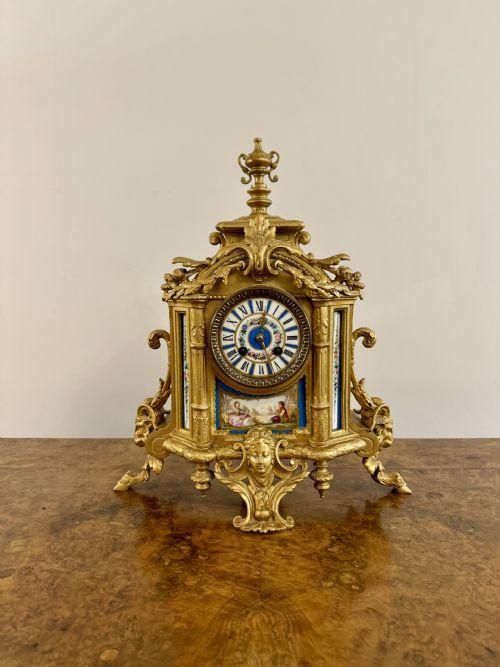
Victorian Bronze Mantel Clock
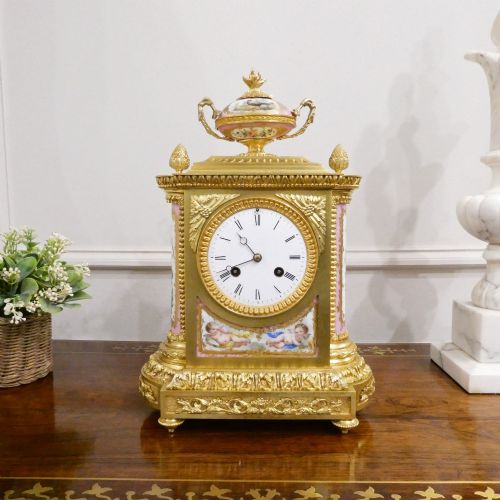
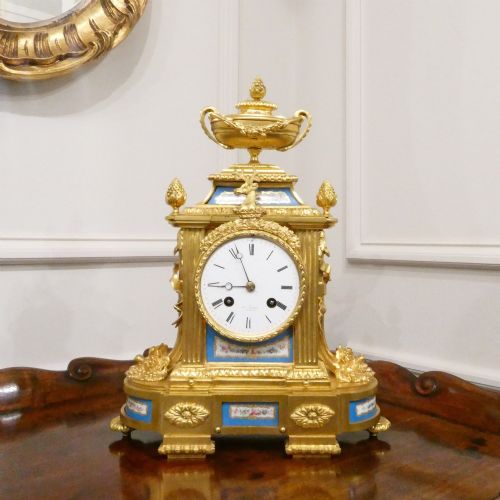
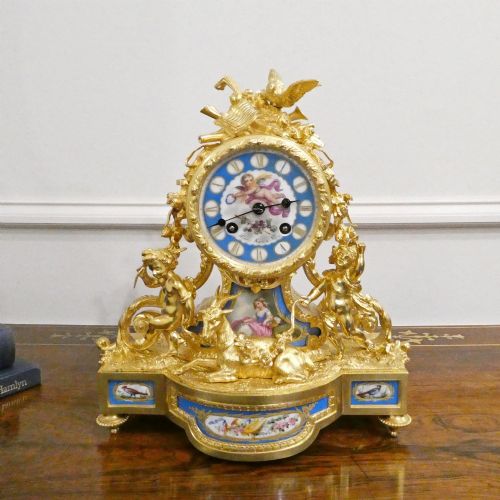
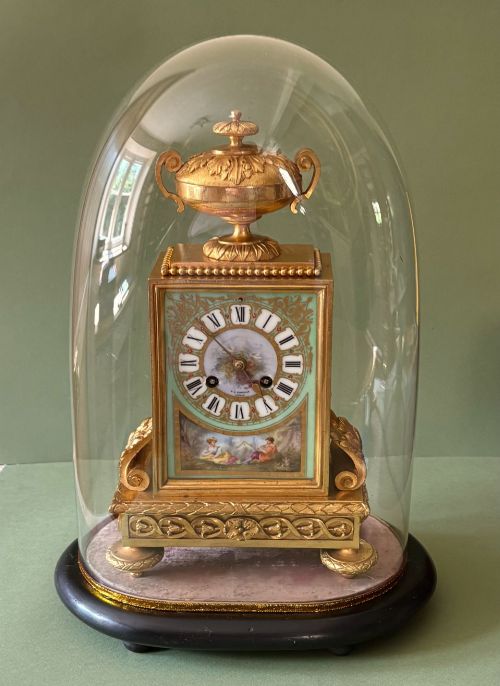
These Victorian bronze mantel clocks combine heavy cast metalwork with intricate enamel dials, anchoring a room with period weight and precise French or English movement.
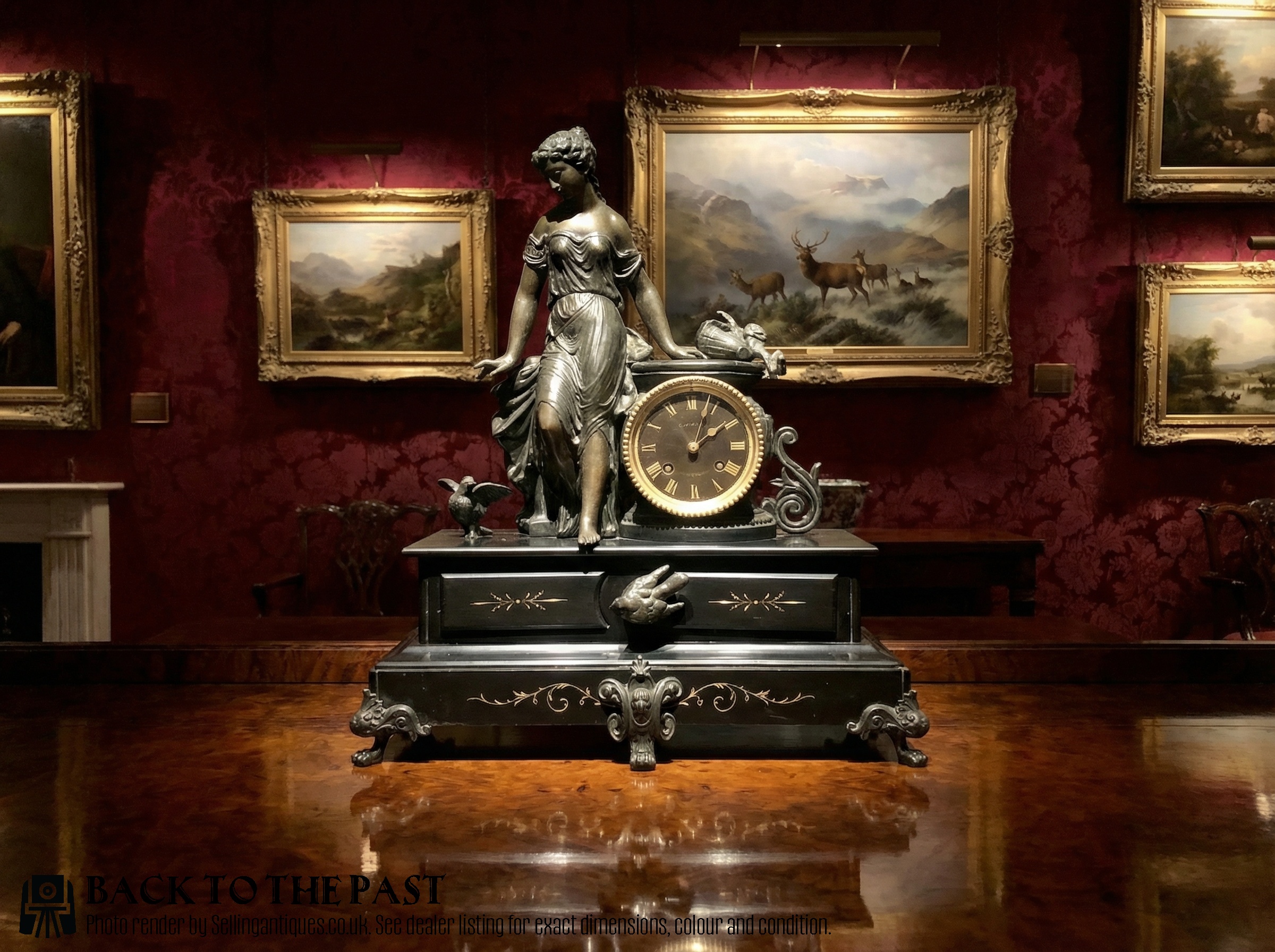
Victorian Bronze Mantel Clock
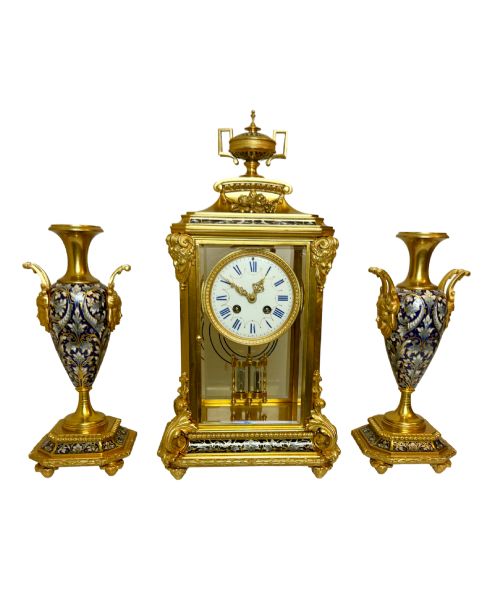
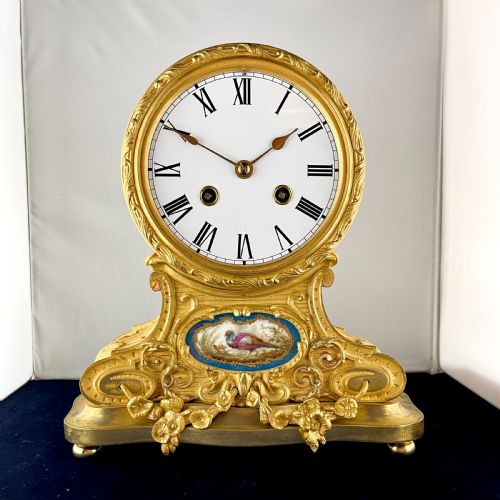
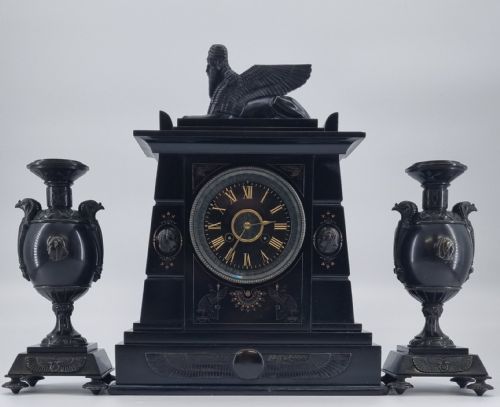
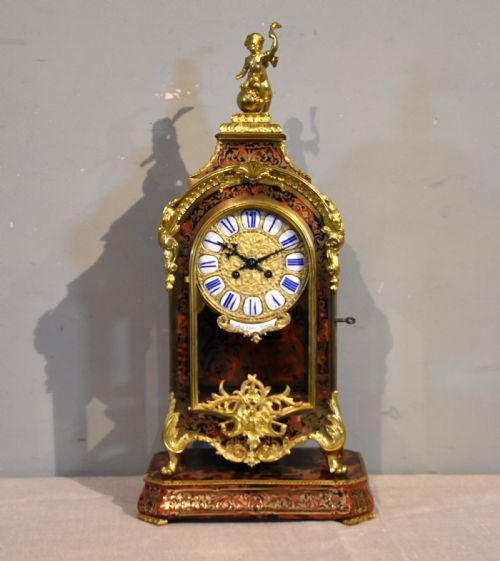
A victorian bronze mantel clock brings together nineteenth century foundry work and mechanical timekeeping, most often taking the form of ornate French portico, Rococo Revival, or Louis XVI style pieces. These designs frequently appear alongside matching side garnitures or porcelain plaques depicting pastoral scenes.
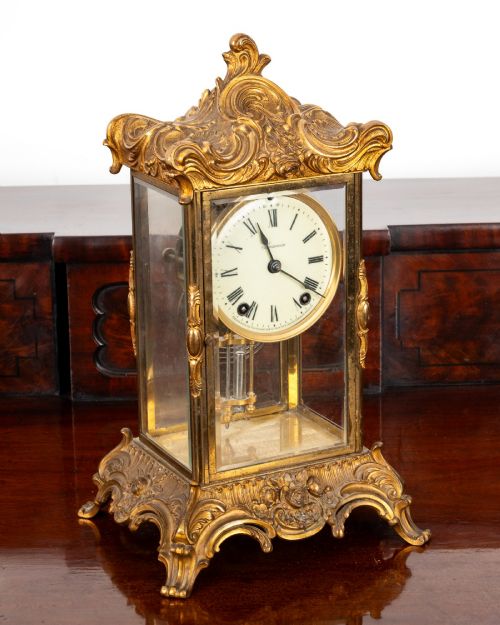
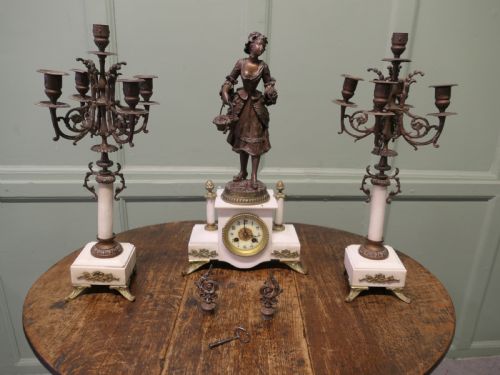
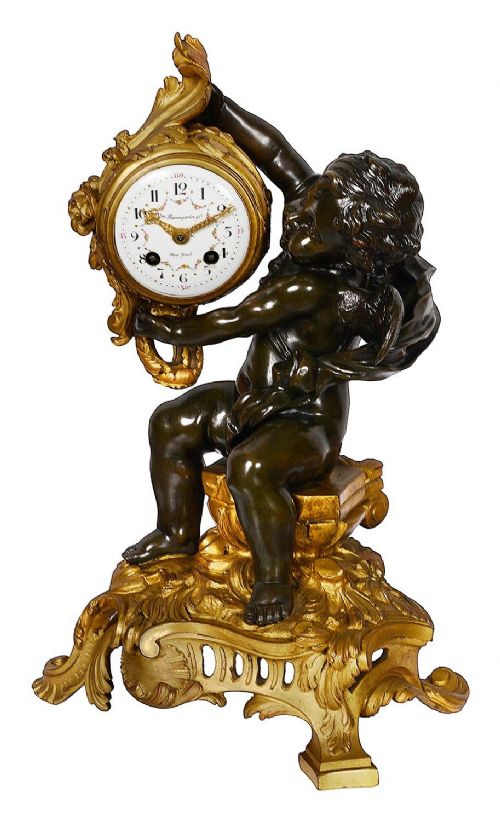
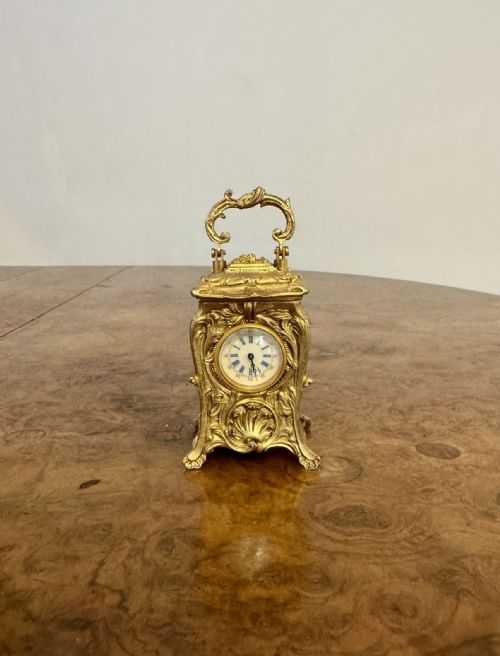
Makers housed these movements in architectural marble cases, crystal regulator frames with four glass sides, or heavy cast bronze figures representing classical motifs and cherubs. The selection spans compact carriage clocks to large monumental garniture sets originating from workshops active between eighteen-sixty and nineteen-hundred.
Materials and construction
Foundries cast the primary housings in bronze, brass, and ormolu, often mounting them upon heavy sienna or rouge marble bases and incorporating hand-painted enamel dials under protective glass. Gilt bronze and fire-gilding techniques created rich surface finishes that contrast against dark patinated bronze figures and polished stone.
Clockmakers fitted eight-day movements, sometimes with strike-repeat functions or twin fusee mechanisms, into these decorative housings. Artisans then applied champleve enamel panels or hand-painted porcelain components to complete the facade.
Listings feature movements spanning the nineteenth century, ranging from Regency twin fusee mechanisms to late Victorian crystal regulators.
Distinctions in manufacture
The distinction between standard production and top-tier pieces lies in the crispness of the bronze chasing and the depth of the fire-gilding. Finer examples exhibit deeply carved ornamentation on the cast mounts, hand-painted detail on the porcelain and enamel dials, and substantial marble or onyx plinths.
Movement quality separates workshop output, where signed plates by known makers and integrated chime systems indicate higher grade production than unmarked standard movements. The cohesion of complete three-piece garniture sets also influences the overall standard of the object.
Jean-Baptiste Delettrez·Henry Marc·Philippes Paris·Leroy Paris·PH Mourey·William Payne
The Victorian Bronze Mantel Clock Glossary
- Ormolu
- Gilt bronze created by applying a mercury and gold amalgam to a bronze base and heating it to drive off the mercury. This technique produced a durable, rich golden surface typical of nineteenth-century French pieces.
- Garniture
- A set of matching decorative ornaments, usually comprising a central clock flanked by two matching vases, candelabra, or urns designed to sit together on a mantelpiece.
- Champleve
- An enamelling technique where troughs or cells are hollowed out of the metal surface and filled with vitreous enamel powder before firing. The resulting surface shows coloured enamel designs flush with the metal dividers.
- Portico clock
- A mantel clock housed within a architectural frame supported by four or more columns. These tall, symmetrical designs often feature a pendulum visible swinging within the central opening.
- Crystal regulator
- A clock encased in glass panels on four sides within a brass or gilt bronze frame. This design allows light to pass through the movement and reveals the internal escapement from multiple angles.
- Fusee
- A conical pulley used in mechanical clocks to maintain even force on the gear train as the mainspring unwinds. This mechanism improves timekeeping accuracy across the duration of the wind.
Victorian Bronze Mantel Clock: Frequently Asked Questions
How do I wind an antique mantel clock?
Winding requires inserting the appropriate key into the winding holes on the enamel dial and turning it gently until resistance increases. Care must be taken not to overwind the mainspring.
Many nineteenth-century pieces utilise eight-day movements, meaning they require attention roughly once a week to maintain accurate timekeeping.
What is a crystal regulator clock?
A crystal regulator is a mantel clock featuring glass panels on all four sides within a brass or gilt bronze frame. This construction showcases the mechanical movement and pendulum from every angle.
These pieces emerged during the later nineteenth century and often feature mercury-filled pendulums designed to compensate for temperature changes.
How do French and English clocks differ?
French pieces from this era frequently emphasise ornate sculptural cases in gilt bronze, porcelain, and marble, often featuring elaborate Rococo or Louis XVI revival styling. Makers such as PH Mourey and Leroy Paris focused heavily on decorative visual impact.
English examples, such as those by William Payne, often prioritise mechanical innovations like twin fusee movements housed within more restrained architectural wooden or metal cases.