


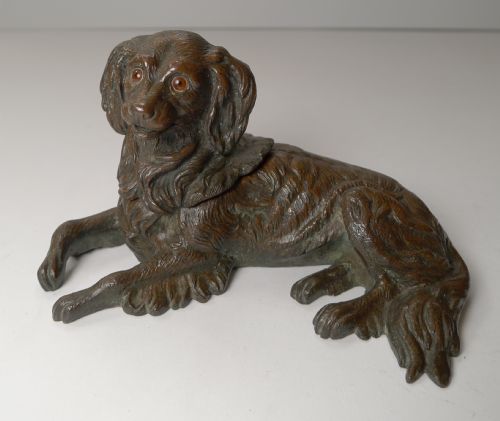
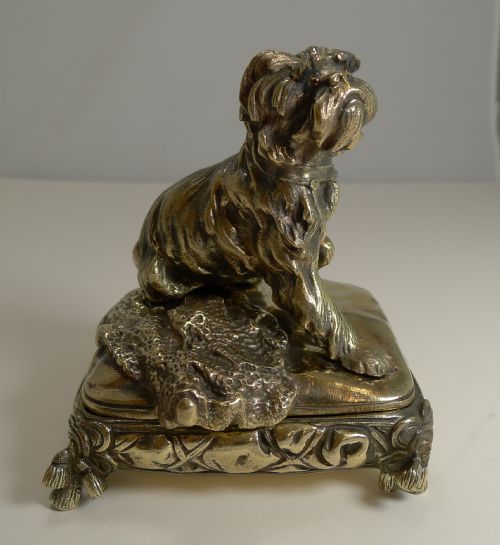

Victorian Bronze Dog Ornament
A victorian bronze dog ornament captures the character of nineteenth-century canine sculpture, offering substantial weight and detailed animalier artistry for any desk or mantelpiece.
Victorian Bronze Dog Ornament
A victorian bronze dog ornament encompasses sculptural figures and desk accessories created during the nineteenth century, celebrating canine forms through the Animalier movement. Buyers exploring this category encounter a variety of subjects ranging from sighthounds and setters to pugs, bulldogs, and spaniels, rendered in solid metal or mounted on stone bases.
The objects take diverse functional and decorative shapes, including freestanding sculptures, paperweights, inkwells, and jewellery boxes. Most examples derive from French and Austrian workshops or English makers, reflecting the era's widespread fascination with realistic animal anatomy and domestic pet portraits.
Materials and production methods
These pieces rely primarily on bronze cast through traditional foundry methods, often finished with cold-painted enamel to add realistic colour to breeds like pugs and bulldogs. Certain figures incorporate mixed media elements, pairing metal castings with marble or onyx bases, glass components, or plaster structures.
Foundries utilised detailed chasing work after casting to sharpen the fur texture, facial expressions, and musculature. Cold-painted surfaces required delicate application of polychrome pigments directly onto the metal surface, creating lifelike hues that remain vulnerable to wear.
Listings feature 19th-century works executed in bronze, bronzed plaster, and marble, spanning figures, inkwells, and jewellery boxes.
Factors that define quality
The presence of an identifiable founder or artist signature, combined with the preservation of original cold-painted enamel surfaces, elevates an example. Furthermore, utilitarian forms that integrate bronze figures into desk accessories or jewellery boxes succeed when the mechanical components and housing materials match the sculptural ambition.
Pierre Jules Mene·Jules Moigniez·Auguste Nicholas Cain·Arthur Waagen·Joseph Francois Victor Chemin·Franze Bergman
The Victorian Bronze Dog Ornament Glossary
- Animalier
- A nineteenth-century artistic movement dedicated to the realistic portrayal of animals, particularly in sculpture. Practitioners focused on capturing creatures in motion or natural repose.
- Cold-painted bronze
- A technique where bronze sculptures are painted with multi-coloured enamels at room temperature rather than fired in a kiln. This finish is delicate and prone to flaking over decades.
- Chasing
- The manual refinement of a metal casting using hammers and punches to sharpen details and remove surface flaws. Skilled chasing distinguishes finer sculptures from mass-produced castings.
- Patina
- The surface sheen and coloration developed on bronze through age, oxidation, or intentional chemical treatment. Collectors value a stable, undisturbed surface skin.
Victorian Bronze Dog Ornament: Frequently Asked Questions
How do I clean a bronze dog figure?
Dust the surface gently with a soft, dry brush to prevent the accumulation of grit in recessed details. Avoid using metal polishes, water, or chemical solvents, particularly on cold-painted pieces where moisture strips the original enamel.
Preserving the existing surface sheen maintains the integrity of the material. A microcrystalline wax can be applied very sparingly by experienced hands if the metal requires protection against atmospheric moisture.
Were these always desk accessories?
While many examples incorporate inkwells or jewellery box compartments, a significant portion were created purely as decorative sculptures or paperweights. Functional pieces served the writing desks of nineteenth-century studies and offices.
Sculptural groups and individual figures sat upon mantelpieces, library tables, and cabinets. The dual purpose of utility and ornamentation reflects Victorian interior tastes.
How can I identify the maker?
Look closely around the base or integral plinth of the sculpture for cast signatures, foundry stamps, or inscribed monograms. Well-known sculptors often signed their models directly into the hot wax or mould before casting.
Absence of a signature does not diminish the quality of a casting, as many anonymous workshops produced fine animalier figures. Comparing anatomical proportions and surface chasing helps attribute unsigned pieces.
What is cold-painted enamel?
Cold-painted enamel refers to pigment applied to unheated bronze and allowed to dry naturally without kiln firing. This method permitted vibrant, lifelike colouration on dog breeds like pugs and bulldogs.
Because the paint sits on the metal rather than fusing with it, handling causes gradual wear over time. Surviving examples with intact polychrome surfaces are prized by collectors of Vienna bronzes.