


Nineteenth Century Animalier Bronze
Nineteenth century animalier bronze captures the raw muscle and sudden movement of beasts, brought to the shelf in cast metal.
Nineteenth Century Animalier Bronze
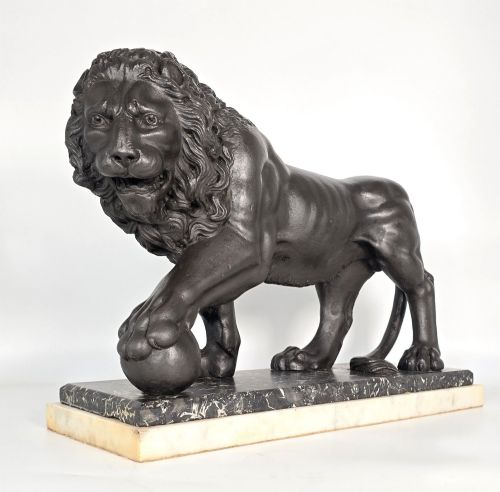
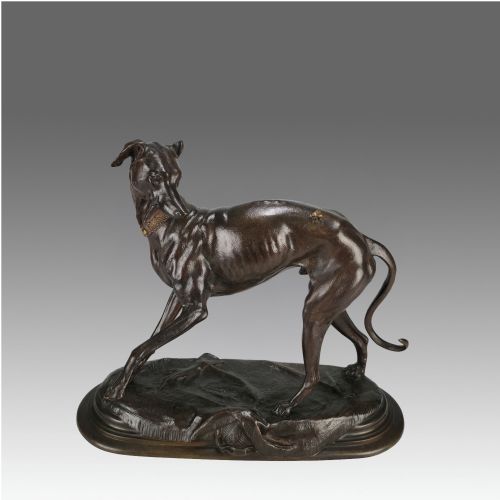
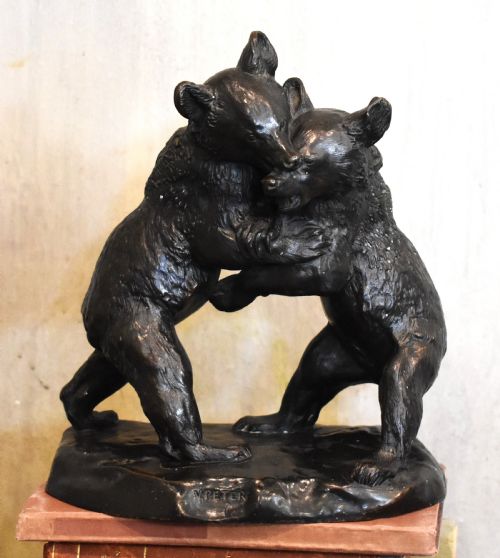
Nineteenth century animalier bronze describes realistic metal sculptures of beasts, birds and hounds modelled by European artists during the Victorian era and the decades flanking it. These figures capture lions, bears, dogs and big cats in moments of repose, stalking or fierce combat.
The pieces on this page appear as tabletop sculptures and small statuary, frequently mounted on heavy stone plinths of marble or onyx to anchor the heavy metal composition.
French animalier works dominate the selection, showing the influence of Parisian studios and foundries that specialised in animal anatomy during the eighteen-fifties through to the turn of the twentieth century.
How they were made
Foundries cast these sculptures in bronze using traditional methods, applying chemical patination afterwards to achieve deep brown, black or greenish surface tones that mimic natural fur and hide. Some select pieces receive cold painted enamel decoration applied directly over the metal surface, creating vibrant plumage on birds.
Finished metal figures are secured onto carved bases of marble or onyx using threaded bolts, combining heavy stone with sculpted metal to create a stable display piece.
Listings feature nineteenth century animalier bronze figures cast in bronze and patinated bronze, frequently mounted on marble or onyx.
What varies in quality
Sculptural fidelity separates a masterful animalier casting from a weaker commercial copy, particularly in how accurately the artist renders bone structure, tense muscle and taut skin under stress. The liveliness of the pose determines whether a bronze feels like a living creature or a stiff ornament.
The crispness of the post-casting chase work dictates the definition in fur, feathers and claws, while the quality and depth of the patinated surface finish complete the visual impact of the work.
Alfred Barye·Victor Peter·Franz Bergman·P. J. Mene·Auguste Nicholas Cain·A Vannetti·Pierre-Jules Mêne·Georges Gardet·Siot Foundry·Jules Moigniez·Barbedienne
The Nineteenth Century Animalier Bronze Glossary
- Animalier
- A nineteenth-century artistic movement dedicated to the realistic portrayal of animals, particularly wild beasts and hunting dogs in action. Sculptors in this tradition studied living specimens closely in menageries.
- Patinated Bronze
- Metal treated with chemical solutions to produce a controlled surface colour or tone, ranging from rich dark brown to verdigris. This finish protects the metal and defines the contours of the sculpture.
- Cold Painted Bronze
- A technique where oil or enamel paint is applied to an unheated bronze casting, most famously utilised by Viennese workshops for colourful birds and figures. The paint sits on the surface rather than fusing through heat.
- Grand Tour
- A cultural journey of Europe undertaken by wealthy young men in the nineteenth century, acquiring classical souvenirs like miniature bronze lions and antiquities. These pieces often referenced ancient Roman sculpture.
- Plinth
- A heavy base of marble, onyx or slate supporting the bronze sculpture, providing structural stability and visual contrast to the dark metal.
Nineteenth Century Animalier Bronze: Frequently Asked Questions
What is an animalier bronze?
An animalier bronze is a nineteenth-century sculpture focusing on realistic depictions of animals, birds and hunting hounds in dynamic or natural poses.
These pieces were produced primarily in France and Austria, capturing the anatomical precision of wildlife through skilled metal casting.
How do I clean a bronze sculpture?
Dust the bronze gently with a soft, dry cloth to remove surface particles without disturbing the underlying patina or chemical finish.
Avoid using water, oils, or metal polishes, as these abrasive substances can strip away the historical surface colour.
Why are some bronzes mounted on marble?
Marble and onyx plinths provide substantial weight and a stable foundation to balance the heavy metal sculptures resting upon them.
Stone bases also offer a clean architectural framing device that elevates the animal figure above the tabletop.
What is cold painted bronze?
Cold painted bronze refers to metal figures decorated with enamel or oil paints applied to the unheated surface after casting.
This technique allows for bright, lifelike coloration, commonly seen on small bird and exotic animal sculptures.