




Dark Bronze Hound Sculpture
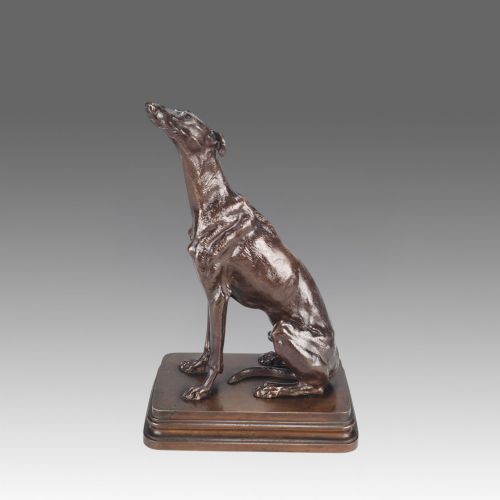
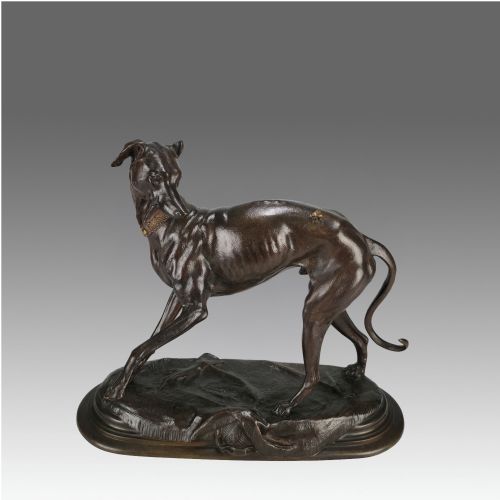
A dark bronze hound sculpture brings nineteenth-century animalier realism into the room, capturing the muscle and stance of sporting dogs.
Dark Bronze Hound Sculpture
When you search for a dark bronze hound sculpture, you find animalier bronzes depicting greyhounds, bassets, setters, and hunting groups from the nineteenth century. These pieces record hounds at rest, sitting, or engaged in the chase.
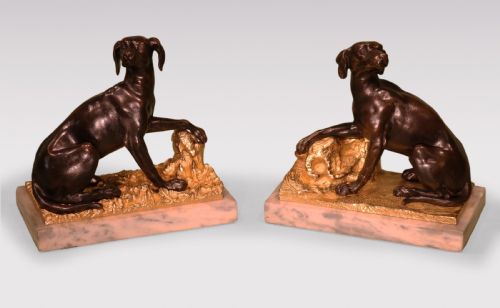
Most examples originate from French and English foundries of the Victorian period. They take the form of tabletop figures, fireside statues, and complex groups mounted on marble bases or paired with wood and ormolu.
How they were made
Foundries utilised traditional lost-wax or sand-casting techniques to shape the dark bronze metal. Artists applied chemical patination to achieve the characteristic dark surface tones.
Many sculptures incorporate additional materials such as marble for heavy bases and ormolu for decorative accents. Foundries like Barbedienne oversaw the precise casting and chasing of these metal elements.
Several hounds share their bronze space with persistent flies and startled pheasants.
What varies in quality
The precision of the chaser's work separates superior castings from simpler productions, defining the tension in a hound's muscle and the texture of its coat. Sharp detailing around the paws, collar, and expression reflects the skill applied after the metal left the mould.
The quality of the base materials also differentiates the range, from plain marble slabs to elaborate ormolu mounts and integrated hunting scenes with birds.
Alfred Dubucand·Alfred Barye·Pierre Jules Mene·Auguste Nicholas Cain·Antoine Louis Barye·Joseph Francois Victor Chemin·Christophe Fratin·John Willis Good·Nikolai Lieberich·Barbedienne
The Dark Bronze Hound Sculpture Glossary
- Animalier
- A nineteenth-century artistic movement focused on the realistic portrayal of animals. Sculptors in this style studied live subjects in menageries and fields.
- Patinated Bronze
- Bronze treated with chemical solutions to produce a specific surface colour, ranging from deep brown to near black. This finish protects the metal and defines the sculptural form.
- Ormolu
- Gilt bronze ornamentation applied to furniture and sculpture bases. It provides a bright metallic contrast to the dark bronze hound figures.
- Lost-wax casting
- A method of metal casting in which a molten metal is poured into a mould that has been created by means of a wax model. Once the mould is made, the wax is melted and drained away.
Dark Bronze Hound Sculpture: Frequently Asked Questions
What is an animalier bronze?
An animalier bronze is a nineteenth-century sculpture focusing specifically on the realistic depiction of animals in natural poses. These works were produced across Europe, particularly in France.
Artists studied animal anatomy closely, resulting in sculptures that capture movement and muscle with precision.
How do I identify a Victorian bronze?
Victorian bronzes typically exhibit heavy metal casting, naturalistic patination, and detailed chasing. They often date from the nineteenth century and bear signatures or foundry marks.
Many of these pieces are mounted on slate or marble bases to provide stability.
Where were these sculptures displayed?
In the nineteenth century, these sculptures sat on libraries, desks, and antechamber tables in country houses and town residences. Larger pieces served as fireside ornaments.
Today, they function as focal points on mantelpieces or sideboards.
Are hounds the only animals shown?
While hounds and hunting dogs predominate in these specific groups, sculptors also included game birds like pheasants and prey animals within the compositions.
Some works depict complex scenes involving multiple dogs and quarry.