


Victorian Bronze Dog Figurine
A victorian bronze dog figurine brings character and animalier artistry into a room, capturing hounds and sporting dogs in enduring metal.
Victorian Bronze Dog Figurine
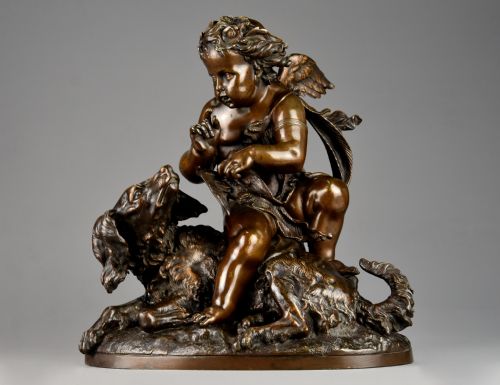
When you search for a victorian bronze dog figurine, you encounter sculptural works depicting various canine breeds from the nineteenth century and slightly beyond. These range from domestic pets and working gundogs to stylised animalier subjects cast in bronze, brass, cast iron, and bronzed plaster.
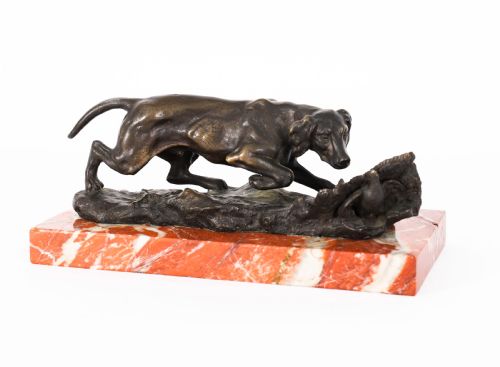
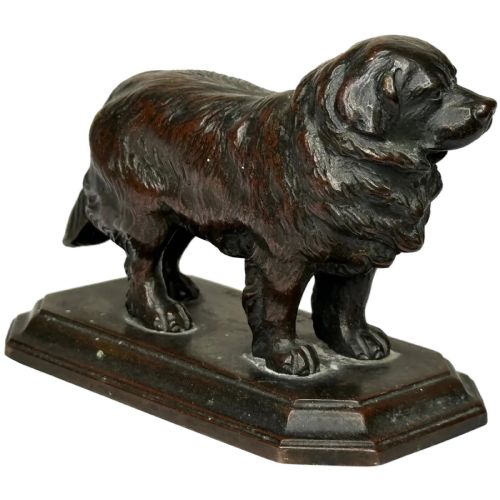
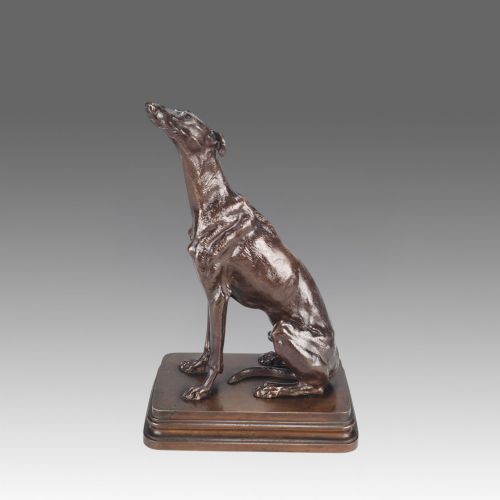
The most common examples on this page are French and Austrian animalier bronzes, often mounted on marble bases or combined with functional objects such as doorstops and jewellery boxes. They portray pugs, greyhounds, setters, and bulldogs with careful attention to canine anatomy and posture.
How they were made
Foundries utilised the lost-wax casting technique or sand casting to produce these metal sculptures, allowing for intricate detail in the fur and musculature. Many pieces received a dark patination, whilst others were cold-painted with enamel to create realistic or humorous coloration.
Some decorative items combine cast bronze figures with marble plinths, while alternative listings employ simpler materials like cast iron or bronzed plaster to achieve a similar sculptural effect.
Materials span traditional cast bronze, cold-painted enamel, brass, cast iron, and bronzed plaster.
What varies in quality
The precision of the casting and the crispness of the churing or hand-finishing determine the refinement of a figure. Superior examples display subtle musculature and realistic textures in the coat, whereas simpler castings lose finer anatomical details.
The application of cold-painted enamel and the quality of the original foundry patina significantly influence the visual depth of the object. Furthermore, integrated bases of polished marble or the presence of a distinct artist signature elevate the standing of the piece.
Carl Kauba·Alfred Dubucand·Prosper Lecourtier·Jules Moigniez·Auguste Nicholas Cain·Arthur Waagen·Joseph Francois Victor Chemin·Franze Bergman·Stephan Buchinger
The Victorian Bronze Dog Figurine Glossary
- Animalier
- A nineteenth century sculptural movement focusing on realistic depictions of animals, particularly predators and domestic beasts. Practitioners rendered these subjects with close attention to natural movement.
- Cold-painted bronze
- A technique where bronze sculptures are painted with cold enamel colours rather than fired in a kiln. This method allows for vivid detailing but is vulnerable to chipping over time.
- Patination
- The surface coloration and sheen developed naturally through age or applied artificially by the foundry. A rich patina adds depth to the metallic contours.
- Lost-wax casting
- A historic method of metal casting where a wax model is melted out of a mould and replaced with molten bronze. This technique permits complex undercuts and fine textures.
- Vienna bronze
- Small, highly detailed Austrian bronzes produced around the turn of the twentieth century, typically cold-painted and often humorous in theme.
Victorian Bronze Dog Figurine: Frequently Asked Questions
What is an animalier bronze?
An animalier bronze is a nineteenth century sculpture specifically focused on realistic animal forms. These works were created by artists who studied animal anatomy in detail.
Such sculptures often capture dogs, horses, and wildlife in active or resting postures, reflecting a Victorian fascination with the natural world.
Where were these dog sculptures made?
The pieces originate primarily from European workshops, with French and Austrian foundries producing a large share of the animalier figures. English makers also contributed domestic dog figures and cast iron doorstops.
Foundry marks and artist signatures are sometimes stamped directly into the bronze base.
How should I display a bronze dog figure?
Bronze figures look well on desks, mantelpieces, or wooden cabinets where their patinated surfaces catch the light. Ensure they sit on stable, flat surfaces away from excessive moisture.
Dust them gently with a soft dry cloth to preserve the finish without damaging the patina.