


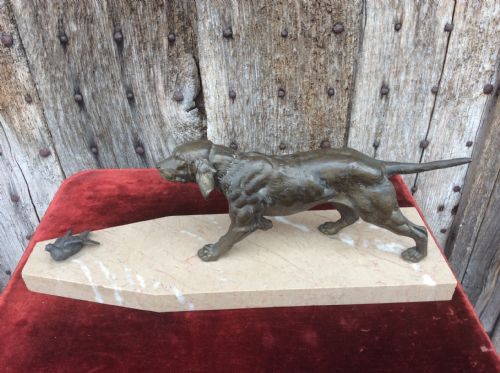


Antique Setter Sculpture
These antique setter sculpture pieces capture the hunting dog in bronze, porcelain and earthenware, offering a lifelike presence for your mantelpiece.
Antique Setter Sculpture
An antique setter sculpture represents the canine form through the lens of nineteenth century animalier art and ceramic traditions. You will encounter figures spanning the nineteenth century, the Edwardian era, and the nineteen twenties.
The objects take the form of freestanding sculptures, decorative figurines, and pottery figures. Materials range from cast bronze and spelter to glazed porcelain and Staffordshire earthenware.
French animalier works and English ceramic factories dominate the selection. Figures often depict the dog alongside game such as pheasants and rabbits, or mounted on marble plinths.
How they were made
Bronzes utilise the lost wax casting method to capture muscle and fur detail, frequently finished with cold painted surfaces or rich patination. Foundry workers mounted these metal casts onto heavy marble bases.
Ceramic examples combine earthenware and porcelain bodies with hand applied glazes and subtle gilding. Factory modellers at sites such as Enoch Wood and Minton shaped these figures before kiln firing.
Spelter pieces provide a lighter metal alternative to bronze, cast from zinc alloys and patinated to simulate heavier bronze metalwork.
The listings span the nineteenth century and the early twentieth century, featuring materials from cold painted bronze to Staffordshire earthenware.
What varies in quality
The finesse of the casting separates standard production from exceptional animalier sculpture. Superior bronze and spelter figures retain crisp anatomical lines and detailed fur texture without softening during the pour.
Jules Moigniez·Delabrierre·Minton·C Masson·Enoch Wood factory·Royal Dux
The Antique Setter Sculpture Glossary
- Animalier
- A nineteenth century artistic movement focused on the realistic depiction of animals. Sculptors in this tradition studied anatomy closely to portray working dogs in motion.
- Spelter
- A zinc alloy used as a cost effective alternative to bronze. It takes patination well but possesses a lighter weight and softer surface.
- Blanc de Chine
- A white porcelain glaze originating in China and adopted by European factories. It highlights the pure contours of modelled ceramic figures without surface colour.
- Cold painted
- A method where bronze is painted with oil or enamel paints after casting rather than firing in a kiln. This finish remains vulnerable to scratching and cleaning.
- Patina
- The surface sheen or coloration developed on bronze through age or chemical treatment. It adds depth to the metallic skin of the sculpture.
Antique Setter Sculpture: Frequently Asked Questions
What is an animalier setter sculpture?
An animalier sculpture depicts animals with anatomical accuracy, focusing on the natural postures of hunting dogs. These pieces emerged strongly in nineteenth century European studios.
Artists aimed to capture the tension of a working dog on point or retrieving game, using bronze or spelter as the primary medium.
How do I care for a bronze setter?
Bronze sculptures require minimal intervention to preserve their historic patination. Dust them gently with a dry, soft cloth.
Avoid using liquid cleaners or polishes, which can strip away the original surface treatment applied by the foundry.
Are ceramic setter figures fragile?
Earthenware and porcelain figures demand careful placement away from high traffic areas or edge surfaces. The extremities and glazed details remain vulnerable to chipping.
Display them on stable furniture where temperature fluctuations stay minimal to protect the ceramic body and glaze.
How do I distinguish spelter from bronze?
Spelter feels noticeably lighter than bronze and often shows a softer, more greyish metal beneath worn areas of paint. Bronze offers greater density and a resonant weight.
Magnetic tests are inconclusive because both metals are non ferrous, so inspection of the surface wear provides the clearest clue.