


Victorian Bronze Candlesticks
Victorian bronze candlesticks bring the heavy, dark metals and gleaming highlights of the nineteenth-century interior straight to your table.
Victorian Bronze Candlesticks
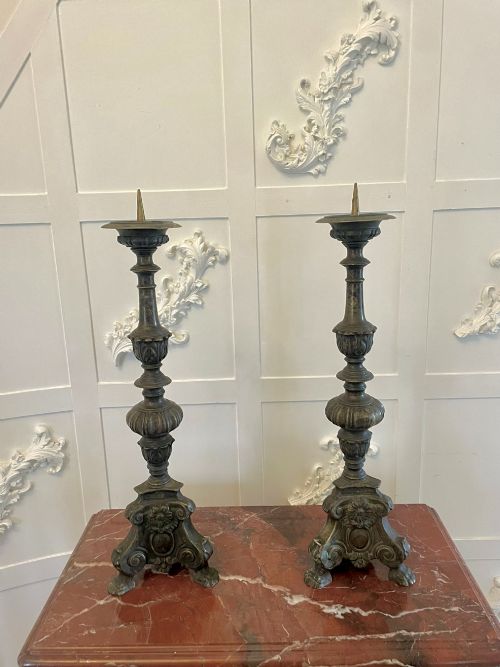
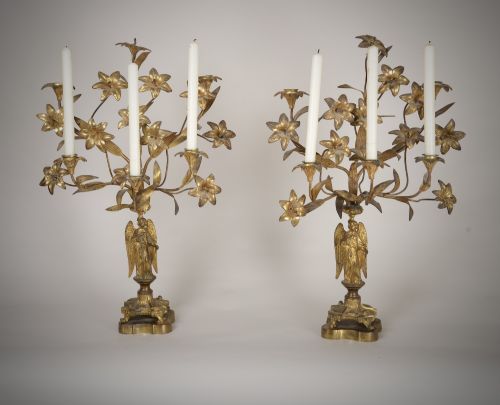
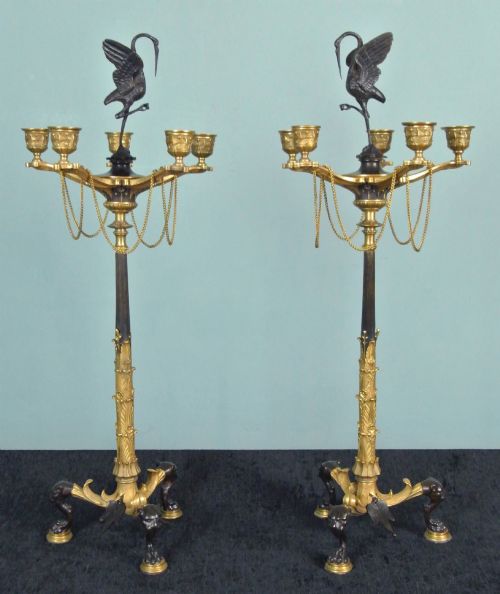
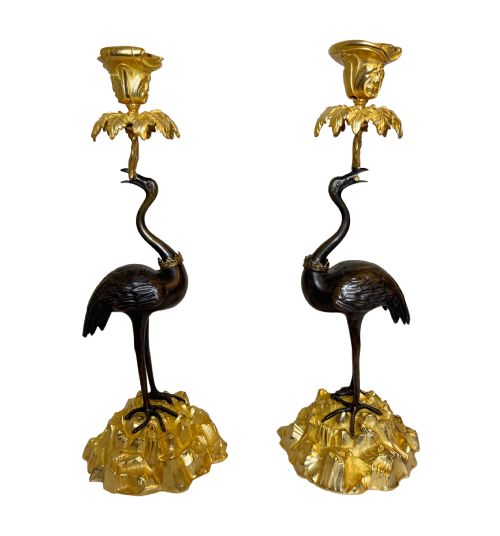
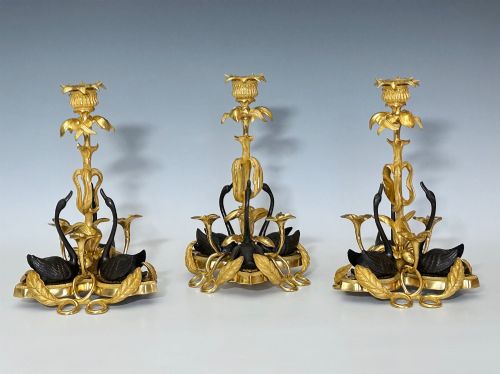
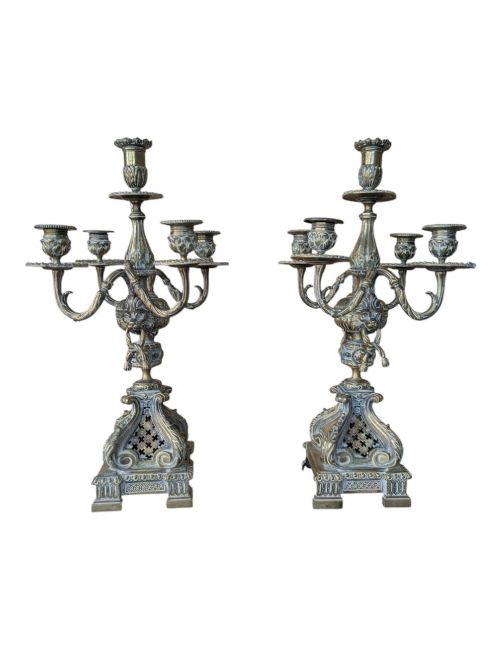
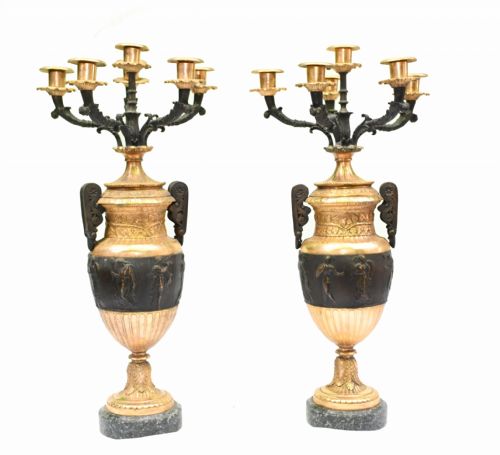
Victorian bronze candlesticks encompass a variety of nineteenth-century forms, ranging from simple patinated holders to elaborate multi-branch candelabra. You are most likely to meet pairs cast in rich brown or blackened bronze, frequently paired with contrasting ormolu highlights.
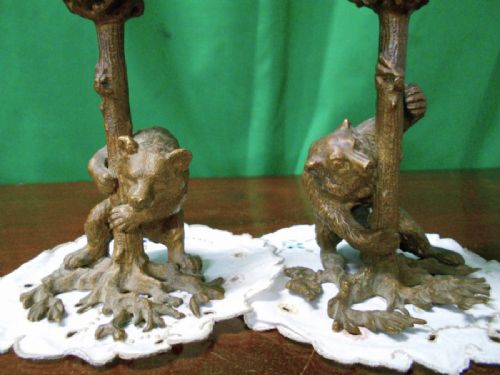
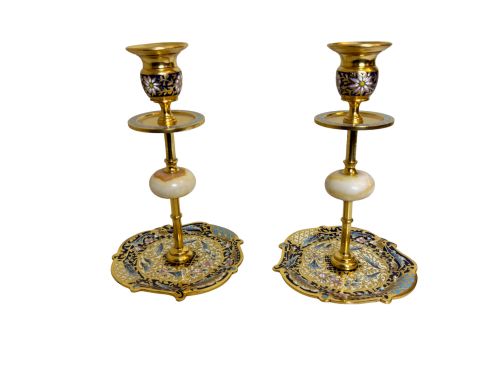
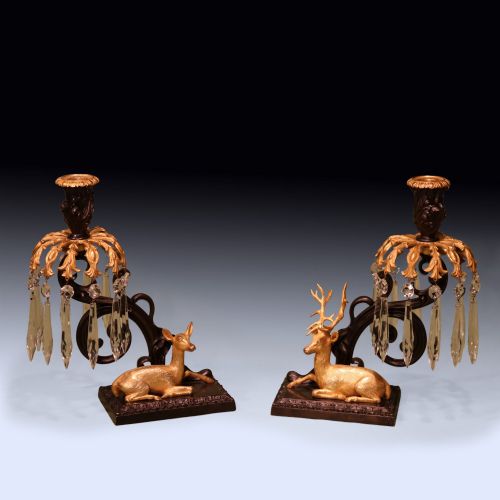
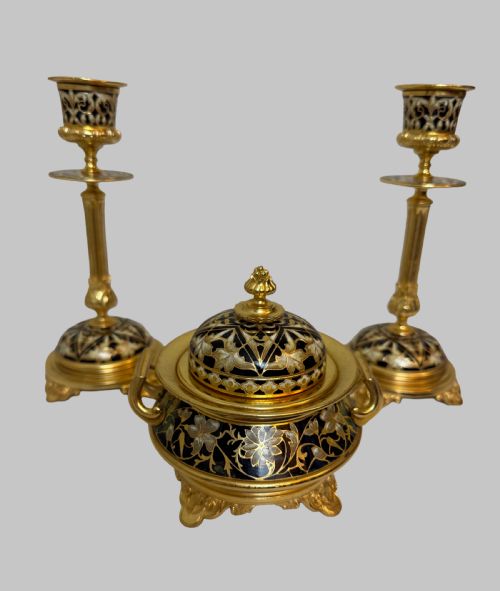
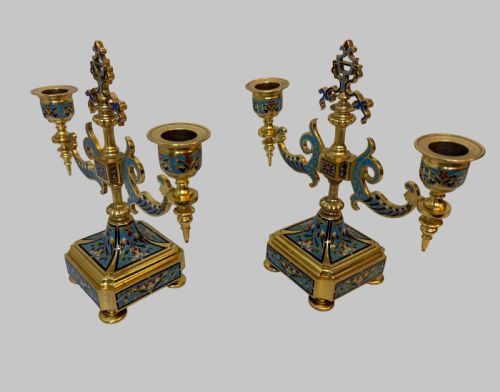
The designs draw heavily on historicist revivals, showing Gothic, Neoclassical, and French Rococo influences alongside figural subjects like cherubs, animals, and classical figures. Many examples sit upon marble or onyx bases, whilst others incorporate cut glass lustres or champleve enamel panels.
How They Were Made
Foundries produced these pieces using traditional casting methods, often combining cast bronze with fire-gilded ormolu for striking visual contrast. Artisans applied chemical patination to achieve deep brown or black surfaces, while intricate chased details added crisp definition to foliage, drapery, and animal motifs.
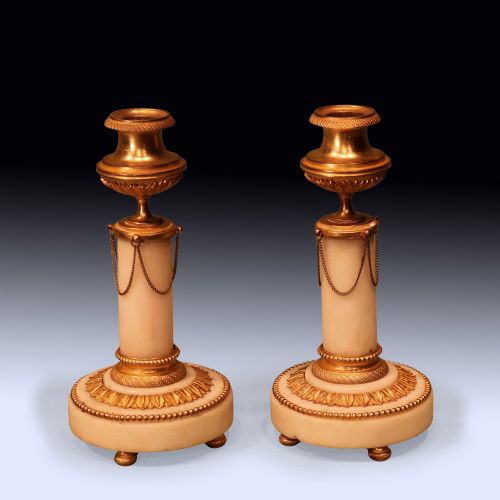
Sturdier components relied on brass or iron elements beneath the bronze surface, and many items integrated decorative materials like white marble bases and colourful champleve enamel sections.
Victorian Bronze Candlesticks Retail Price Guide 2026
Typical asking prices for victorian bronze candlesticks among the pieces listed under this phrase on Sellingantiques today, from the lower quarter to the upper quarter. They describe what is for sale here now, not the wider market.
Stilts and medieval costumes occasionally make unexpected appearances, proving that Victorian makers possessed a thoroughly playful imagination.
What Varies in Quality
Heavier casting and genuine marble or onyx plinths elevate the overall weight and presence of the piece, whereas lighter alloys like spelter often indicate a more commercial grade of manufacture.
Barbedienne·Thomas Hope
The Victorian Bronze Candlesticks Glossary
- Ormolu
- Gilded bronze, produced by applying a mixture of gold and mercury to the metal surface before heating. This technique creates a rich, golden finish characteristic of many nineteenth-century decorative pieces.
- Champleve
- An enamelling technique where troughs or cells are hollowed out of the metal surface and filled with vitreous enamel before firing. It produces vibrant coloured patterns alongside the bronze framework.
- Patinated bronze
- Bronze treated with chemical solutions to alter its surface colour to brown, green, or near-black. This finish protects the metal and highlights sculptural contours.
- Lustre
- A candlestick or candelabrum hung with cut glass prisms or pendants designed to reflect candlelight. They were popular throughout the Victorian period for formal entertaining.
- Pricket candlestick
- A candlestick featuring an upright spike at the centre rather than a socket to hold the candle. These designs are frequently found on church or Gothic revival pieces.
Victorian Bronze Candlesticks: Frequently Asked Questions
Were these used for everyday lighting?
In the nineteenth century, these objects served as practical light sources in parlours, dining rooms, and bedrooms before the widespread adoption of gas and electric lighting. Their heavy bronze construction made them stable enough for carrying from room to room.
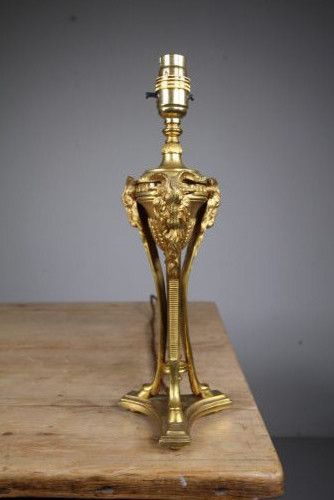
Over time, many of these pieces lost their primary function as candle holders and were subsequently converted into table lamps or kept purely as decorative sculptural items.
How do I clean bronze candlesticks?
Dusting gently with a dry, soft cloth is normally sufficient to keep the patinated surface clean without disturbing the historic finish. Avoid using abrasive metal polishes on bronze or ormolu, as harsh chemicals will strip away the original gilding and patination.
If the piece incorporates marble or glass sections, wipe those specific areas with a damp cloth while keeping moisture away from the metal joins.
How can I tell the period?
Dating relies on the stylistic clues of the casting, such as the characteristic heavy ornamentation of the mid-nineteenth century or the specific historicist revivals popular during the eighteen-eighties. Weight, casting seams, and the choice of accompanying materials like marble or champleve enamel provide further chronological markers.
Many examples carry stylistic overlaps with Regency or later Edwardian designs, requiring careful comparison of their proportions and decorative motifs.
Can I use modern candles in them?
Standard modern candles rarely match the precise diameter of nineteenth-century sockets, which can leave a taper leaning unsteadily. Using fitted beeswax inserts or slightly melting the base of a modern candle helps secure it safely.
Take care to extinguish candles before they burn down close to the metal or decorative enamel to prevent heat damage.