



Victorian Breakfront Server
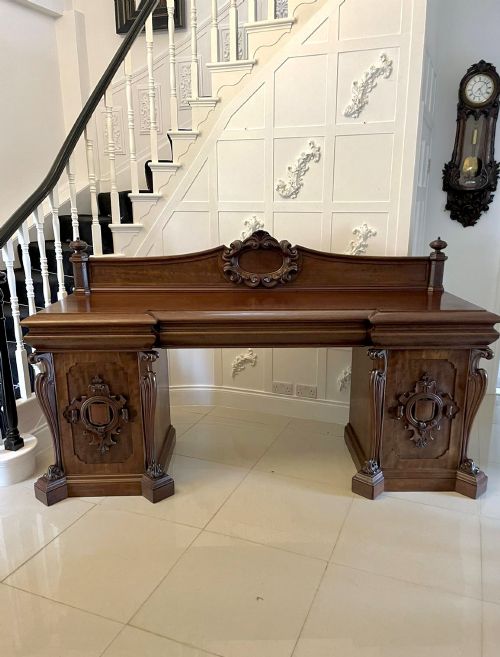
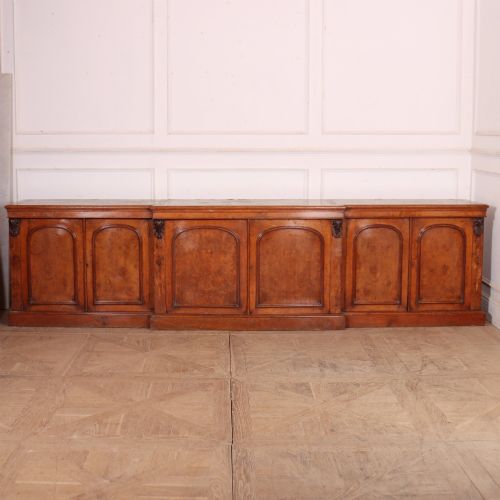
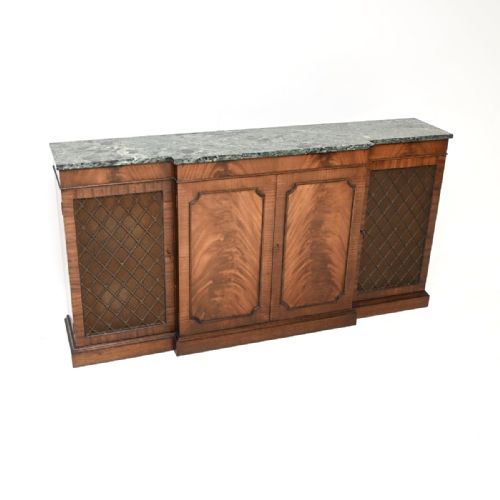
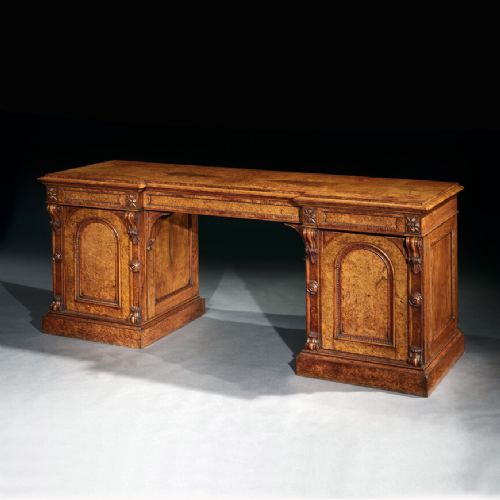
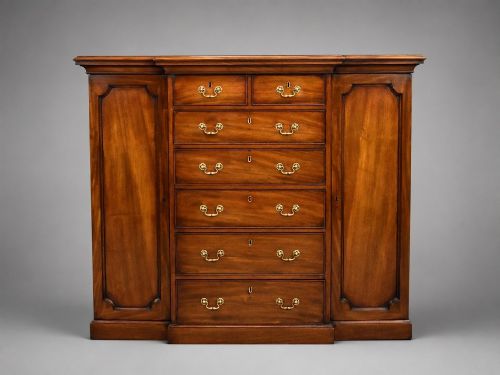
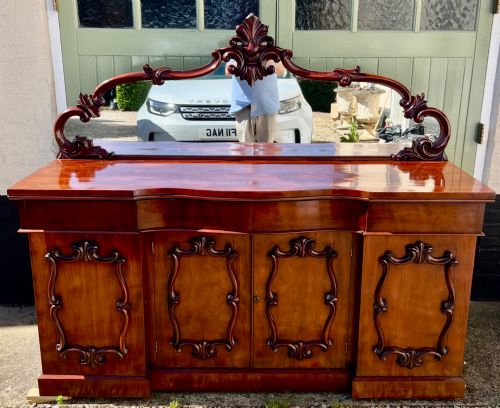
A victorian breakfront server is a substantial dining room piece, and these mahogany and pollard oak examples offer grand proportions and deep storage.
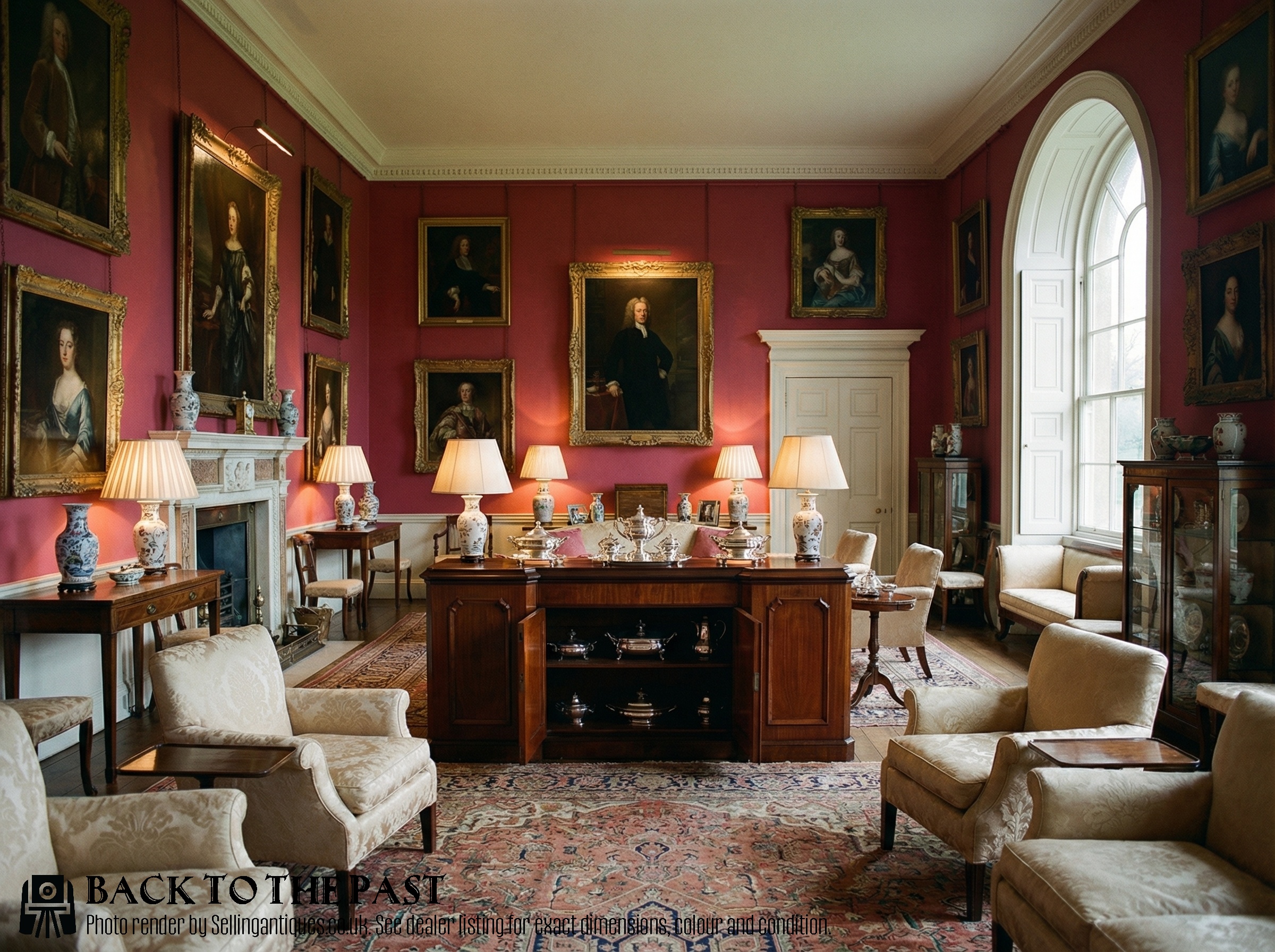
Victorian Breakfront Server
When you search for a victorian breakfront server, you encounter large storage furniture primarily catalogued as sideboards, credenzas, and chiffoniers. These pieces project outward in the centre, creating a distinctive architectural profile that anchors a traditional dining room or hallway.
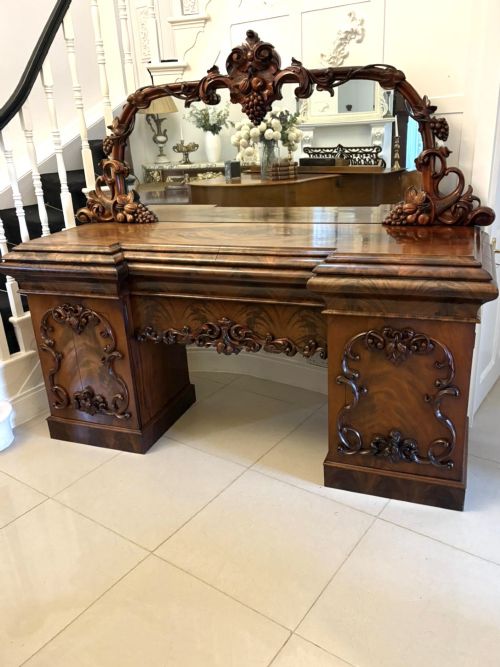
The selections span the nineteenth century, including specific dates from the eighteen-fifties through to nineteen-thirties revivals. You will find three-door and four-door configurations, alongside mirror-back variations and grill-front designs.
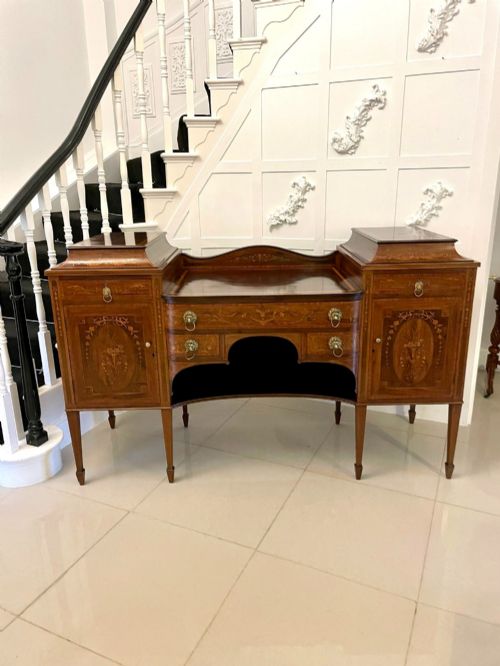
Styles range from straightforward Victorian to Sheraton Revival, Regency, William IV, and Chippendale Revival. Mahogany dominates the selection, appearing in figured and flame veneer varieties alongside pollard oak.
What varies in quality
The selection of timber grain largely dictates visual impact, with highly figured flame mahogany and pollard oak commanding attention over plain surfaces. The depth and execution of carved ornamentation further separate standard examples from finer works.
Attribution to known cabinet makers elevates a piece, as seen in labeled works from London firms. Structural integrity in the breakfront framework and the preservation of original veneers also define the upper tier of these items.
Victorian Breakfront Server Retail Price Guide 2026
Typical asking prices for victorian breakfront server among the pieces listed under this phrase on Sellingantiques today, from the lower quarter to the upper quarter. They describe what is for sale here now, not the wider market.
The listings combine nineteenth-century periods with early twentieth-century revival styles, using mahogany, pollard oak, brass, glass, and marble.
Hewetsons London
The Victorian Breakfront Server Glossary
- Breakfront
- A cabinet design where the central section projects forward from the flanking outer sections. This architectural feature creates depth and shadow across the front elevation.
- Flame Mahogany
- A veneer cut from the fork of the mahogany tree where branches join the trunk. It produces a fiery, undulating grain pattern prized for decorative furniture surfaces.
- Pollard Oak
- Timber taken from trees that have been pollarded, resulting in dense, tightly clustered knots. This produces a highly decorative, mottled grain figure.
- Chiffonier
- A low sideboard or cabinet, often featuring a mirror or shelf superstructure at the back. These pieces served functional storage and display roles in Victorian interiors.
- Marquetry
- Decorative patterns formed by fitting together small pieces of veneered wood. Craftsmen applied these intricate designs to cabinet doors and drawer fronts.
Victorian Breakfront Server: Frequently Asked Questions
How do I style a large sideboard?
These grand pieces suit dining rooms and spacious hallways where their depth and length can be appreciated without crowding the floor plan.
Pair them with heavy dining tables and substantial seating to maintain proportional balance in the room.
What woods were used in Victorian sideboards?
Mahogany is the primary timber found in these listings, frequently utilised as figured or flame mahogany veneer over solid secondary woods.
Pollard oak and walnut also appear, providing alternative grain patterns and darker natural tones.
What is the difference between a sideboard and a credenza?
Sideboards traditionally feature substantial cupboards and drawers designed specifically for dining room service and storage.
Credenzas often sit lower to the ground and may incorporate glass doors, mirror backs, or open shelving structures.