


Victorian Brass Spyglass
These victorian brass spyglass pieces are compact, functional optical instruments designed for portability and maritime use, offering collectors tactile history and precise brass mechanics.
Victorian Brass Spyglass
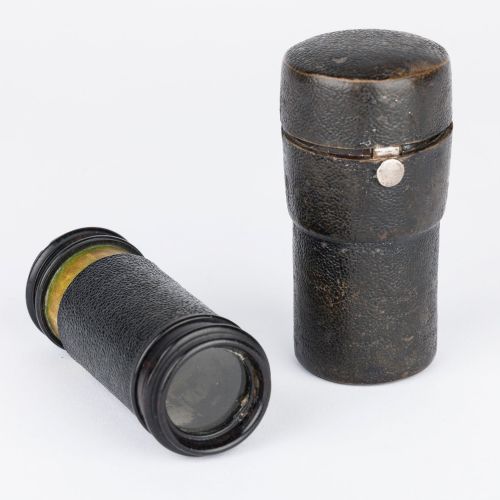
A victorian brass spyglass is a portable optical instrument designed for terrestrial viewing, marine navigation, and field use. These items appear across various formats, from pocket-sized single-draw tubes to multi-draw extending cylinders housed in leather or wood.
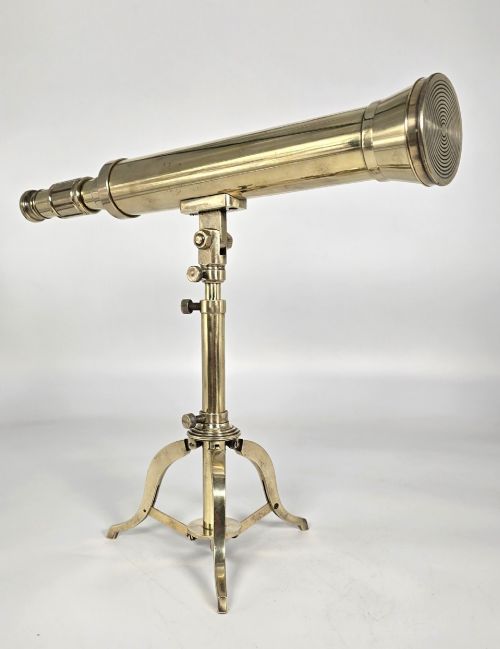
The selection includes compact pocket versions, marine telescopes, and tabletop models on folding stands. Materials range from solid brass and glass to secondary components of leather, mahogany, oak, and bone.
Most pieces date from the nineteenth century, including specific decades such as the eighteen fifties, sixties, eighties, and nineties, alongside earlier eighteenth-century examples and later twentieth-century tabletop adaptations.
Quality and execution
Optical clarity and the precision of the draw mechanism separate standard instruments from superior examples. The tightness of the fit between brass sections dictates how steadily the tube extends without wobbling.
Maker signatures engraved upon the draw tubes or brass casings elevate the standing of an instrument. Finer pieces also feature original fitted cases, auxiliary sunshades, or substantial tabletop stands.
Listings feature instruments constructed from brass combined with mahogany, oak, fruitwood, bone, leather, and nickel.
Ross of London·Steward of London·Newton and Co·L Casella London·Chadburn Brothers of Sheffield·S and B Solomons·Dollond
The Victorian Brass Spyglass Glossary
- Draw
- A sliding section of the telescope barrel that extends to alter the focal length. Multiple draws allow a long instrument to collapse into a compact pocket size.
- Terrestrial
- An optical setup designed for viewing land objects rather than astronomical bodies. It uses an erecting lens system to ensure the image appears right side up.
- Marine telescope
- A durable glass built for use at sea, frequently wrapped in leather to withstand salt air and handling. These often feature large objective lenses for gathering light in hazy conditions.
- Monocular
- A single-barrel viewing scope used with one eye, similar to half of a pair of binoculars. Opera monoculars represent a smaller, decorative variation of this optical form.
- Objective lens
- The primary glass at the front of the telescope that collects light from the subject. Its diameter determines the brightness and clarity of the magnified view.
Victorian Brass Spyglass: Frequently Asked Questions
How do I use a draw telescope?
Gently pull each section of the brass barrel out to its full extension until the internal stops engage. Hold the instrument steady against a fixed support or steady hand while adjusting the final draw to focus.
Keep optical surfaces clean and avoid forcing stuck metal draws. Store the telescope in a collapsed position to protect the interior lenses from dust.
What is an officer of the watch telescope?
This specific marine telescope style was carried by naval officers on deck for signaling, spotting land, and monitoring ship movements. The design prioritised robust brass construction and quick deployment.
Many examples feature leather grips to prevent slipping in wet weather conditions at sea. They represent standard equipment for nineteenth-century maritime navigation.
How are nineteenth-century makers identified?
Maker names and addresses are typically engraved directly onto the outermost draw tube near the eyepiece. You will often find the firm name accompanied by their city of operation.
Examining these inscriptions provides a direct link to optical workshops operating during the period. Unsigned instruments rely on construction style and materials for attribution.
Can I use these antiques for viewing?
Most of these historic instruments remain optically functional for terrestrial viewing when the lenses are clean and properly aligned. However, coatings and glass technology reflect nineteenth-century standards rather than modern optics.
Collectors generally appreciate them as historical scientific instruments rather than daily viewing tools. Handle the focus adjustments with care to preserve the original glass.