
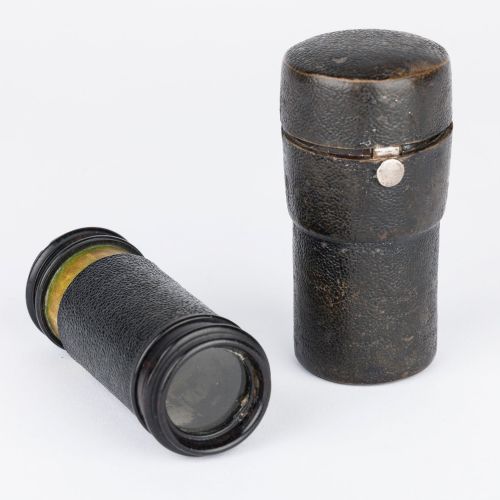


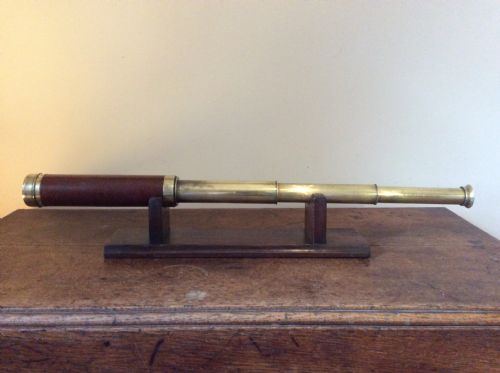


Brass Marine Spyglass
These brass marine spyglass pieces offer portable magnification built for navigation, combining polished metal with practical leather and wood to bring distant horizons sharply into view.
Brass Marine Spyglass
A brass marine spyglass is a compact, extendable optical instrument designed for navigation and spotting at sea. These devices range from pocket versions to longer multi-draw instruments intended for officers on deck.
The selections available here span several distinct periods, featuring Georgian, Regency, Victorian, and Edwardian examples. Collectors frequently encounter instruments with multiple draws that collapse down for easy stowage.
Makers such as Ross of London, Richardson, and Broadhurst Clarkson & Co appear across the inventory, alongside pieces produced after Dollond. These makers represent the core of English optical manufacturing during the nineteenth and early twentieth centuries.
Materials and construction
Brass forms the primary structural material for these tubes, offering durability against the maritime environment while taking a fine polish. Makers combined this metal with glass lenses to achieve clear terrestrial and celestial magnification.
Leather, oak, mahogany, and walnut appear as jacketing or supplementary components on the barrel sections. These organic materials provided a secure, non-slip grip for cold or wet hands on board a vessel.
Assessing quality and finish
Quality in these instruments rests on the precision of the draw-tubes and the clarity of the optical glass. Smooth extension and secure locking between sections distinguish superior workshop output.
The refinement of signed signatures on the brass barrel and the inclusion of protective wooden or leather outer bodies indicate higher-status commissions intended for senior officers.
Ross of London·Richardson·Broadhurst Clarkson & Co·Dollond
The Brass Marine Spyglass Glossary
- Draw
- A sliding tubular section of a telescope that extends to bring the optical system into focus. Multiple draws allow a long instrument to collapse into a highly portable length.
- Terrestrial telescope
- An optical instrument configured to erect the image so that it appears right side up for land and sea viewing. This design utilises additional lenses within the draw-tubes.
- Day or night
- A specific lens configuration designed to gather extra light in low visibility conditions at sea. These objectives feature wider apertures for twilight or dawn watches.
- Officer of the watch
- A descriptive term for a telescope specification carried by naval personnel responsible for the vessel. Such instruments prioritized reliable magnification and sturdy brass construction.
Brass Marine Spyglass: Frequently Asked Questions
How do I focus a multi-draw spyglass?
Extend all the brass draw-tubes fully until the instrument reaches its maximum length. Adjust the smallest eyepiece tube nearest your eye inward or outward until the distant subject appears sharp.
Keep the remaining larger sections locked firmly in place during this final eyepiece adjustment to maintain steady alignment of the internal lenses.
Can I use these antiques for modern viewing?
These historical instruments function optically, though their magnification and field of view differ significantly from modern binoculars. They suit casual daytime spotting of distant horizons.
Handle the delicate draw-tubes with care to avoid misaligning the historic glass elements inside the brass barrels.
What does day or night mean on a telescope?
Day or night markings indicate an objective lens arrangement built to gather extra light during poor visibility. Navigators relied on this feature during dawn, dusk, or heavy weather at sea.
Such tubes often feature slightly larger bell housings at the objective end to accommodate the enhanced light-gathering optics.
How do I tell a Georgian spyglass from a Victorian one?
Georgian and Regency examples often feature warm timber barrels like walnut or mahogany alongside simpler brass components. Victorian pieces frequently introduce leather grips, hexagonal body shapes, and more complex multi-draw configurations.
Maker signatures and style conventions stamped onto the brass draw-tubes also provide clear chronological markers for attribution.