


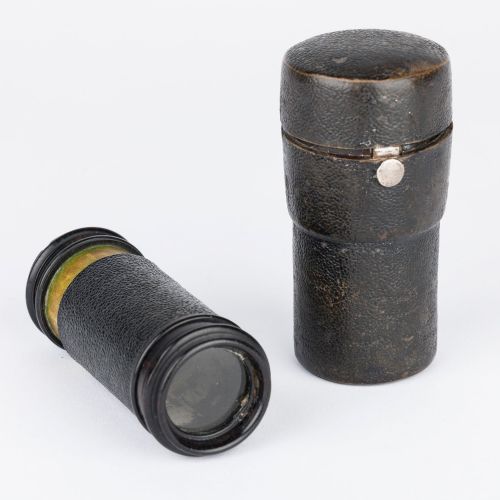


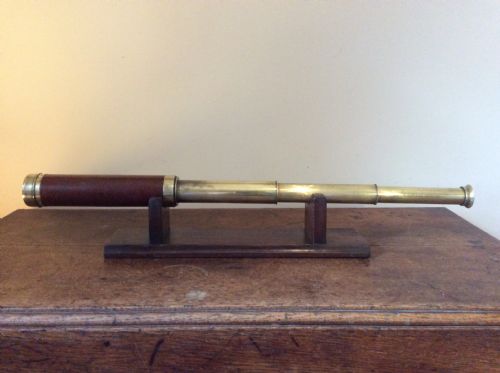


Brass and Leather Telescope
A brass and leather telescope is an optical instrument that offers magnification and portability, sought after for both practical use and historical charm.
Brass and Leather Telescope
When searching for a brass and leather telescope, buyers encounter optical instruments spanning periods from the eighteenth century through the Edwardian era. These pieces include pocket spyglasses, marine telescopes, and cased terrestrial instruments.
The most common examples on this page are Victorian designs featuring single or multiple draws, often constructed in England by makers such as Ross of London or Newton & Co. Forms range from compact pocket devices to larger officer of the watch models intended for naval or military campaign use.
How They Were Made
Makers utilised turned brass for the barrels and draw tubes, pairing the metal with stitched leather coverings to provide a secure grip and protection for the body. Glass lenses supplied the magnification, while internal tube spacers occasionally incorporated cardboard or wood components.
Engraved maker details and focal markings frequently appear on the final draw tube near the eyepiece, applied by hand to identify the workshop and origin.
Brass and Leather Telescope Retail Price Guide 2026
Typical asking prices for brass and leather telescope among the pieces listed under this phrase on Sellingantiques today, from the lower quarter to the upper quarter. They describe what is for sale here now, not the wider market.
Early nineteenth-century officers often relied on these extending tubes to spot approaching vessels while nursing a cup of lukewarm grog.
What Varies in Quality
The distinction between standard instruments and superior examples rests upon the precision of the brass turning and the clarity of the optical glass. Finer pieces maintain smooth movement across multiple draws without looseness in the barrel alignment.
Signatures from notable London or regional makers elevate an instrument, as do surviving original leather cases and dedicated wooden desk stands that accompany the telescope.
Ross of London·Newton and Co·Broadhurst Clarkson and Co·Cary London·L Casella London·Chadburn Brothers of Sheffield·Davis of London
The Brass and Leather Telescope Glossary
- Draw
- A sliding tube section that extends from the main body of the telescope to focus the image. Most antique terrestrial telescopes feature between one and six draws.
- Spyglass
- A small, portable historic telescope typically used for terrestrial viewing rather than astronomical observation. These compact instruments often fit into pockets or small leather cases.
- Terrestrial telescope
- An optical instrument designed for viewing objects on land, incorporating erecting lenses to ensure the image appears right side up. They contrast with astronomical telescopes which show inverted images.
- Officer of the watch telescope
- A robust marine telescope utilised by naval officers for signaling and navigation during watch duties at sea. These pieces often feature protective leather body grips to withstand maritime environments.
Brass and Leather Telescope: Frequently Asked Questions
How do I use an antique telescope?
Extend all the draw tubes fully until they lock into position, holding the instrument steady against a firm surface.
Adjust the final eyepiece draw slightly inward or outward until the distant terrestrial subject comes into sharp focus.
Can I use these for stargazing?
These instruments are primarily terrestrial models designed with internal erecting lenses for viewing objects on land.
While bright planets or the moon may be visible, they lack the high light gathering power required for serious astronomy.
How do I date a telescope?
Examine the style of the lettering engraved on the brass draw tube, along with the address of the maker if signed.
The number of draws and the presence of stitched leather or mahogany bodies also help align the piece with Georgian, Victorian, or Edwardian manufacturing periods.
How should I clean the brass?
Dust the brass and leather gently with a soft, dry microfiber cloth to remove surface grime.
Avoid chemical polishes or abrasive cleaners, as these can strip the aged patina and damage the historic leather coverings.