



Victorian Brass Log Dogs
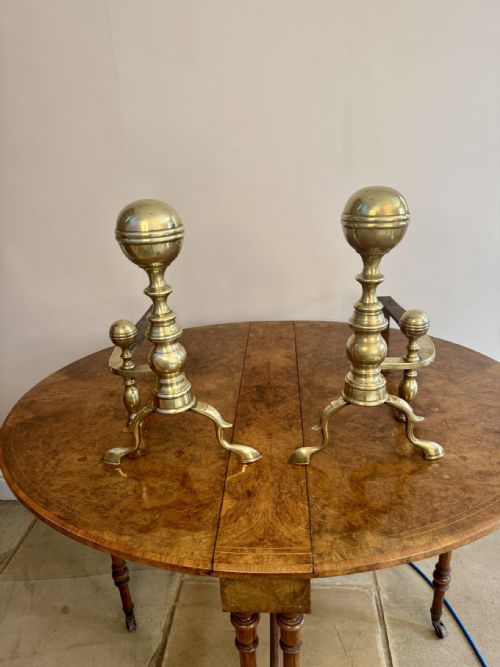
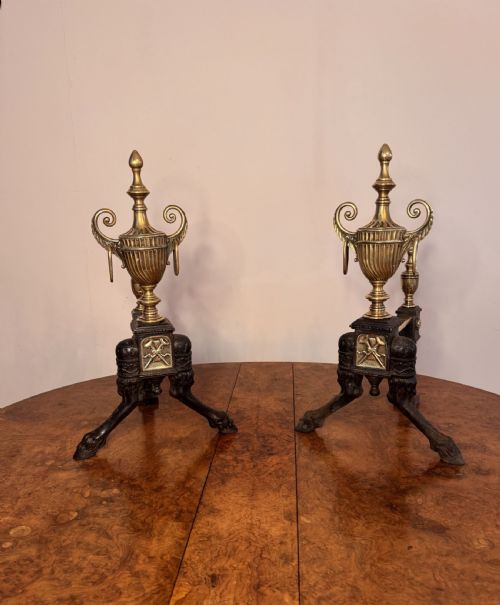
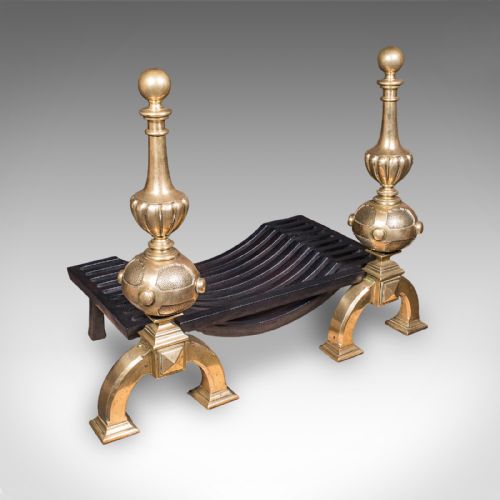
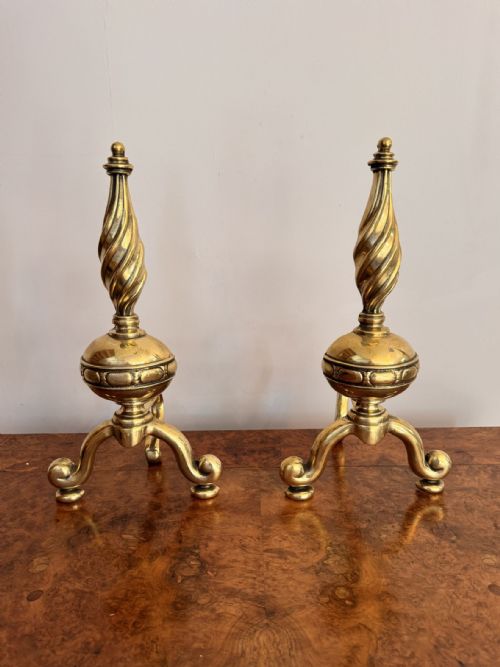
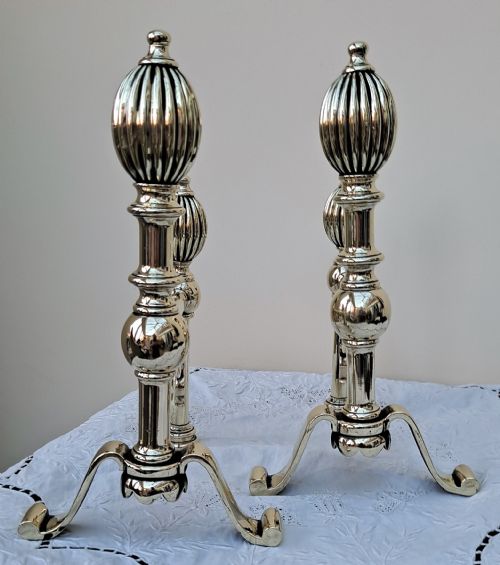
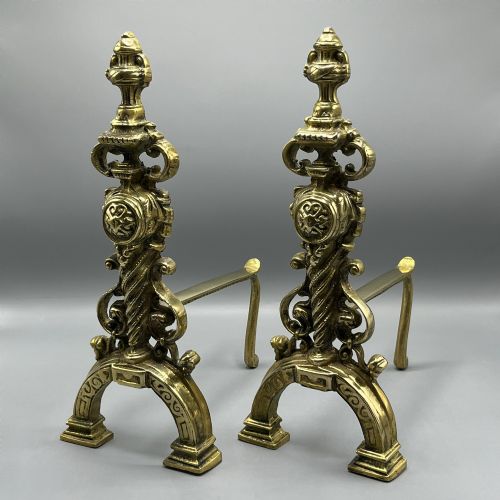
Victorian brass log dogs anchor a hearth with functional metalwork designed to support firewood in style.
Victorian Brass Log Dogs
These pieces are hearth accessories designed to hold wood above the hearth floor for better airflow, commonly known in listings as fire dogs, firedogs, or andirons. When searching for Victorian brass log dogs, you encounter pairs of sturdy metal supports placed at either side of a fireplace grate or basket. Most examples date from the nineteenth century, spanning periods from the 1860s through to 1900.
The forms vary from simple utilitarian shapes to ornate designs incorporating fire tool rests or matching fire irons. Alongside straight Victorian pieces, you find items reflecting earlier aesthetics, including 17th century revival styles, Regency influences, and Arts and Crafts designs associated with Christopher Dresser. They form part of a broader category of fireplace accessories that also includes fire baskets and copper hearth furniture.
Origins span English workshops of the nineteenth century, constructed to handle both open coal or wood fires and decorative hearth displays. While many feature solid brass fronts, others combine brass elements with cast iron, wrought iron, copper, or steel components. Buyers select these pairs to restore period fireplaces or to add traditional metalwork texture to a living space.
Materials and construction
Makers utilised casting techniques to shape the decorative brass fronts, creating ornate neoclassical, gothic revival, or classical motifs. Cast brass and solid brass components provide the polished golden sheen visible on the front-facing standards, while iron or steel forms the heavy rear billets that bear the weight of burning wood.
Wrought iron and cast iron appear extensively in the structural shafts and log-supporting bars, ensuring the metal withstands intense hearth temperatures. Copper surfaces occasionally accent the brass bodies, adding tonal variation through mixed metal construction standard in nineteenth-century metalwork.
Victorian Brass Log Dogs Retail Price Guide 2026
Typical asking prices for victorian brass log dogs among the pieces listed under this phrase on Sellingantiques today, from the lower quarter to the upper quarter. They describe what is for sale here now, not the wider market.
Materials recorded across the inventory include solid brass, cast brass, cast iron, wrought iron, copper, and steel.
Differentiating quality in hearth furniture
The distinction between standard production and top-tier pieces lies in the crispness of the casting and the weight of the metal. Superior pairs display deeply chased surface detail, balanced proportions, and substantial solid brass construction rather than thin plated shells.
Integration of design influences also marks the upper range, such as distinct Arts and Crafts styling or faithful neoclassical revival detailing. Heavy cast iron internal bars paired with robust brass mounts indicate utilitarian longevity combined with decorative ambition.
The Victorian Brass Log Dogs Glossary
- Andiron
- A horizontal metal bar raised on legs, with a vertical pillar at the front, used to support logs in an open fireplace. Also referred to as a fire dog or firedog.
- Fire basket
- A metal grate designed to hold coal or wood within a fireplace opening, often flanked by integrated andirons.
- Log dog
- An alternative term for an andiron or fire dog used to keep firewood elevated off the hearth floor.
- Neoclassical
- A style drawing on classical antiquity, frequently seen in Victorian brasswork featuring urn, column, and leaf motifs.
- Wrought iron
- Iron that has been heated and shaped with tools by a blacksmith, providing tough structural support behind decorative brass fronts.
Victorian Brass Log Dogs: Frequently Asked Questions
What are Victorian brass log dogs?
They are matched pairs of metal supports placed inside a fireplace to hold logs above the hearth floor. Their primary function is to allow air to circulate beneath the burning wood for a better fire.
Beyond utility, these pieces served a decorative purpose in nineteenth-century rooms. The polished brass fronts reflect firelight and complement other hearth furnishings like fenders and tool sets.
How do I use them in a modern fireplace?
These pieces sit inside the fireplace opening to cradle firewood during a burn. Ensure the iron or steel rear bars match the depth of your hearth.
Many people also place them in non-working fireplaces purely for decorative effect. They fill an empty hearth with nineteenth-century character and metallic texture.
How do I tell different styles apart?
Victorian pieces encompass various revival movements that reflect the design tastes of the nineteenth century. Gothic revival versions feature pointed arches and ecclesiastical motifs, while neoclassical examples display urns and fluted columns.
Arts and Crafts pieces show cleaner, more geometric lines inspired by designers like Christopher Dresser. Looking at the decorative motifs on the front standard reveals which historical period inspired the maker.
What metals are used in these pieces?
The front-facing pillars utilise brass, solid brass, or cast brass to provide a bright, reflective appearance. Copper elements occasionally appear alongside the brass for colour contrast.
The structural bars that actually hold the logs typically consist of cast iron, wrought iron, or steel. This combination places decorative metal at the front and heat-resistant iron where the wood rests.