
Victorian Brass Irons
When you search for victorian brass irons, you are looking at functional hearth tools designed to tend coal fires during the nineteenth century.
Victorian Brass Irons
Victorian brass irons appear primarily as matched companion sets designed for domestic fireplaces, combining pokers, shovels, and tongs. These hearth accessories date across the nineteenth century, with many examples originating from the mid-Victorian period around 1860.
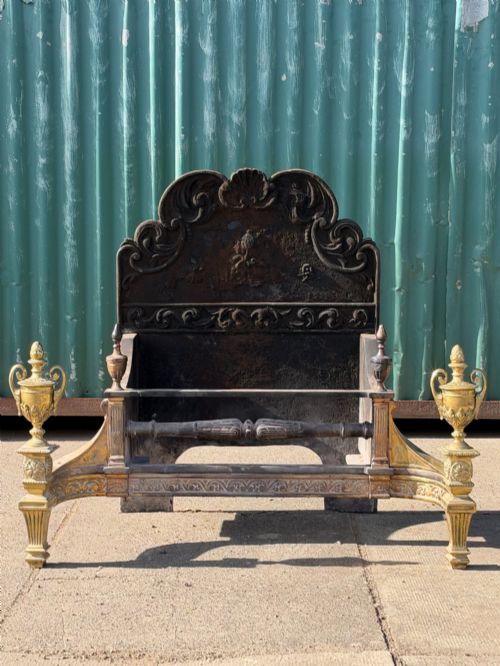
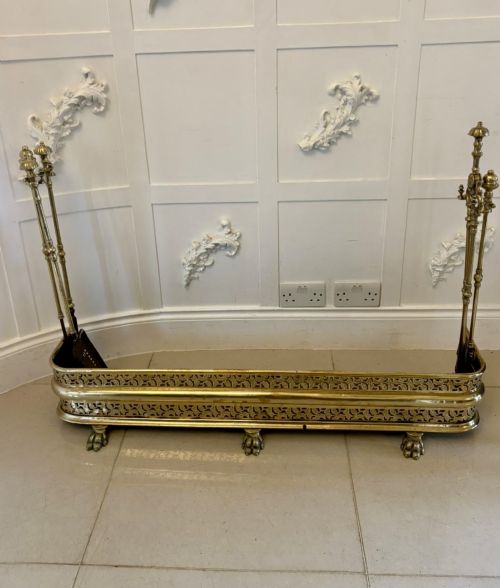
Beyond standard hearth tools, the category encompasses related fire furniture such as fenders, andirons, and grates incorporating brass elements. The selection bridges utilitarian room heating and decorative metalwork typical of nineteenth-century domestic interiors.
How they were made
Maker workshops combined heavy cast or wrought iron shafts for structural strength with bright brass for handles, finials, and decorative mounts. Steel components also appear in tool shafts, offering resilience during frequent use at the hearth.
Handle attachments often involved threaded joins or solid riveting to withstand high temperatures and regular handling. Surface decoration relied on turning on lathes, cast detailing, and pierced brass work rather than applied finishes.
Listings show these hearth tools spanning the early Victorian period through the late nineteenth century in brass and iron.
What varies in quality
Quality rests in the weight of the metal and the integrity of the original joins between handle and shaft. Heavier gauge brass and solid iron cores separate sturdy utilitarian sets from lighter decorative replacements.
The sophistication of the handle castings and the presence of matching companion pieces define the higher tier of survival. Sets retaining their original pierced fenders or coordinated andirons show greater integrity than assembled groups.
The Victorian Brass Irons Glossary
- Companion set
- A matched group of fireplace tools, usually including a poker, tongs, and shovel, designed to sit together on the hearth. These sets were often displayed on a dedicated stand or resting against a fender.
- Andirons
- Heavy metal supports placed on either side of a fireplace to elevate logs for better air circulation. They frequently incorporate decorative brass finials that match contemporary fire irons.
- Fender
- A low metal guard placed around the hearth edge to contain stray embers and ash. Victorian examples often incorporate pierced brass galleries and matching tool rests.
Victorian Brass Irons: Frequently Asked Questions
Were these irons used daily?
These tools were essential for managing coal or wood fires that heated Victorian homes. Daily use meant shafts and handles experienced regular thermal stress.
Heavier sets survived this active service better, while lighter decorative pieces saw less demanding use in formal drawing rooms.
How do I match irons to a fender?
Matching relies on observing the brass tone, casting style, and period details such as spiral twists or ball finials. Fenders and companion sets were often purchased together from ironmongers.
Look for consistent manufacturing traits like similar handle proportions and matching metal weight across the pieces.
What is the difference between brass and steel irons?
Brass irons use the bright alloy primarily for decorative handles and visible mounts to catch the firelight. Steel or iron provides the rigid core needed for the working shafts and tool tips.
Many surviving sets combine both metals to balance aesthetic appeal with practical strength.
How should I clean nineteenth-century brass?
Historic brass benefits from gentle dusting and minimal intervention to preserve the natural warm patina accumulated over decades. Aggressive polishing removes surface history and softens sharp casting details.
Light cleaning with a soft cloth maintains the metal without stripping its age.