


Period Hearth Accessories
These period hearth accessories bring warmth and character to a room, offering functional metalwork and baskets shaped by centuries of fireside use.
Period Hearth Accessories
Period hearth accessories encompass the functional ironmongery, brassware, and fire baskets that served domestic fireplaces from the sixteenth century through the Arts and Crafts era. These pieces range from heavy cast iron firebacks and fire dogs to delicate steel fire irons and beaten copper fenders.
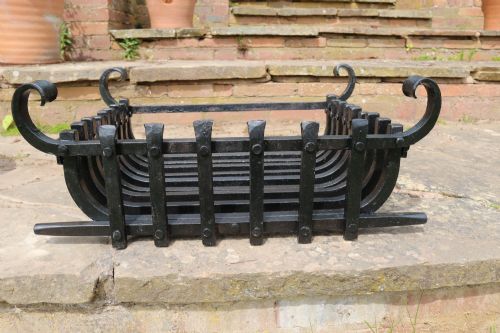
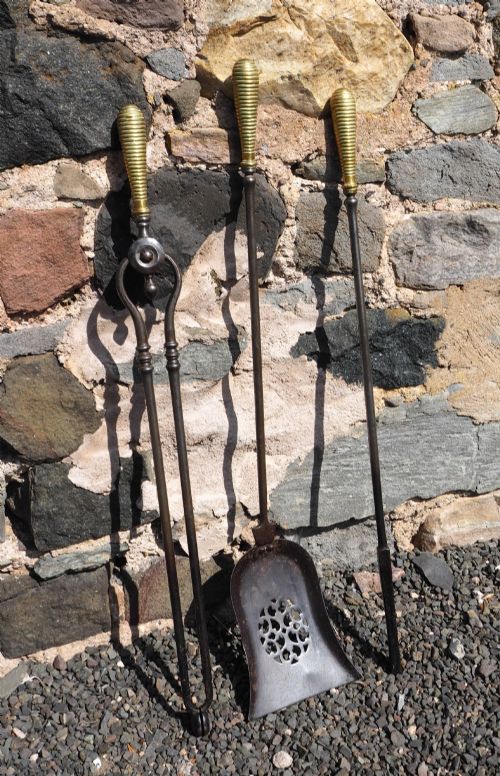
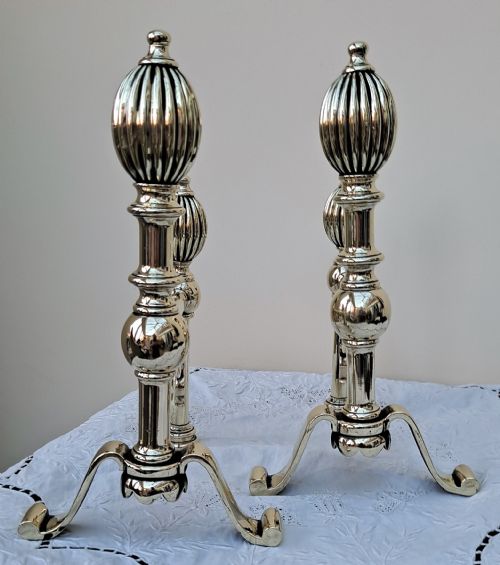
The selection on this page leans heavily towards nineteenth century brass companion sets, eighteenth century steel fire irons, and robust Georgian and Victorian fire baskets. Buyers encounter everything from utilitarian coal scuttles to ornate Baroque style andirons and decorative fireguards.
Forms are dictated entirely by utility around the grate, uniting shovels, tongs, pokers, and fenders into a cohesive functional group. Whether sourced in polished steel, wrought iron, or cast brass, each item reflects the specific demands of domestic coal and wood fires.
Materials and Construction
The pieces rely primarily on metals forged, cast, or beaten by hand or in early foundries. Cast iron provides the dense, durable substance required for heavy firebacks and grates, withstanding intense thermal stress without warping.
Brass and copper offer polished decorative surfaces, often shaped into bright andirons, kettles, and fenders during the Georgian and Victorian periods. Steel and wrought iron supply the tensile strength needed for slender fire irons, pokers, and structural baskets.
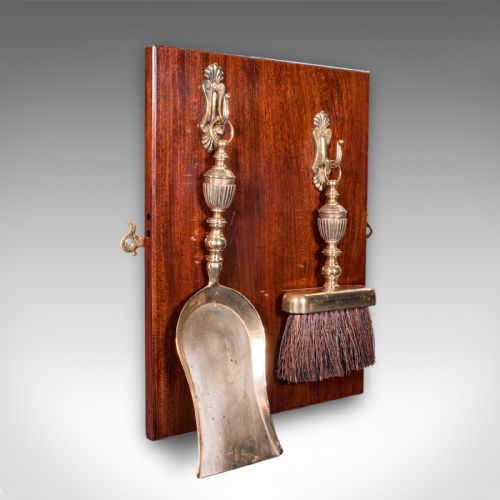
You can secure a maid's maintenance set complete with miniature tools, perfect for keeping the nineteenth century hearth in immaculate order.
Distinctions in Quality
Quality reveals itself in the weight of the metal and the crispness of the casting or hand-forging. Heavy, substantial firebacks and thick gauge brass fenders show a structural integrity missing in lighter, purely decorative reproductions.
Execution of detail separates ordinary tools from exceptional sets, seen in the clean turnings of brass handles, the precise matching of companion tools, and the depth of relief on cast iron figures and fire dogs.
The Period Hearth Accessories Glossary
- Andiron
- A metal support for logs in a fireplace, often featuring decorative front pillars or fire dogs. They sit in pairs to keep wood elevated for better airflow.
- Fireback
- A heavy cast iron plate placed against the back wall of a fireplace. It radiates heat back into the room and protects the masonry from direct flames.
- Fire Fender
- A low metal guard placed on the hearth in front of the fireplace. It contains ash and prevents stray embers from rolling onto the floorboards.
- Companion Set
- A matching group of fireplace tools, typically comprising a shovel, tongs, and poker. These are usually suspended from a shared stand or resting place.
- Fire Basket
- An open metal grate designed to hold coal or wood within the fireplace opening. They combine structural iron frames with decorative cast elements.
Period Hearth Accessories: Frequently Asked Questions
What is a fireback used for?
A fireback sits at the rear of the fireplace hearth to absorb and radiate heat outward into the room. It also serves to protect the brickwork behind the fire from intense, direct heat.
Heavier examples feature cast designs such as coats of arms or historical scenes, adding a decorative element when the grate is empty during warmer months.
How do I care for antique brass hearth items?
Polished brass and copper require gentle cleaning to maintain their lustre without stripping the underlying metal or erasing age-related patination. Avoid harsh abrasives that scratch the surface.
Many collectors prefer to leave a mellow, darkened patina on older pieces rather than polishing them to a bright, modern shine.
Are antique fire irons still usable?
Most antique steel and brass fire irons remain entirely functional for tending a traditional open fire. Their robust construction from the Georgian and Victorian periods suits regular domestic use.
Buyers should verify that handles are secure and that pokers and tongs retain their structural rigidity before putting them to work.
What is the difference between andirons and a fire grate?
Andirons are standalone metal supports used primarily to hold logs above the hearth floor for wood-burning fires. They focus on the side supports and decorative front standards.
A fire grate incorporates a basket or iron frame designed specifically to contain coal, turf, or wood within a defined container inside the fireplace opening.