
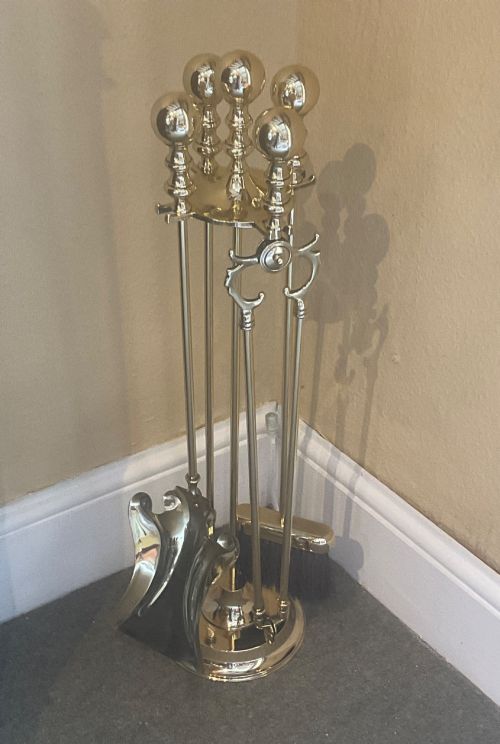


Polished Brass Companion
A polished brass companion is a hearth set that brings bright metalwork and practical fire tending together by the fireplace.
Polished Brass Companion
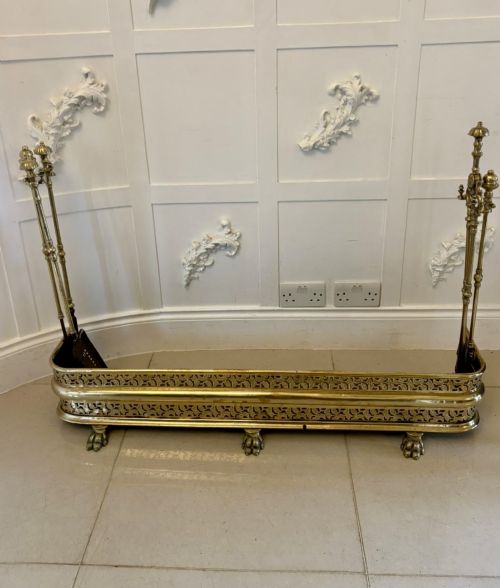
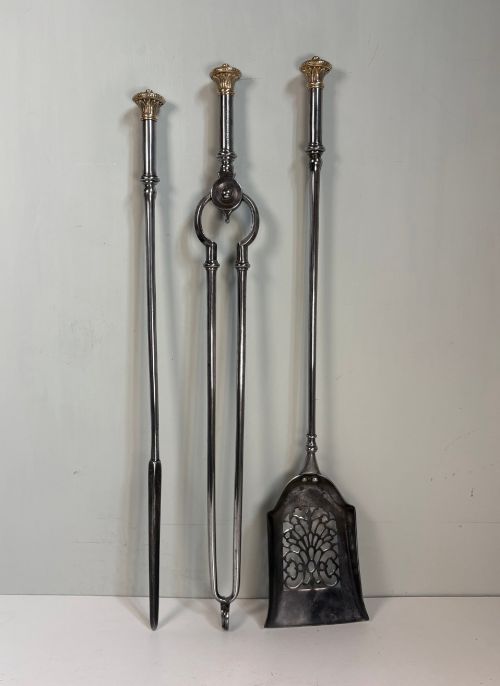
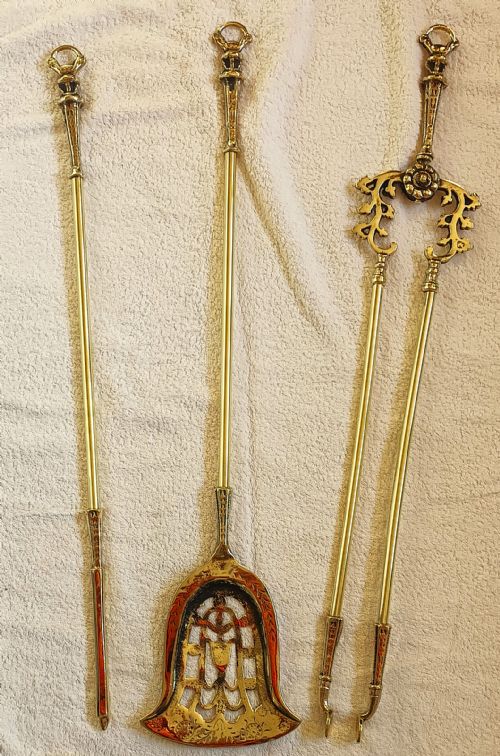
A polished brass companion set consists of grouped fire irons designed to tend a domestic hearth while offering a bright decorative finish to the room. When you search for a polished brass companion, you encounter groupings of pokers, shovels, and tongs, frequently accompanied by stands, fenders, or fire dogs.
The pieces on this page stem predominantly from the Victorian period and the nineteenth century, alongside examples from the eighteenth and early twentieth centuries. Traditional English workshop traditions shape these assemblies, uniting functional ironwork with polished brass surfaces.
Standard forms include triple companion sets, sets of three fire irons, and broader hearth suites featuring copper, steel, and cast iron elements. These configurations serve both the operational needs of coal or wood fires and the aesthetic standards of period interiors.
Materials and construction methods
Makers constructed these hearth tools using combinations of brass, steel, and iron, frequently pairing resilient steel shafts with polished brass handles and mounts. Copper also appears in associated log bins and vessels, while cast brass and cast iron provide weight and structural stability to dogs and stands.
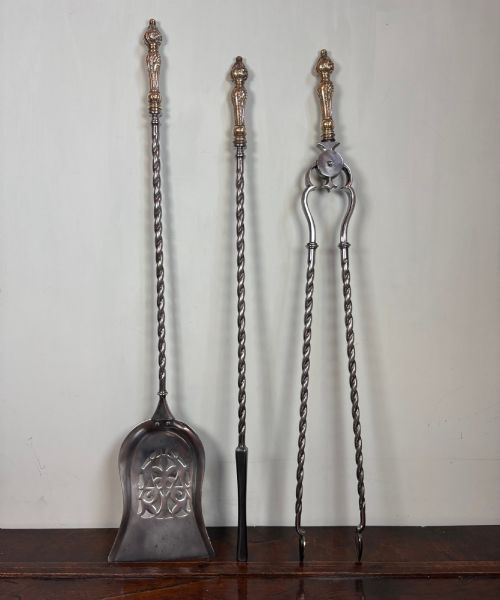
Craftsmen utilised techniques such as rope twist turning, starburst detailing, and claw and ball designs to shape handles and terminals. Metalworking methods ensured that functional elements like shovels and pokers could withstand regular heat while maintaining decorative polished surfaces.
Listings feature Victorian, Regency, and Georgian periods, utilising brass, steel, iron, and copper across traditional English fireplace accessories.
Distinctions in craftsmanship and design
Quality in these hearth tools rests upon the crispness of decorative detailing, such as rope twist handles, ring handles, and cast motifs like starbursts or claw and ball feet. Heavier metal gauge and substantial construction separate superior sets from standard utility items.
Cohesion within the set dictates overall merit, where matching brass finishes and integrated companion stands or fire dogs demonstrate a unified original design rather than a later assembled grouping.
The Polished Brass Companion Glossary
- Companion set
- A coordinated group of fireplace tools, usually including a poker, tongs, and shovel, often arranged on a stand.
- Fire irons
- The individual poker, shovel, and tongs used to manage fuel and ash in an open fire.
- Fire dogs
- Horizontal iron supports used to hold logs above the hearth floor, often paired with matching fire tools.
- Fender
- A low metal guard placed around the hearth to contain ash and embers.
- Footman
- A metal stand placed near the fire to keep plates or kettles warm.
Polished Brass Companion: Frequently Asked Questions
What tools come in a companion set?
A standard set comprises a poker for adjusting logs, a shovel for clearing ash, and tongs for handling fuel safely.
Many configurations also include a dedicated stand or pairing with fire dogs and fenders to complete the hearth arrangement.
How do I date an antique companion set?
Dating relies on stylistic markers such as Regency reeding, Victorian starburst handles, or Edwardian proportions, alongside construction techniques.
Examining the metal composition, such as the use of hand-forged steel paired with cast brass, helps establish the period of manufacture.
Are these tools suitable for daily use?
Many sets are robustly made from steel and brass, designed specifically for tending open fires in period or modern hearths.
Checking the weight and joint construction ensures the tools will handle regular firing tasks without compromising their decorative appeal.
How do I care for polished brass?
Polished brass benefits from gentle dusting and occasional cleaning with a non-abrasive metal polish to maintain its reflective surface.
Avoiding harsh chemical cleaners preserves the aged patina developed over decades of hearth placement.