

Victorian Brass Hearth Curb
A victorian brass hearth curb brings warmth and architectural weight to a chimney piece, framing the hearth with polished metal and pierced detail.
Victorian Brass Hearth Curb
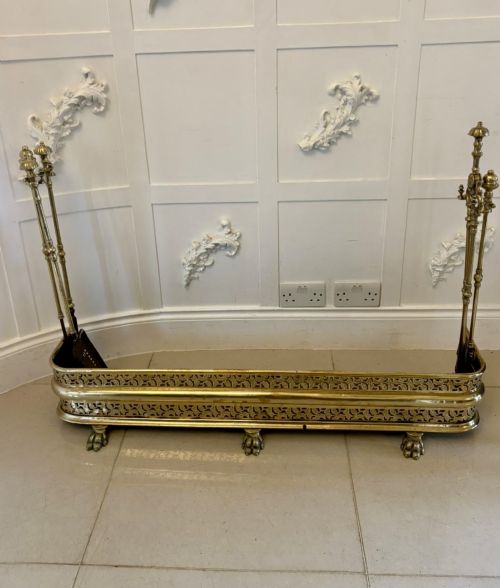
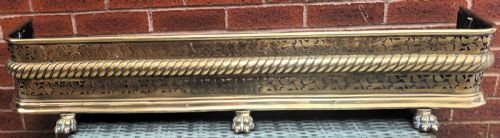
A victorian brass hearth curb sits on the floor directly in front of an open fireplace to contain embers and protect the room. The selection here spans the nineteenth century and into the edwardian era, taking the form of traditional fireplace fenders, adjustable kerbs, and club fenders.
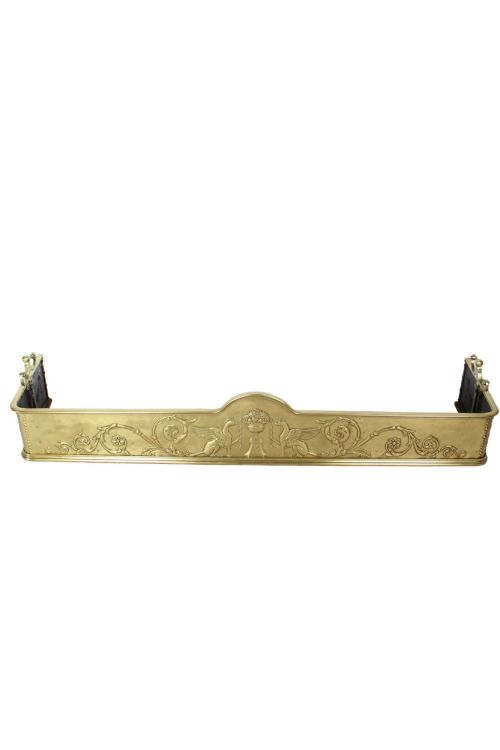
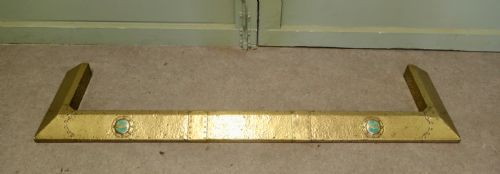
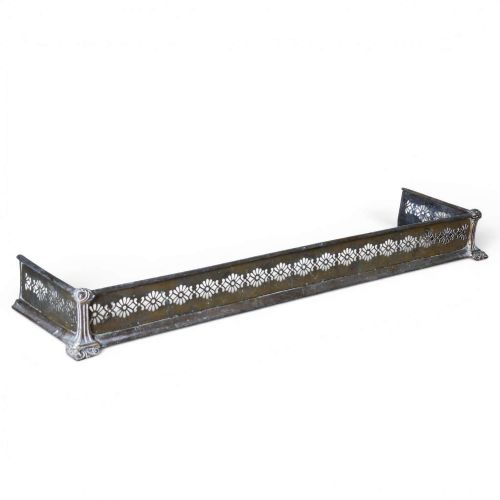
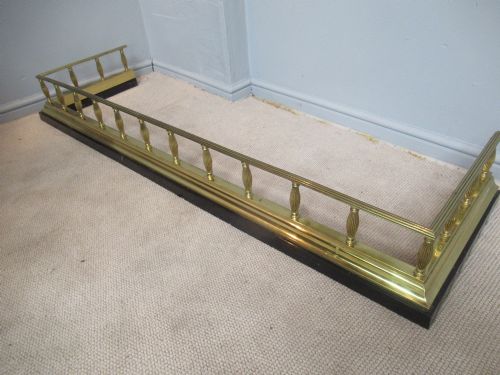
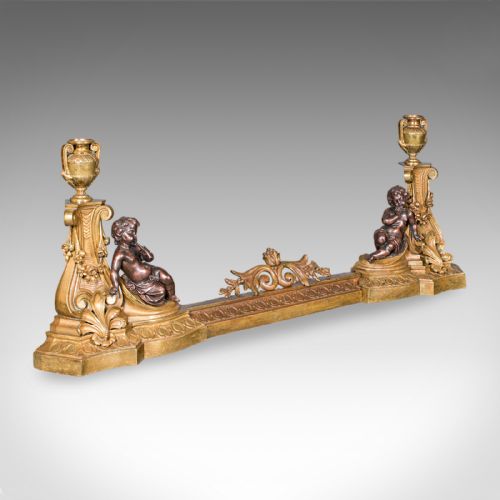
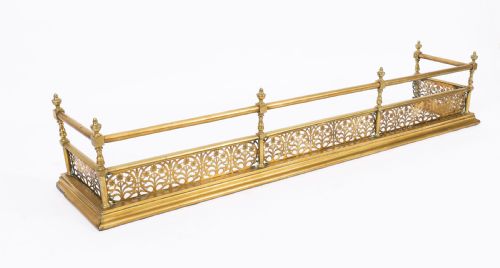
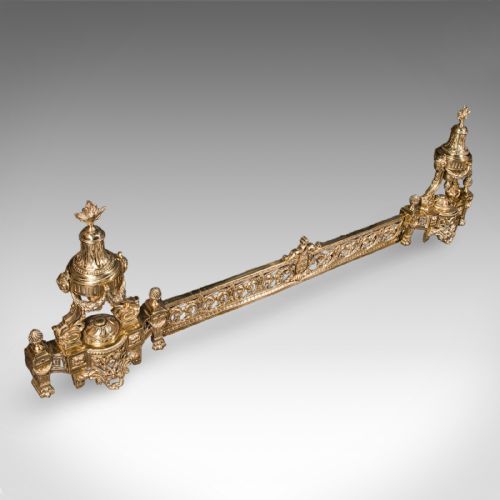
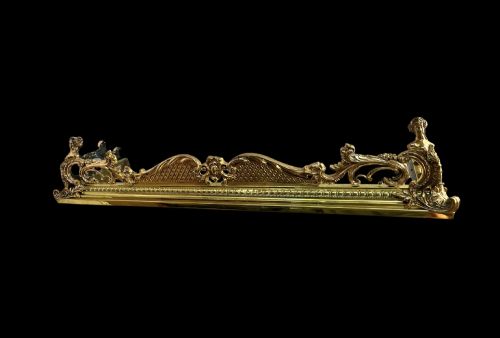
Most examples rely on bright brass or cast brass construction, though makers frequently combined iron, steel, bronze, and copper within a single piece. Pieces range from simple polished frames to ornate neoclassical designs, pierced galleries, and arts and crafts interpretations set with enamel cabochons.
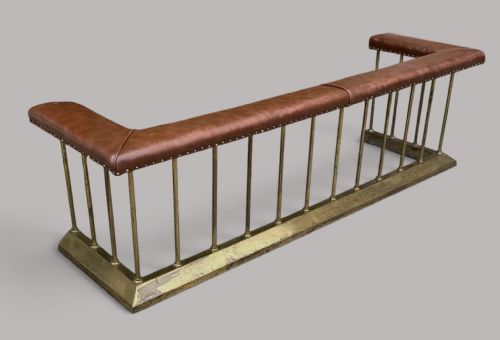
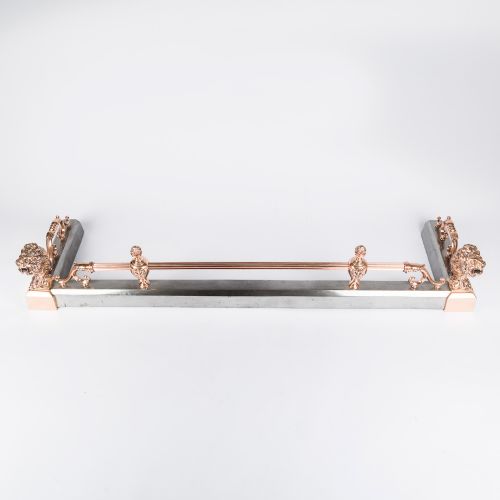
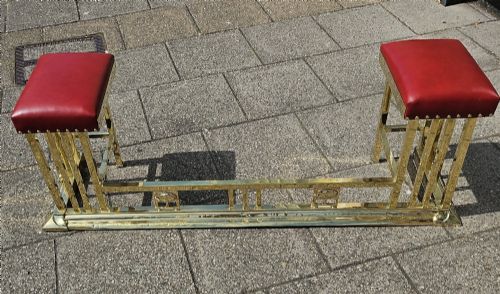
Buyers will encounter standard rigid hearth fenders alongside expanding versions designed to fit varying hearth widths. More substantial pieces incorporate leather seating pads in the style of club fenders, turning the hearth surround into a fireside bench.
How they were made
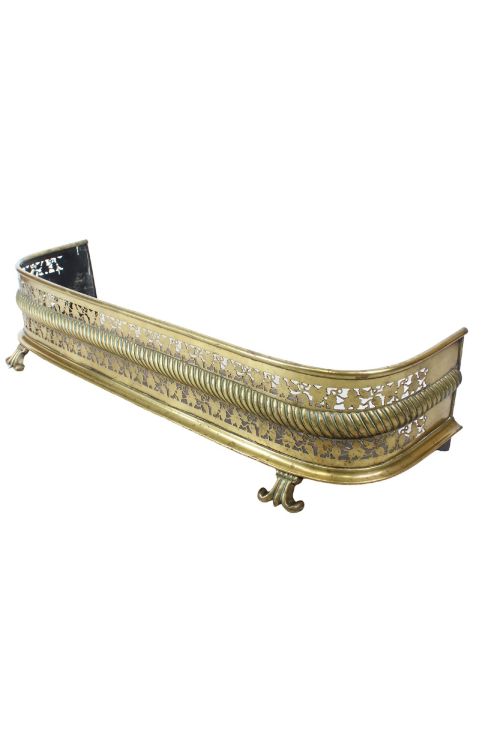
Workshops utilised heavy sheet brass, cast brass decorative elements, and iron or steel internal frames to ensure structural rigidity around high heat. Pierced patterns were achieved through careful hand-sawing and punch work, creating intricate grilles that allowed heat to circulate while catching stray sparks.
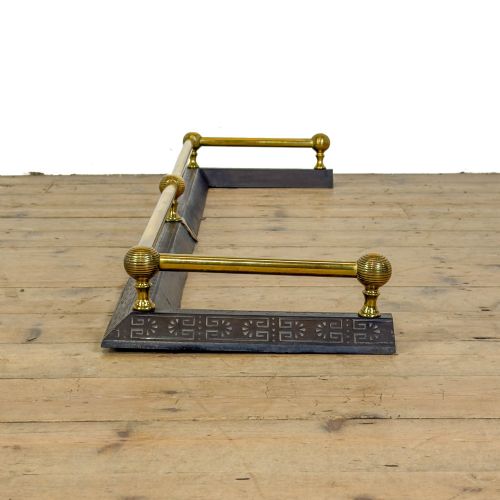
Many items combined metals, pairing polished brass mouldings with blackened cast iron bases or incorporating copper highlights and bronze mounts. Leather upholstery on club fenders was secured using traditional brass tacks over padded frames designed for fireside use.
Listings feature periods spanning the Victorian era, the nineteenth century, 1890, 1860, Edwardian, 1880, 1900, and 1870.
What varies in quality
Quality rests in the weight of the metal gauge and the crispness of the casting and pierced work. Finer specimens display deeply defined neoclassical or arts and crafts motifs without the softening that comes from worn moulds.
The integrity of the structural joints and the retention of original fittings, such as matching fire irons or authentic leather upholstery, separate standard utilitarian pieces from exceptional examples.
The Victorian Brass Hearth Curb Glossary
- Club fender
- A low fireside fender featuring upholstered leather seats along the top rails. This form allows people to sit close to the hearth.
- Pierced brass
- Sheet metal cut through with decorative fretwork patterns. This technique lightens the visual mass of the fender while remaining functional.
- Fire kerb
- An alternative term for a hearth curb or fender. It defines the low barrier retaining coal and ash.
- Cabochon
- A polished, unfaceted stone or coloured enamel inset. Arts and crafts examples frequently employ these decorative bosses.
- Neoclassical
- A style drawing on classical Greek and Roman motifs. These fenders feature formal symmetry, urns, and husks.
Victorian Brass Hearth Curb: Frequently Asked Questions
How do I measure for a fender?
Measure the width and depth of the hearth space where the curb will rest, accounting for any projecting hearth stones or mouldings.
Adjustable models offer flexibility if your fireplace opening falls between standard sizes.
Can I use a club fender for seating?
Club fenders with leather upholstery were specifically constructed to support sitting by the fire.
Check the internal frame and leather condition to ensure the structure remains solid before regular use.
How do I clean brass fenders?
Dust regularly with a soft cloth and apply a appropriate brass cleaner sparingly if you wish to maintain a bright finish.
Many collectors prefer to leave an aged patina intact rather than polishing the metal to a high shine.
What is the difference between a fender and a curb?
The terms are generally used interchangeably to describe the protective metal barrier placed around a fireplace hearth.
Some regional terminology prefers kerb or curb for low stone or metal retaining frames.