

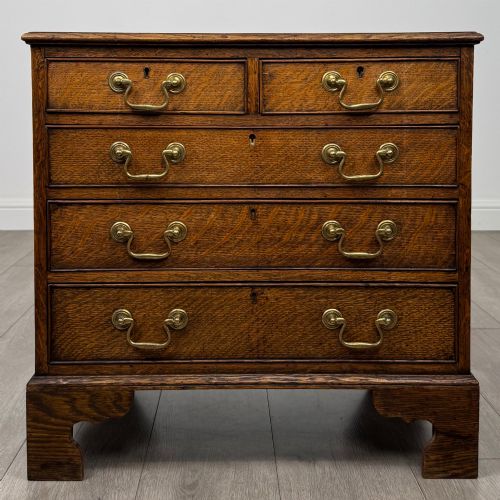
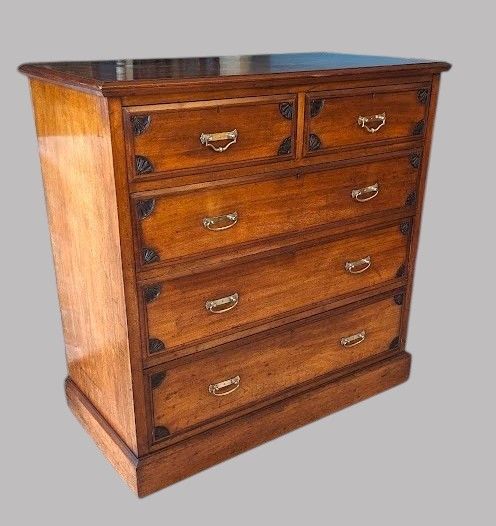
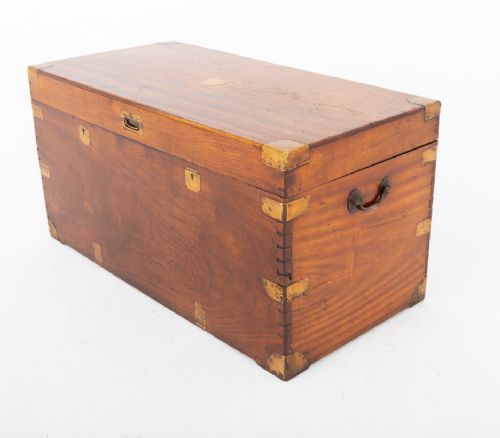
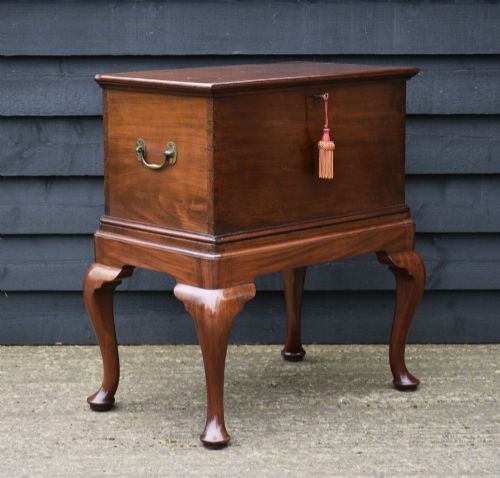
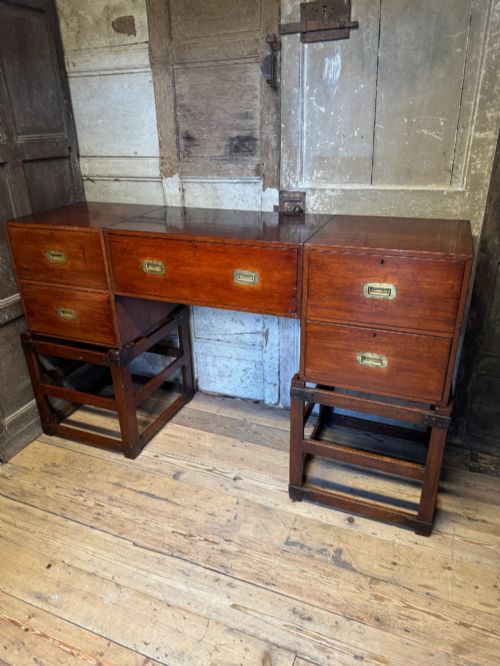
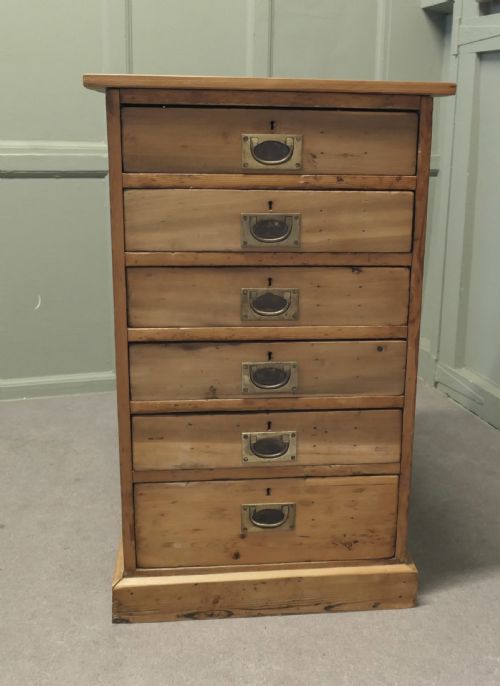
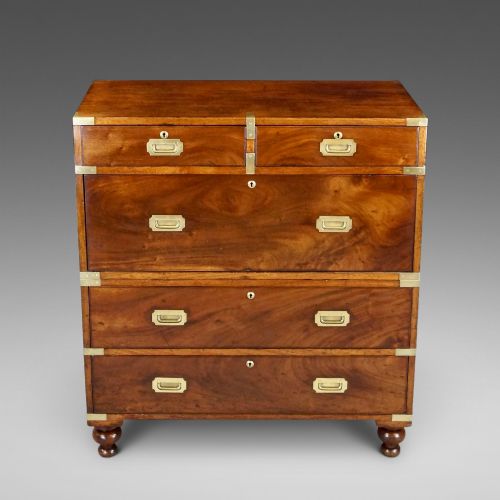
Victorian Brass Handle Chest
A victorian brass handle chest brings sturdy timber and functional metalwork together into a lasting piece of period storage.
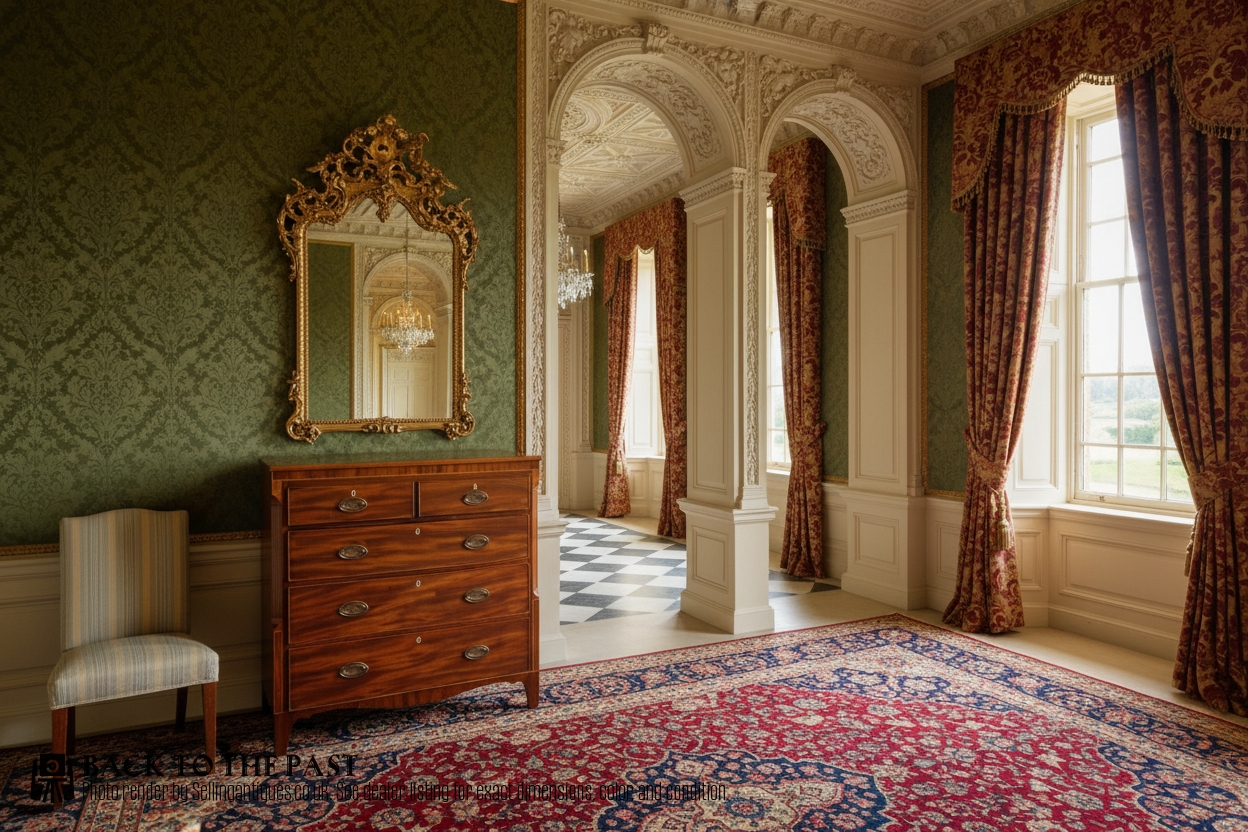
Victorian Brass Handle Chest
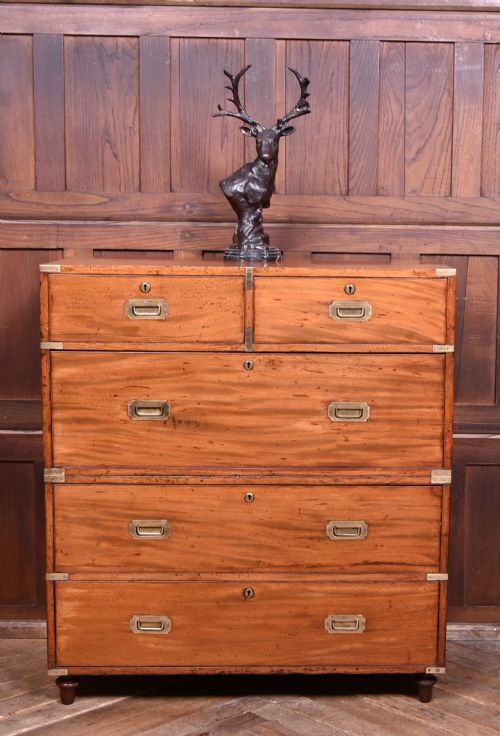
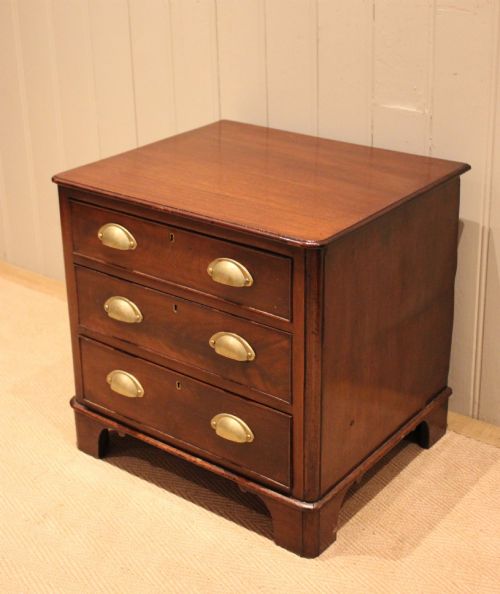
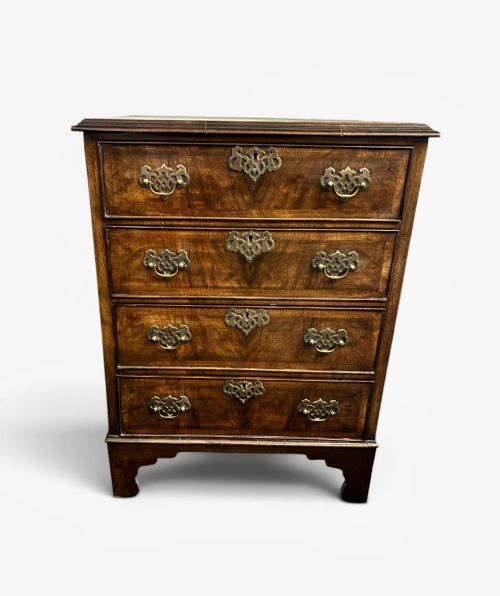
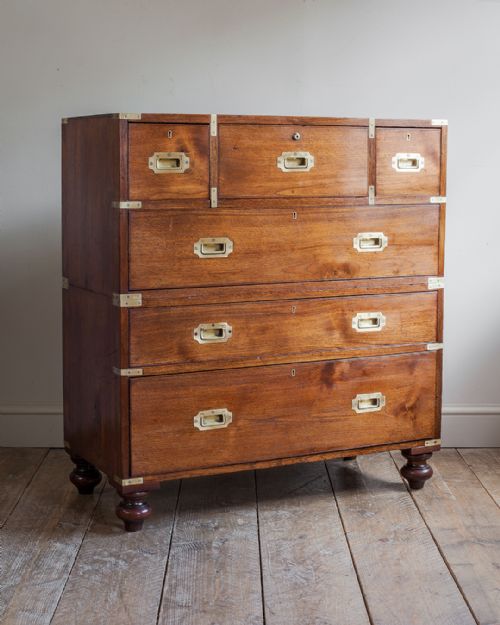
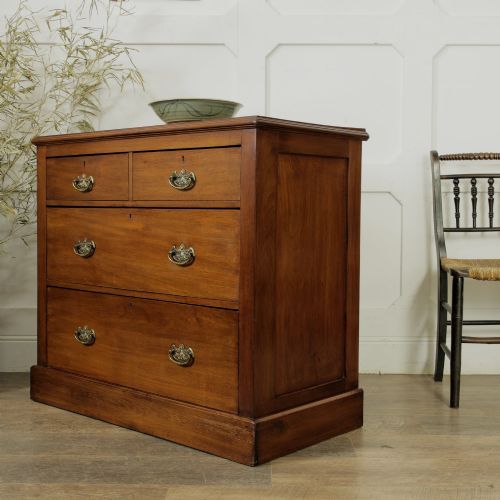
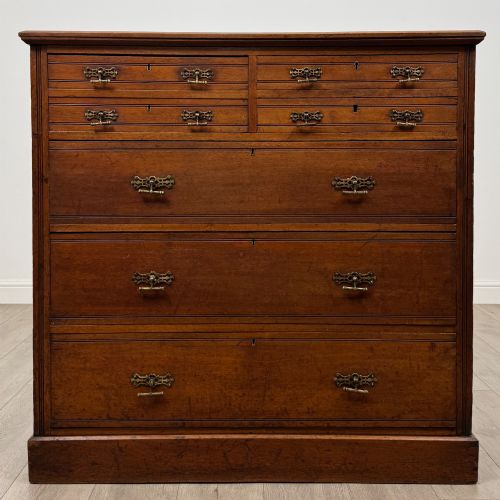
A victorian brass handle chest encompasses robust chests of drawers, two-part campaign furniture, and heavy storage trunks built during the nineteenth century. The typical piece you encounter on this page is constructed from mahogany, walnut, or pine, fitted with durable brass drop or flush handles designed for regular use. These pieces originated in domestic bedrooms, country houses, and military quarters, carrying practical compartments suited to daily storage.
The selection ranges from standard domestic mahogany chests to specialised military campaign pieces split into two sections for travel. Alongside these, you find pine filing drawers, camphor wood trunks, and walnut commodes reflecting the diverse storage needs of the period. Each variant retains the characteristic metal mounts and drawer pulls that define the grouping.
Materials and Construction
Cabinet makers relied on dense hardwoods like mahogany, walnut, teak, and camphor wood alongside softer timbers such as pine and oak to build these carcasses. Drawers were typically constructed with hand-cut dovetail joints, ensuring durable frames capable of holding heavy loads of clothing or documents over generations.
Metal components such as brass flush handles, corner brackets, and escutcheons were countersunk into the timber on travel pieces to prevent snagging during transit. Domestic versions frequently utilised brass drop handles or decorative backplates secured directly to the drawer fronts.
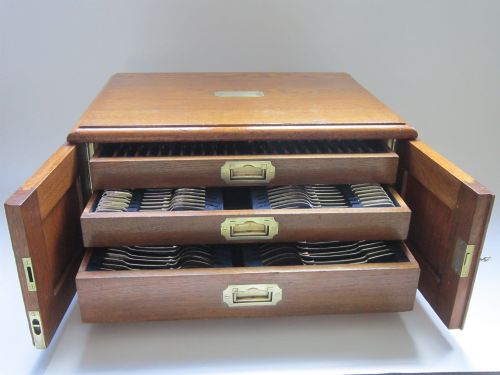
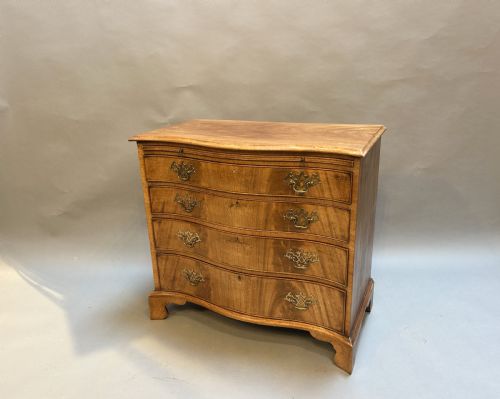
Forms include modular campaign chests, serpentine commodes, secretaire drawers, filing cabinets, and small tabletop boxes.
Evaluating the Pieces
Quality rests primarily in the selection of timber veneers and solid woods, where finely figured walnut or well-grained mahogany elevates a standard chest into a superior example. The crispness of the dovetail joinery and the original retention of matching brass hardware contribute significantly to the integrity of the piece.
Construction details such as dust boards between drawers, secondary timbers used for drawer linings, and the overall weight of the brass fittings distinguish workshop-made items from simpler utility storage.
Jas Shoolbred·S. W. Silver & Co.·Edwards and Roberts
The Victorian Brass Handle Chest Glossary
- Campaign chest
- A sectional storage chest built in two or more parts for easy transport by military officers. These pieces incorporate recessed brass handles and corner brasses.
- Dovetail
- A joint formed by interlocking wedge-shaped fingers of wood. This technique secures drawer corners together with high tensile strength.
- Escutcheon
- A protective plate surrounding a keyhole. It is commonly cast from brass to match the drawer pulls.
- Flush handle
- A metal handle set into a recess so it does not project beyond the surface of the drawer. This design avoids damage during military transit.
- Scumble paint
- A translucent decorative paint technique applied over a base coat to imitate graining. It appears on pine items from the period.
Victorian Brass Handle Chest: Frequently Asked Questions
What is a campaign chest?
A campaign chest is a modular set of drawers built in sections to be packed up and moved easily.
They feature inset brass handles and corner reinforcements to withstand travel.
How do I clean brass handles?
Clean brass handles with a soft cloth and mild soapy water to remove accumulated dirt.
Avoid harsh polishes that strip the historic patina accumulated over the nineteenth century.
Where were these chests used?
These chests served primarily in domestic bedrooms, country house landings, and officers' quarters.
Campaign variants accompanied British military personnel across the empire.
Are the drawer handles original?
Original handles are secured with period fixings and show matching wear consistent with the surrounding timber.
Replacement brassware often leaves filled holes or mismatched impressions inside the drawer frame.