

Victorian Brass Fire Fender
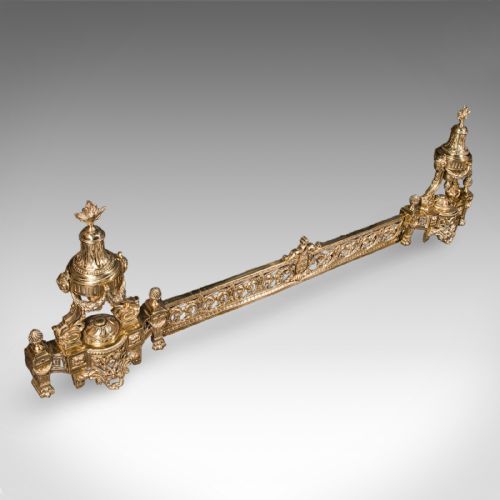
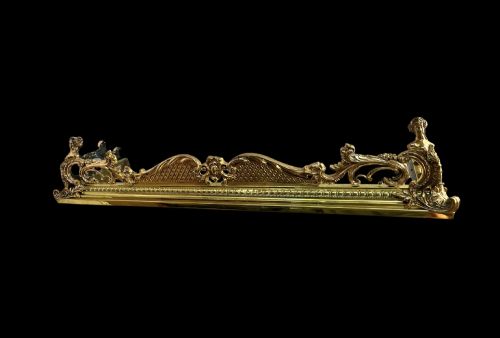
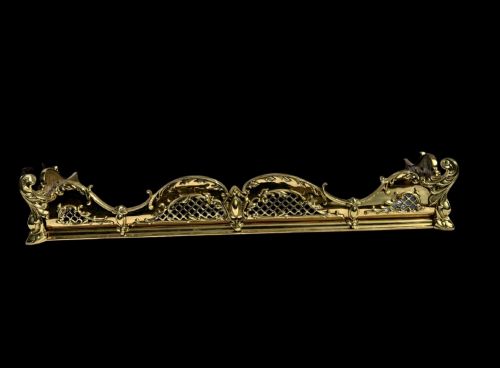
A victorian brass fire fender anchors the hearth with polished metalwork, protecting the floor and framing the fire.
Victorian Brass Fire Fender
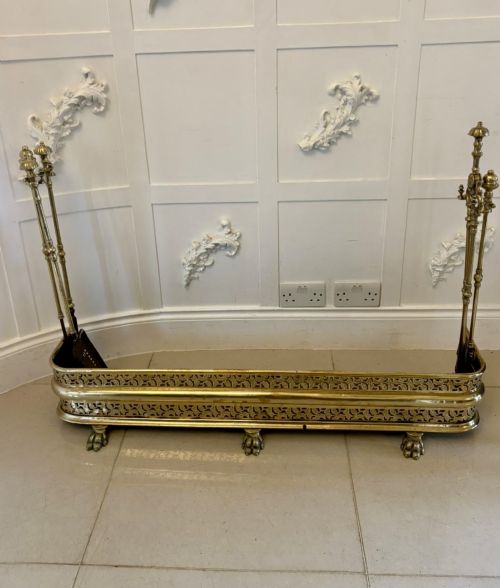
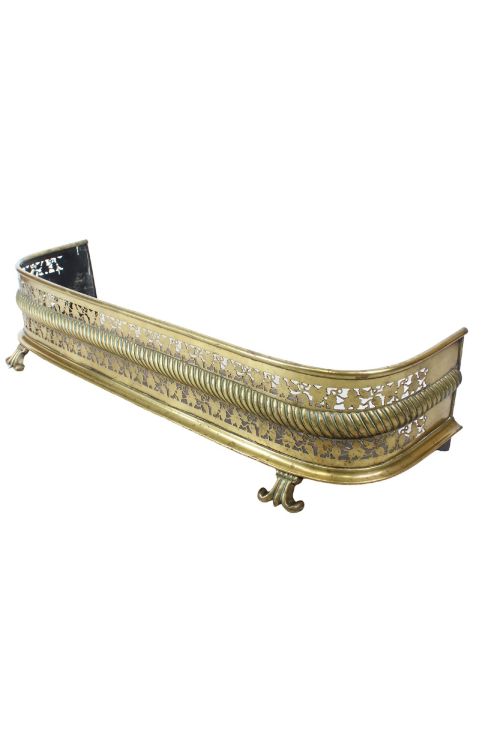
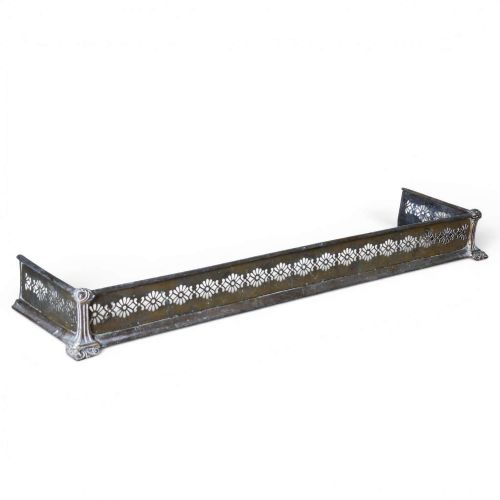
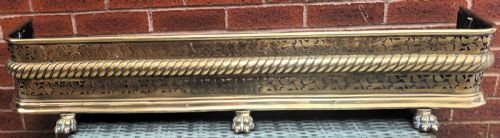
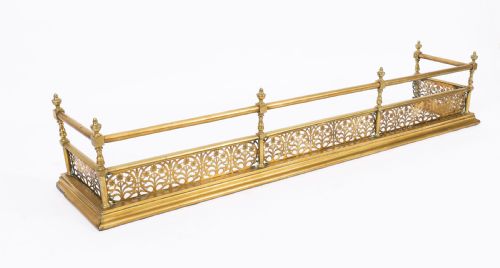
A victorian brass fire fender is a hearth accessory designed to contain embers and frame the fireplace opening. The most common examples met on this page are low, pierced metal kerbs fashioned in the nineteenth century.
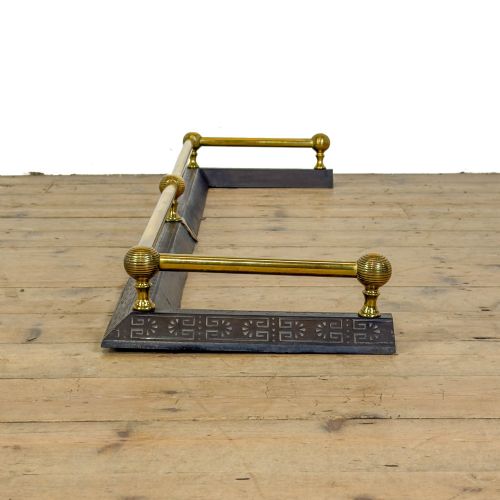
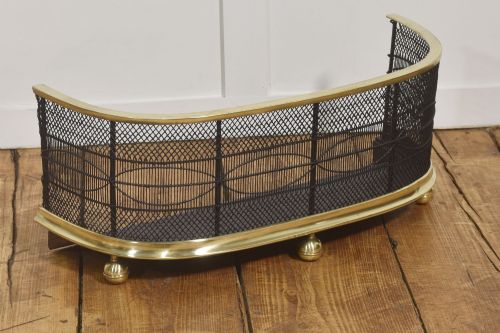
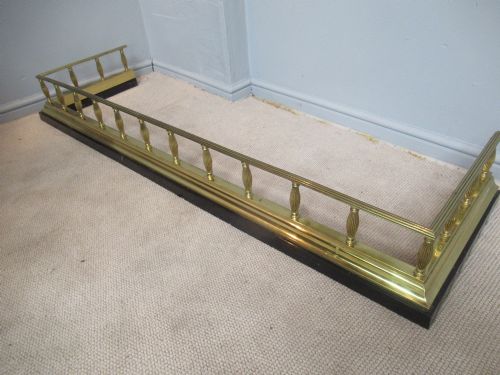
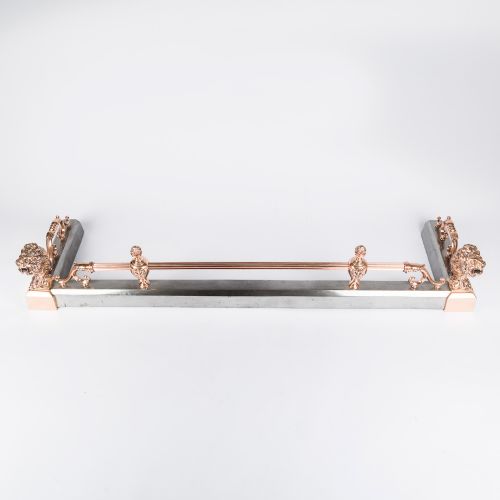
The inventory includes simple extending rails alongside substantial club versions fitted with leather seats. Many pieces incorporate iron, steel or wire mesh to serve as functional nursery fire guards.
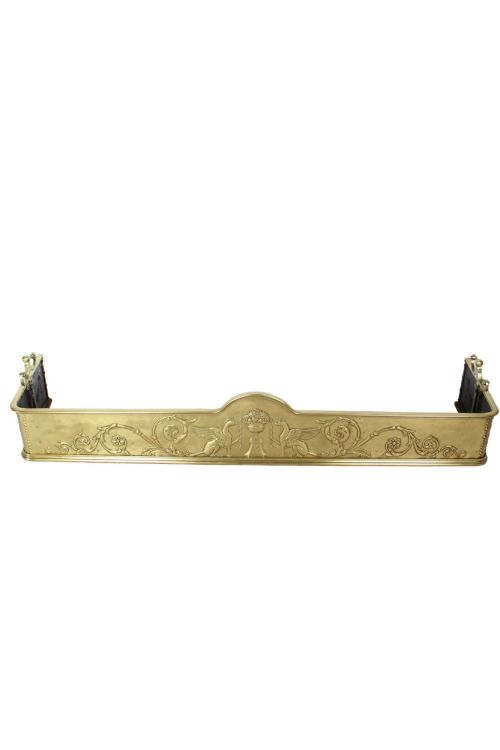
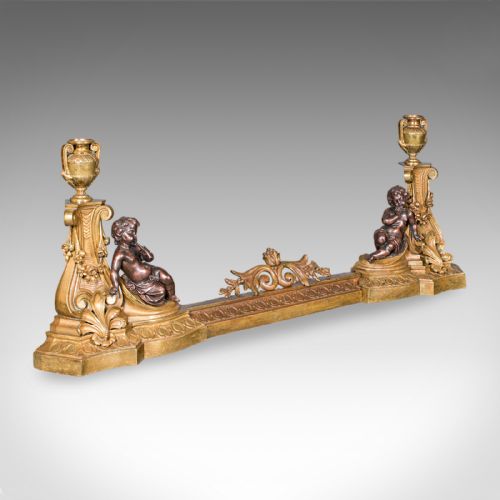
Makers drew on various stylistic movements, resulting in designs ranging from strict neoclassical symmetry to flowing art nouveau curves. These hearth accessories often appear alongside matching fire irons or companion sets.
Materials and Construction
Sheet and cast brass formed the primary visible surfaces, frequently combined with structural iron or steel frames for added weight and rigidity. Pierced fretwork panels were stamped or hand-cut with geometric and floral motifs.
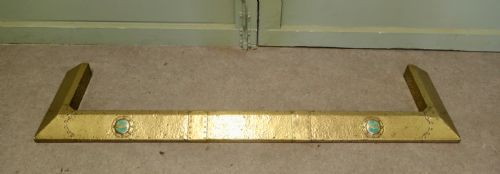
Wire mesh and copper appeared on specific nursery guards and art nouveau variations, sometimes accented with enamel cabochons. Leather upholstery was integrated into the padded top rails of club fenders intended for seating.
Several fenders come equipped with built-in rails originally intended for warming children's damp socks by the fire.
Evaluating Quality and Craftsmanship
Quality rests upon the thickness of the metal gauge and the crispness of any pierced or embossed detailing. Finer pieces display cleanly defined casting work and substantial weight rather than thin, pliable plating.
The integrity of joints, the presence of original components such as lion paw feet or fire irons, and the depth of natural patina distinguish superior examples from standard production items.
The Victorian Brass Fire Fender Glossary
- Club fender
- A low hearth kerb featuring upholstered leather top rails designed to provide fireside seating. These sturdy pieces often combine brass framework with iron supports.
- Nursery fender
- A tall wire mesh and brass guard built to keep children and stray embers safely away from the hearth. They frequently include integrated folding frames or clothes rails.
- Pierced brass
- Sheet metal perforated with decorative geometric or floral fretwork patterns to allow heat to circulate. This technique defines the majority of standard Victorian hearth kerbs.
- Fire kerb
- An alternative term for a low fender that defines the perimeter of the fireplace hearth. They are often adjustable in width to fit various fireplace openings.
Victorian Brass Fire Fender: Frequently Asked Questions
How do I measure for a fender?
Measure the width and depth of your fireplace hearth, leaving sufficient clearance for the fender to sit securely around the opening without obstructing the fire irons.
Note that many nineteenth-century examples are adjustable, allowing you to fine-tune the width to match your specific hearth dimensions.
What is a club fender?
A club fender is a substantial hearth kerb fitted with padded leather top rails that double as fireside seating. These pieces were traditionally used to sit close to the warmth of the fire.
They often feature robust iron frames clad in polished brass, combining utility with comfortable seating in larger rooms.
How do I clean antique brass?
Clean antique brass gently with a soft cloth to remove dust, avoiding harsh abrasive compounds that can strip away the aged patina. Many collectors prefer to leave the mellow oxidation untouched rather than polishing the metal to a bright shine.
Regular dusting and occasional light waxing help preserve the surface without damaging historic finishes or embossed details.