

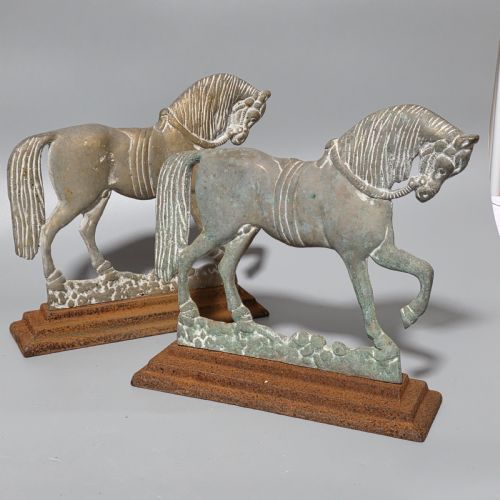


Victorian Brass Door Porter
These heavy pieces of hardware hold open draughty rooms with solid weight, and a victorian brass door porter brings distinct character to a hallway.
Victorian Brass Door Porter
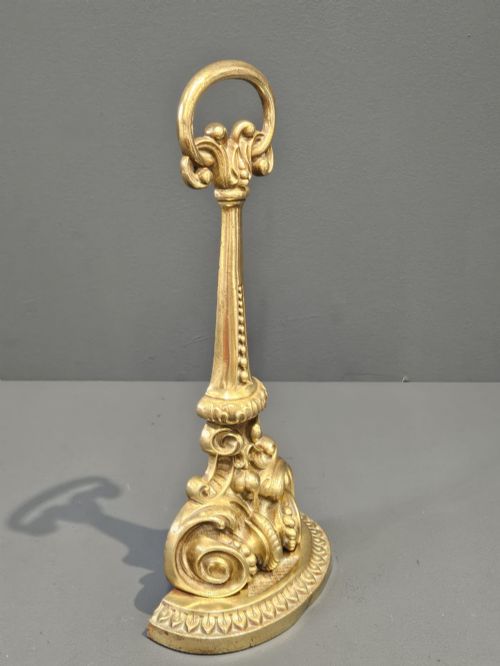
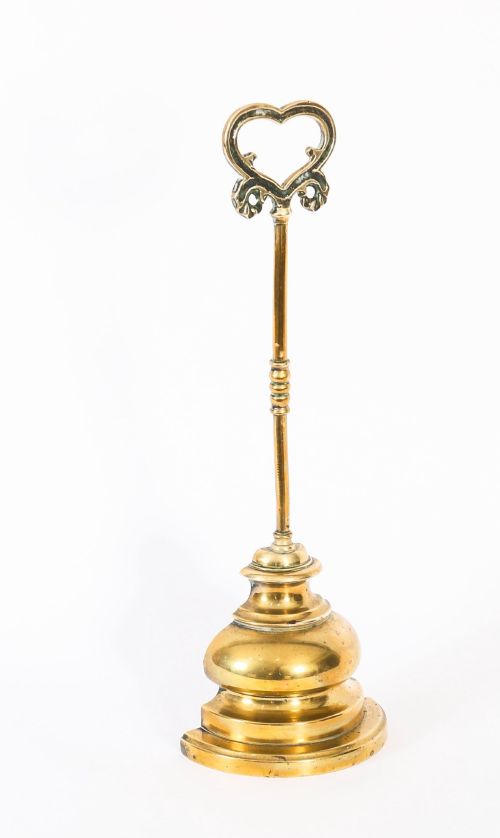
A victorian brass door porter is a heavy, portable object designed to hold interior doors open against drafts. The form spans the nineteenth century, including pieces made during the Victorian and Georgian periods as well as the late Regency era.
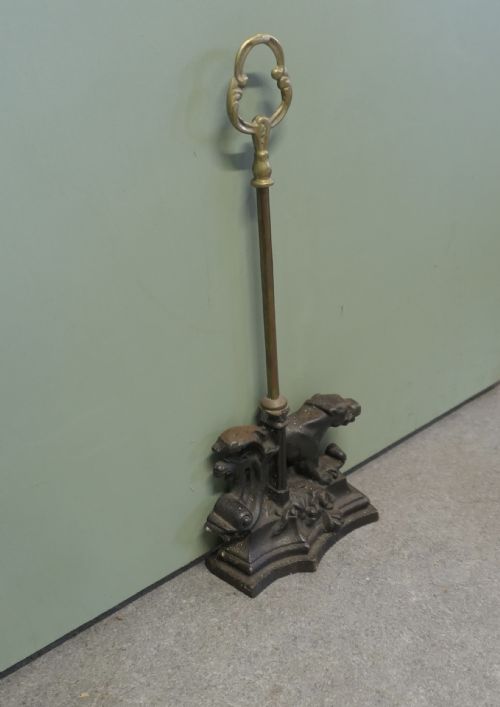
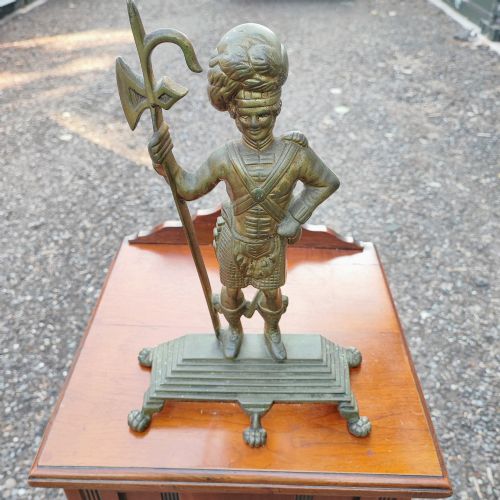
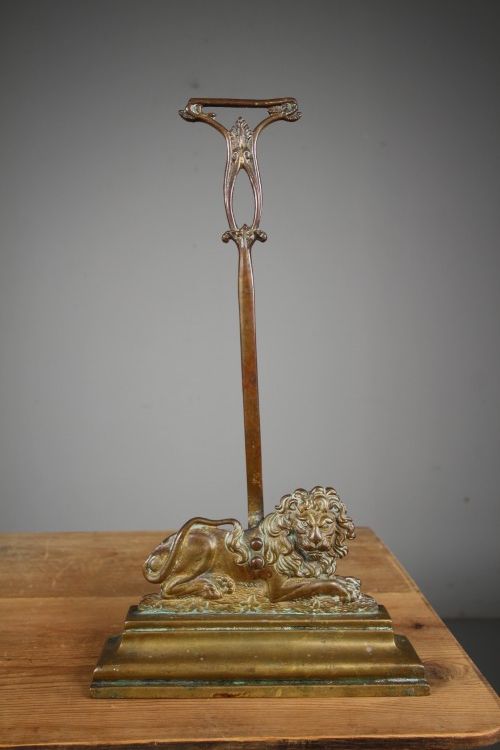
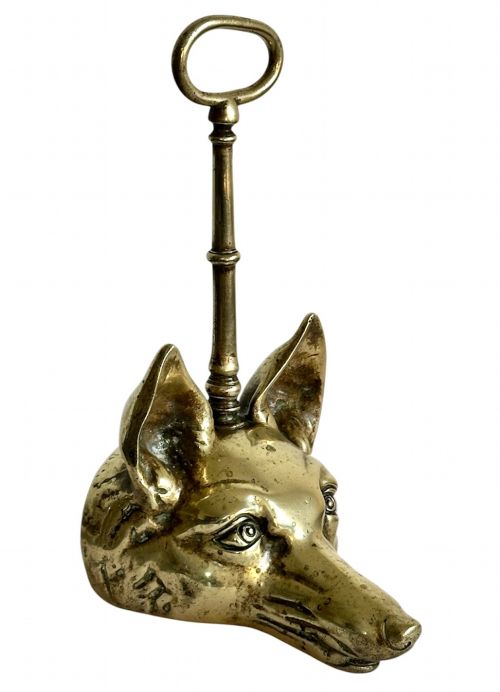
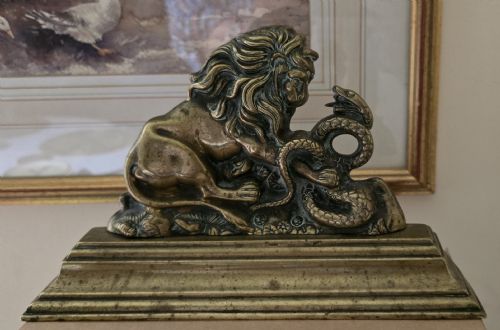
Most examples found here are cast in brass or cast brass, frequently incorporating iron bases or weighted plinths to add stability. Common figural and botanical subjects range from lions, dogs, horses, and foxes to human figures such as Scottish soldiers, Mr Punch, and Lord Nelson, alongside symbols like pineapples, flower baskets, and dolphins.
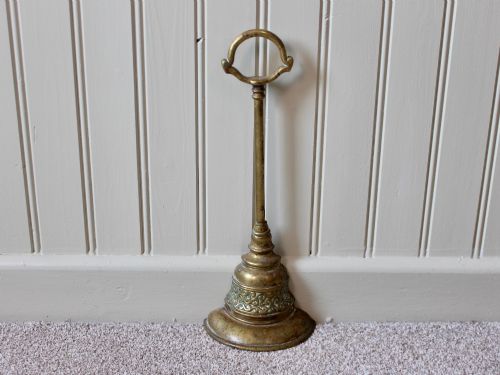
Buyers encounter both single door porters and matched pairs, often standing upright with a looped handle at the top for lifting. These items function as practical floor hardware while serving as decorative metalwork in domestic interiors.
Materials and Casting Methods
Foundry workers utilised sand-casting techniques to form the solid brass and cast iron components of these heavy objects. Molten metal was poured into moulds to create detailed figural subjects, handles, and sturdy plinths.
Many heavy examples combine a cast brass upper figure with a separate cast iron base or internal iron weight to provide the necessary heft. Surface detailing was often finished by hand with filing and polishing after the casting process.
Mr Punch frequently stands guard on nineteenth-century floors, ready to keep stubborn doors firmly in their place.
Assessing Quality and Execution
Weight and structural integrity also divide the range, as heavier solid brass examples with integrated iron plinths or weighted bases provide better service and stability than lighter alternatives.
Tonks·William Tonks·William Tonks and Sons
The Victorian Brass Door Porter Glossary
- Door porter
- A heavy movable weight placed on the floor to keep a door from swinging shut. These objects are also commonly called door stops.
- Plinth
- The solid base block at the bottom of the porter, often made of cast iron to add necessary weight.
- Halberd
- A combined spear and battleaxe carried by figures such as the Scottish soldier represented in certain figural doorstops.
- Regency
- An architectural and design period preceding the Victorian era, influencing styles seen in nineteenth-century metalwork.
Victorian Brass Door Porter: Frequently Asked Questions
How heavy are these door porters?
Most examples possess substantial weight, often several kilograms, because they must hold open heavy interior doors against strong household draughts.
Heavier versions frequently incorporate iron bases or internal weights beneath the brass casting to ensure stability on wooden or stone floors.
What subjects appear on these pieces?
Common subjects include domestic and wild animals such as dogs, lions, horses, foxes, and stags, alongside figures like soldiers and historical personalities.
Botanical and decorative motifs also feature prominently, including flower baskets, pineapples, cherubs, dolphins, and mythical fish.
How do I care for brass door hardware?
Regular dusting with a soft cloth keeps the metal free from surface grit and prevents accumulation in the cast crevices of figural designs.
Polishing should be approached with caution depending on whether an aged patina or a bright finish is preferred for the piece.
Were these used in pairs?
While many items survive as single objects intended for one specific doorway, makers also produced matched pairs for larger double doors.
Pairs often feature mirrored figural designs or identical cast patterns intended to flank wide entrances symmetrically.