




Victorian Blue Glass Bottle
A victorian blue glass bottle brings deep cobalt and teal hues to a dressing table or cabinet, uniting utility with rich nineteenth-century colour.
Victorian Blue Glass Bottle
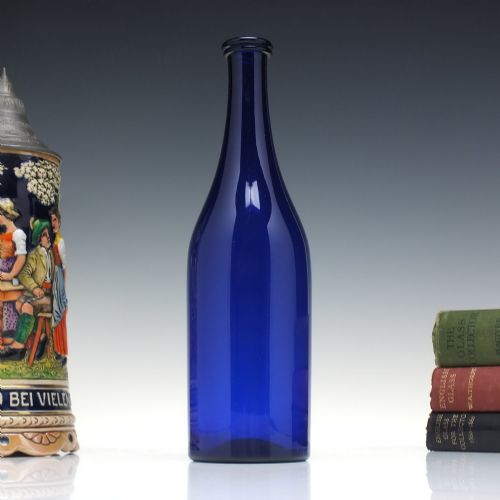
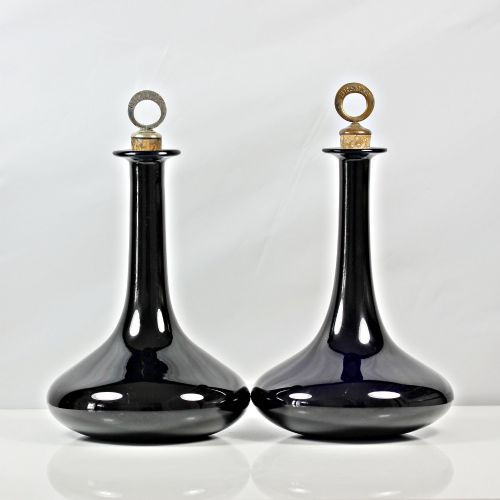
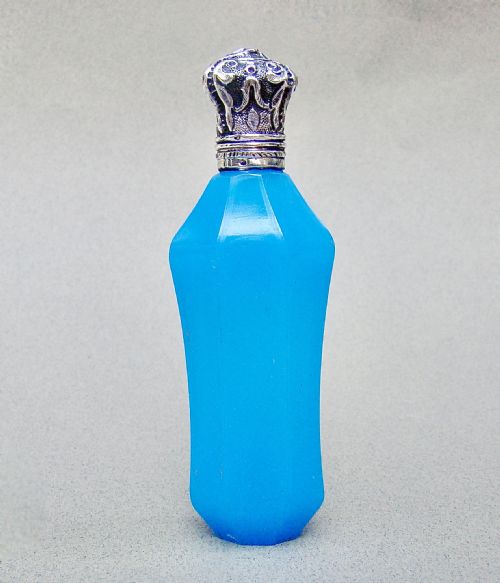
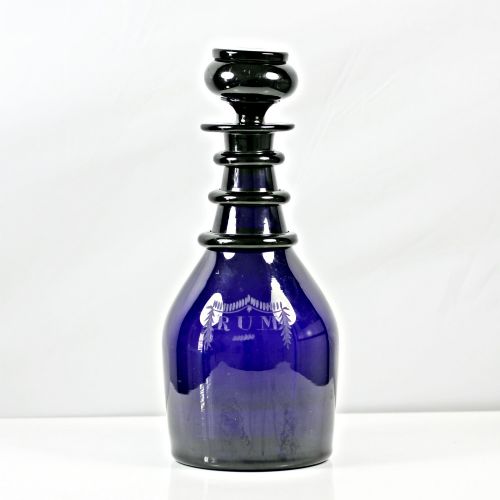
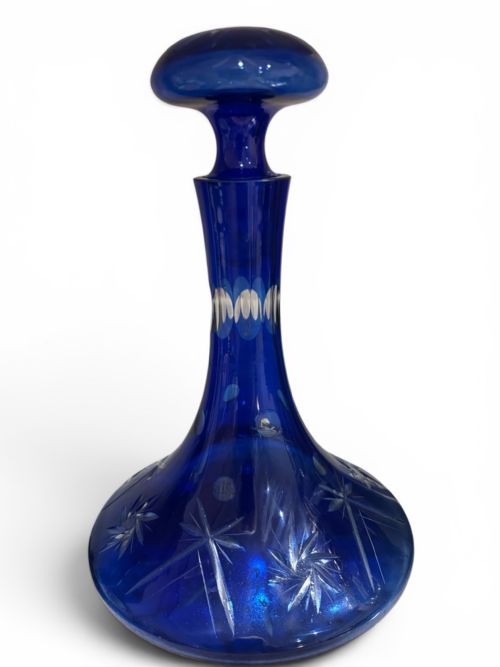
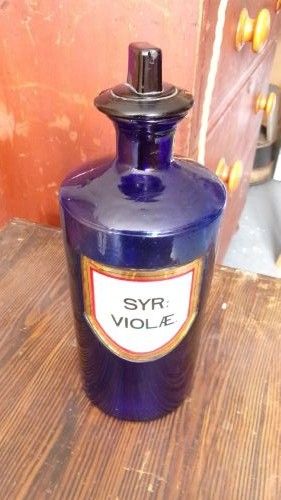
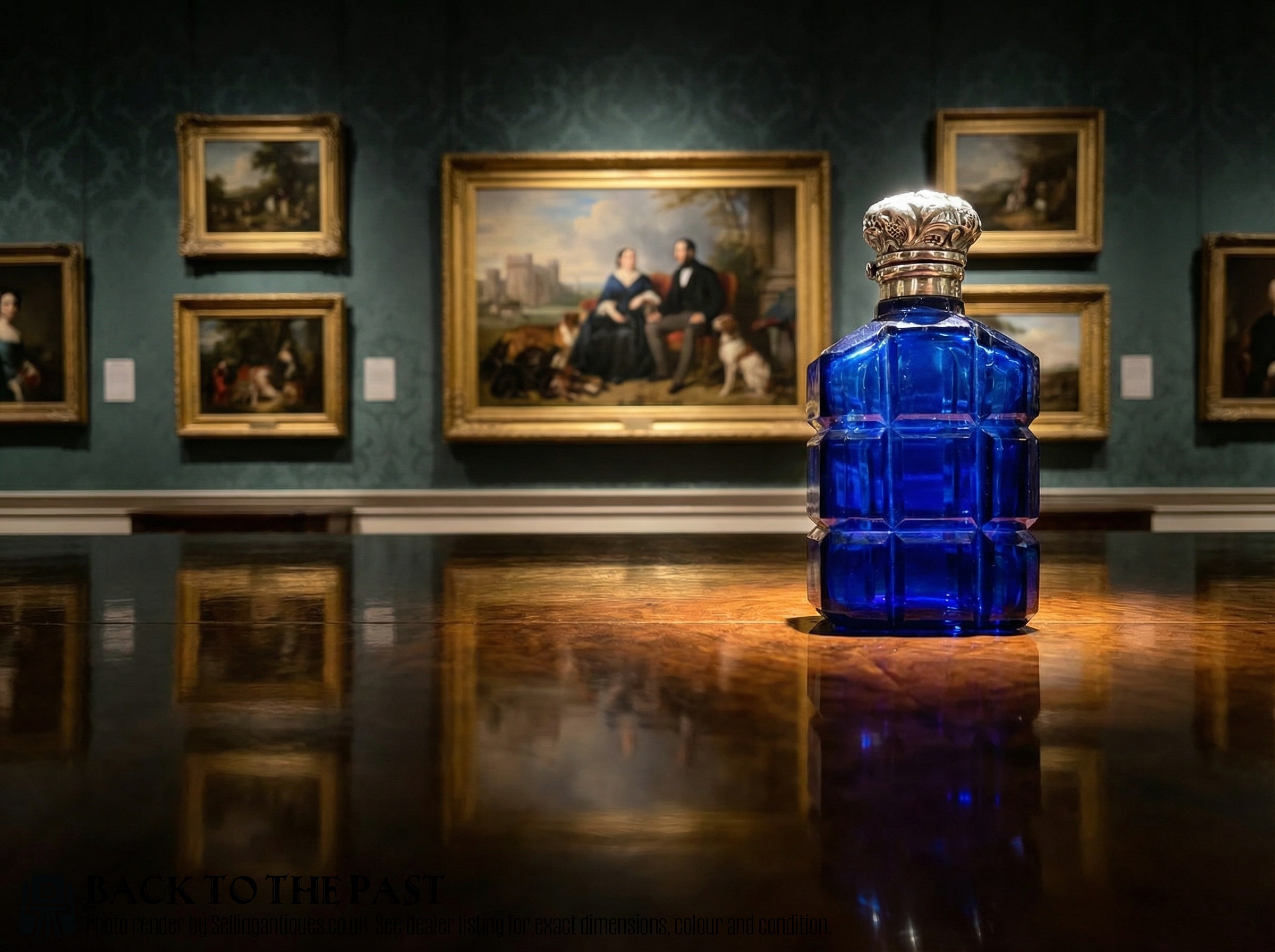
The victorian blue glass bottle category spans domestic decanters, pocket and chatelaine scent containers, and chemist apothecary jars. These vessels served functional roles in the dining room, boudoir, and dispensary during the nineteenth century.
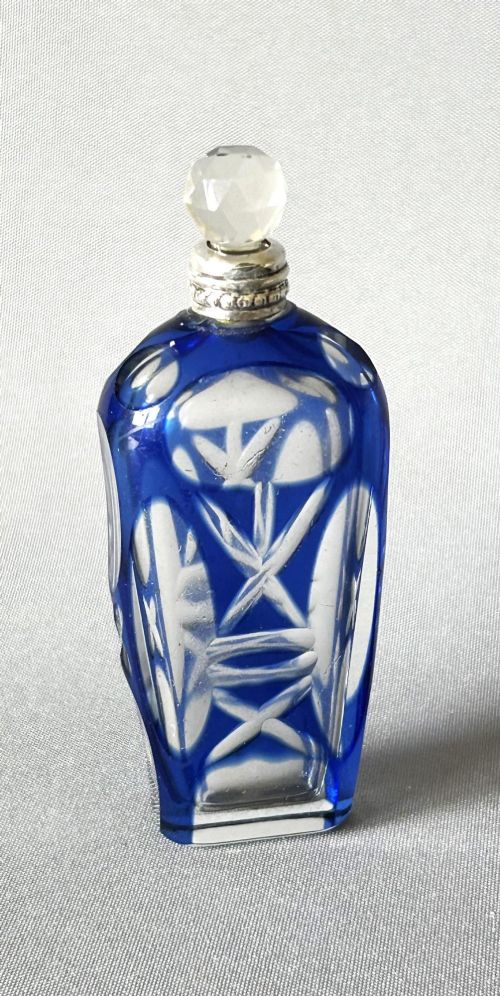
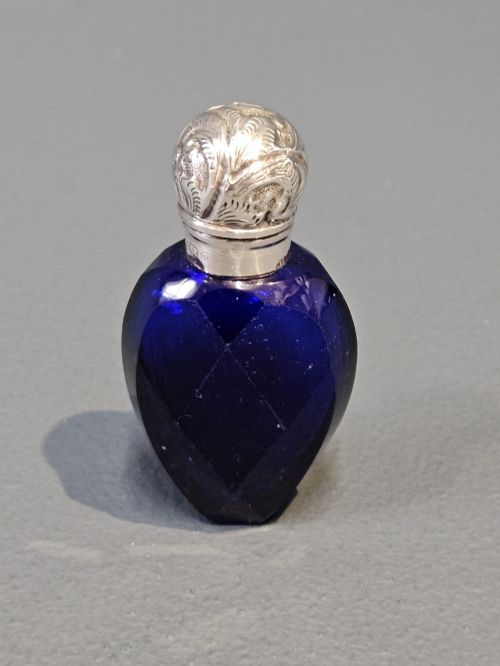
Most examples found here date from the mid to late nineteenth century, reflecting the Victorian and William IV periods. Forms range from heavy three-ring rum decanters and mell decanters to delicate overlay scent bottles mounted in sterling silver.
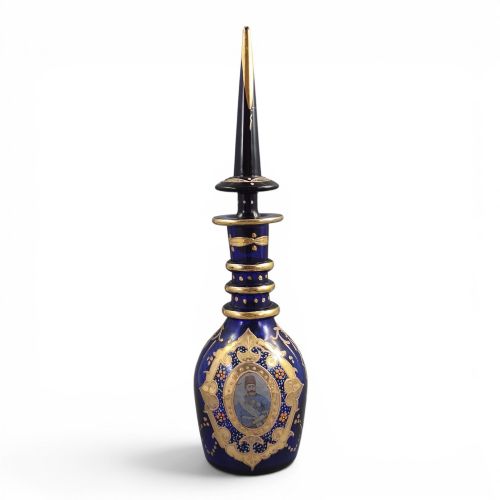
Makers across England, Bohemia, and France produced these items using rich cobalt, teal, and ice blue glass. Collectors encounter everything from plain blown serving bottles to heavily cut, enameled, and gilt luxury dressing table accessories.
How they were made
Glassmakers shaped these objects through free-blowing and mold-blowing techniques, often layering contrasting colours of glass together before cutting through the surface to expose the blue beneath. Artisans added handles, stoppers, and necks by hand while the metal was still malleable.
Silver mounts, hinged caps, and collars in sterling silver or silver plate were fitted to secure cork stoppers on scent bottles and decanters. Surface decoration frequently involved wheel-cutting, gold leaf gilding, enamel painting, and opaline layering.
Victorian Blue Glass Bottle Retail Price Guide 2026
Typical asking prices for victorian blue glass bottle among the pieces listed under this phrase on Sellingantiques today, from the lower quarter to the upper quarter. They describe what is for sale here now, not the wider market.
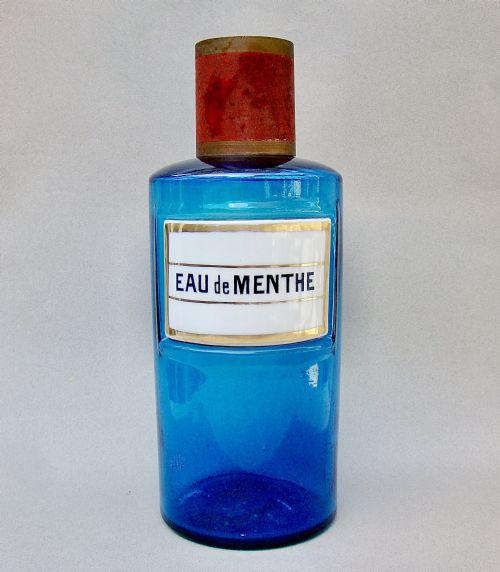
Some Victorian chemist bottles retain their original white ceramic labels, bravely warning patients against poisons while looking remarkably decorative.
What varies in quality
The weight and depth of the glass distinguish simpler utilitarian chemist jars from heavy cut-to-clear decanters and multi-layered scent bottles. Precision in wheel-cutting creates crisp, sharp facets that catch the light far better than shallow or rounded pressing.
The integration of metalwork elevates certain pieces, particularly those featuring hallmarked sterling silver mounts or maker-stamped hardware. Intricate hand-painted enamel and crisp gilding separate standard production items from elite export and exhibition pieces.
Griffith & Co·Sampson Mordan·Franchini & Bigaglia
The Victorian Blue Glass Bottle Glossary
- Bristol Blue
- A deep, vibrant cobalt glass traditionally associated with Bristol glasshouses. It gained popularity for its rich coloration in apothecary and drinking vessels.
- Mell Decanter
- A bottle shape featuring a wide body tapering sharply towards a narrow neck. This form provided stability on dining tables during carriage travel.
- Overlay Glass
- A technique involving two or more distinct layers of glass fused together. The outer layer is often cut away to reveal the contrasting colour underneath.
- Chatelaine
- A decorative belt hook worn with suspended chains holding useful items such as scent bottles and keys. These were popular accessories for Victorian women.
- Apothecary Bottle
- A utilitarian container designed to hold chemicals, medicines, or tinctures. Many feature matching ground-glass stoppers and paper or enamel labels.
Victorian Blue Glass Bottle: Frequently Asked Questions
Were these bottles used for perfume?
Many smaller examples served as scent or perfume bottles, often fitted with tight silver caps to prevent evaporation. Their compact sizes made them suitable for reticules and dressing tables alike.
Larger vessels functioned as decanters for wine, spirits, or medicinal tonics. The dark blue glass helped protect contents from light degradation.
How can I tell the period?
Examine the base for pontil marks left by the pontil rod during hand-blowing, which typically indicate older nineteenth-century production. Pontil scars are usually ground down on finer pieces.
Silver mounts often bear hallmarks indicating assay offices and date letters. These assay marks provide a precise year of manufacture for the metal hardware.
What is Nailsea glass?
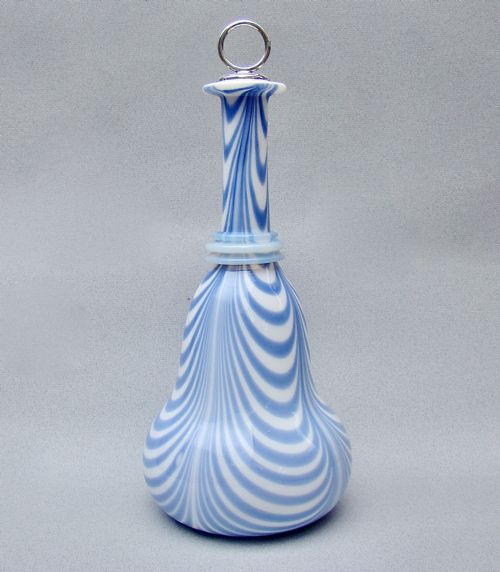
Nailsea glass refers to glassware produced at the Nailsea glassworks near Bristol, known for distinct loop or ribbon patterns. Artisans incorporated white or coloured glass trails into the body.
These pieces display characteristic tactile surface designs embedded within the glass wall. They remain highly sought after by nineteenth-century glass collectors.