



Blue Glass Spirit Bottle
A blue glass spirit bottle brings rich colour and light to a sideboard, holding rum, whisky or wine in deep cobalt tones.
Blue Glass Spirit Bottle
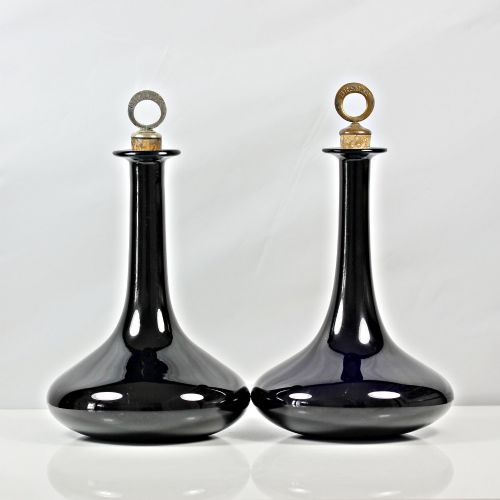
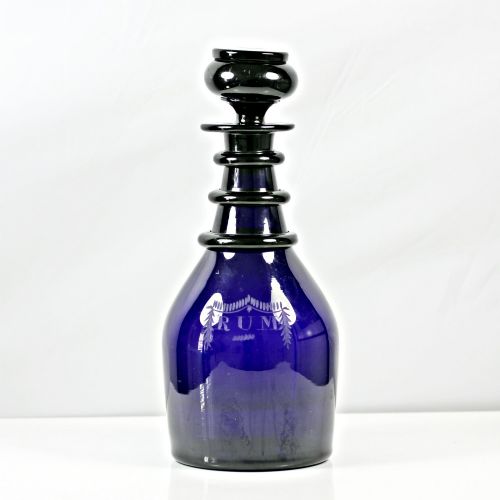
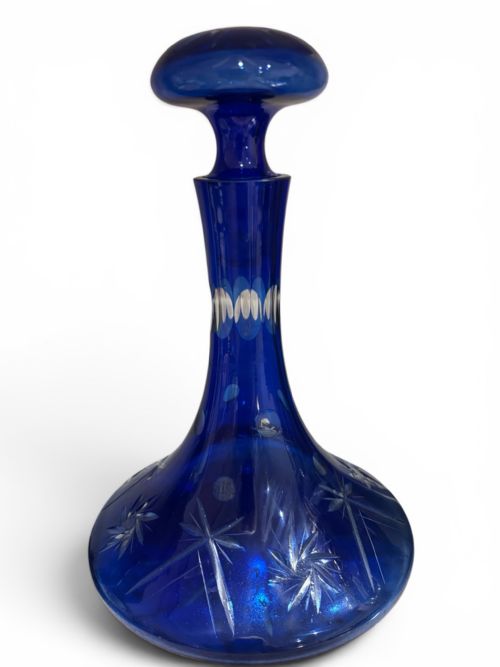
A blue glass spirit bottle takes several distinct forms across the Georgian, Victorian, and later periods. You will encounter decanters, mell shapes, flagon decanters, and serving bottles designed for the dining table or sideboard.
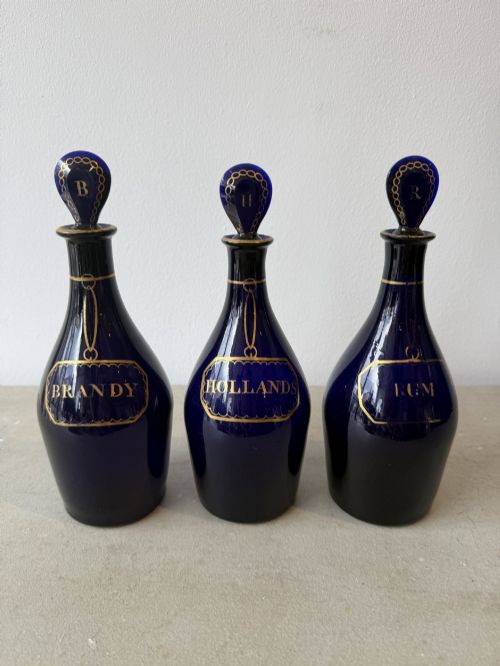
The pieces often feature characteristic neck rings, hand-painted decoration, or precious metal mounts in silver plate and gold leaf. Many originate from English glasshouses, with distinct Bristol blue traditions and Bohemian crystal examples also appearing.
How they were made
Craftsmen used hand-blown glass techniques to shape rich cobalt and Bristol blue glass into decanters and bottles. Metal mounts, silver plate, and gold leaf were applied to necks and rims, alongside fitted cork stoppers.
Makers shaped heavy crystal and glass into distinctive three-ring and mell profiles. Hand-painted details were added to specific Georgian and Victorian items before firing.
Blue Glass Spirit Bottle Retail Price Guide 2026
Typical asking prices for blue glass spirit bottle among the pieces listed under this phrase on Sellingantiques today, from the lower quarter to the upper quarter. They describe what is for sale here now, not the wider market.
Some nineteenth-century sailors allegedly kept blue bottles close to hand so nobody mistook their rum for sea water.
What varies in quality
Quality rests in the depth and clarity of the cobalt or Bristol blue glass itself, alongside the crispness of hand-blown neck rings and profiles. Early Georgian and Victorian examples display superior weight and proportion.
The presence of original silver plate mounts, gold leaf detailing, and intact stoppers elevates certain pieces. Simpler utility bottles contrast with elaborately painted or silver-mounted specimens.
The Blue Glass Spirit Bottle Glossary
- Bristol Blue glass
- A deep vibrant cobalt glass traditionally associated with Bristol glasshouses in the eighteenth and nineteenth centuries. It gained popularity for serving spirits and wine.
- Mell decanter
- A mallet-shaped bottle with a wide base and tapering neck, common in Georgian and Victorian times. This form provided stability on dining tables during carriage travel.
- Ring decanter
- A bottle featuring horizontal glass bands or rings around the neck to ensure a secure grip. These rings are frequently seen on nineteenth-century spirit bottles.
- Flagon decanter
- A pouring vessel designed for serving wines and spirits, often produced in collections during the nineteenth century. They usually feature handles and stoppers.
Blue Glass Spirit Bottle: Frequently Asked Questions
What spirits did they hold?
These vessels held rum, Irish whiskey, wine, and other spirits on dining tables and sideboards. They kept drinks ready for serving during meals and evening gatherings.
Specific bottles were often designated for particular contents through hand-painted labels or decorative rings.
How do I date a blue glass bottle?
Dating relies on stylistic clues like neck rings, pontil marks, and overall silhouette shapes. Georgian and William IV pieces often display heavier proportions and distinct mell outlines.
Later Victorian and Art Deco examples introduce silver mounts and brighter crystal materials.
Are stoppers usually original?
Finding matching original stoppers is common but not guaranteed across every surviving antique bottle. Many pieces retain their period cork or glass stoppers passed down through use.
Replacements do appear on older bottles that saw heavy service in dining rooms.
How should I display them?
Place these bottles where natural light passes through the cobalt or Bristol blue glass to highlight the colour. Sideboards, open shelving, and cabinets work well for display.
Keep them away from direct heat sources to protect any remaining gold leaf or silver plate mounts.