
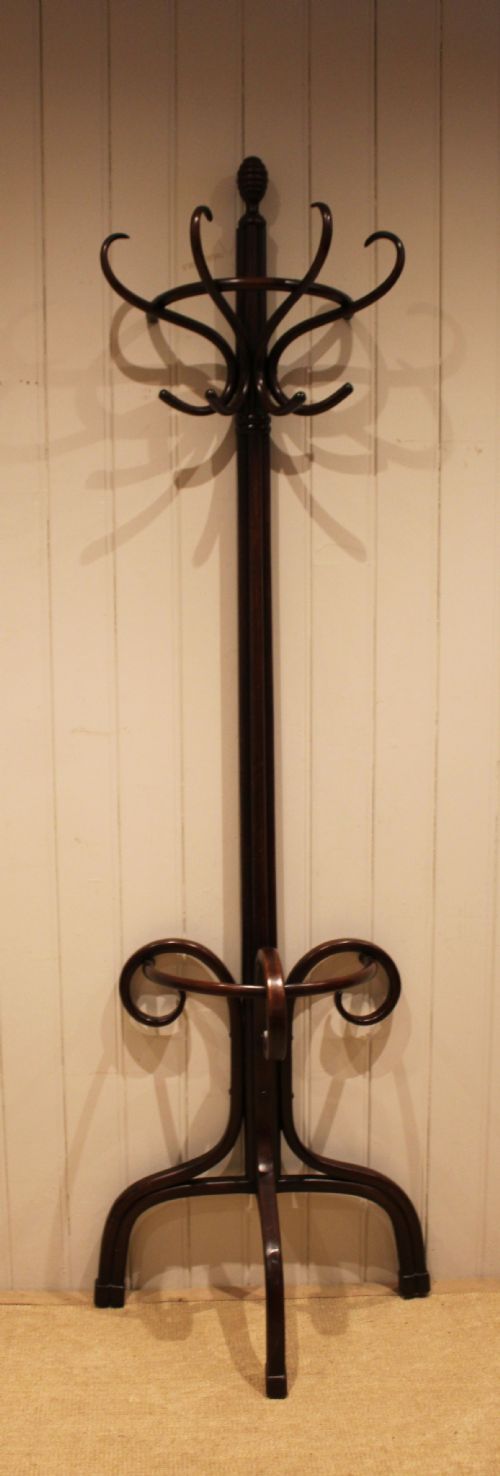


Victorian Bentwood Hat Rack
A victorian bentwood hat rack is a clever feat of steamed timber that organises hallways with lightness.
Victorian Bentwood Hat Rack
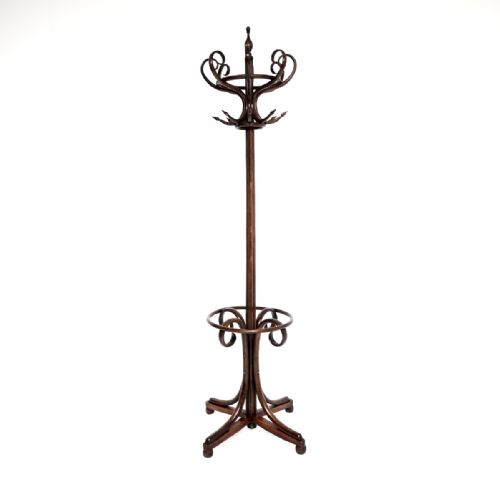
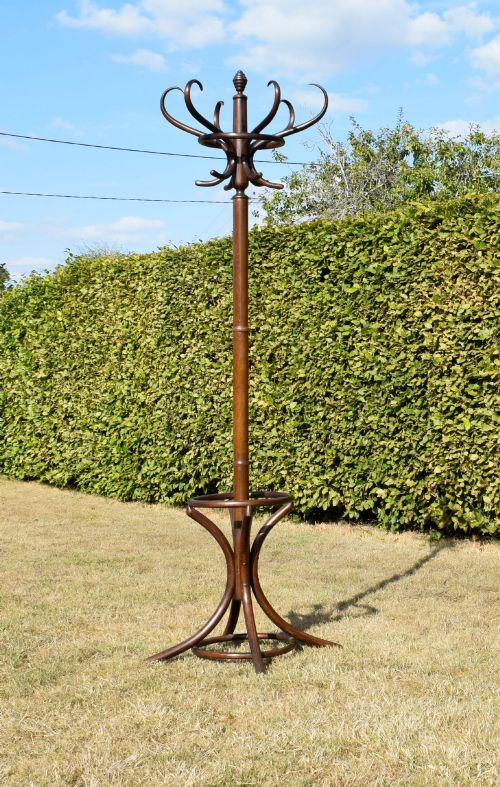
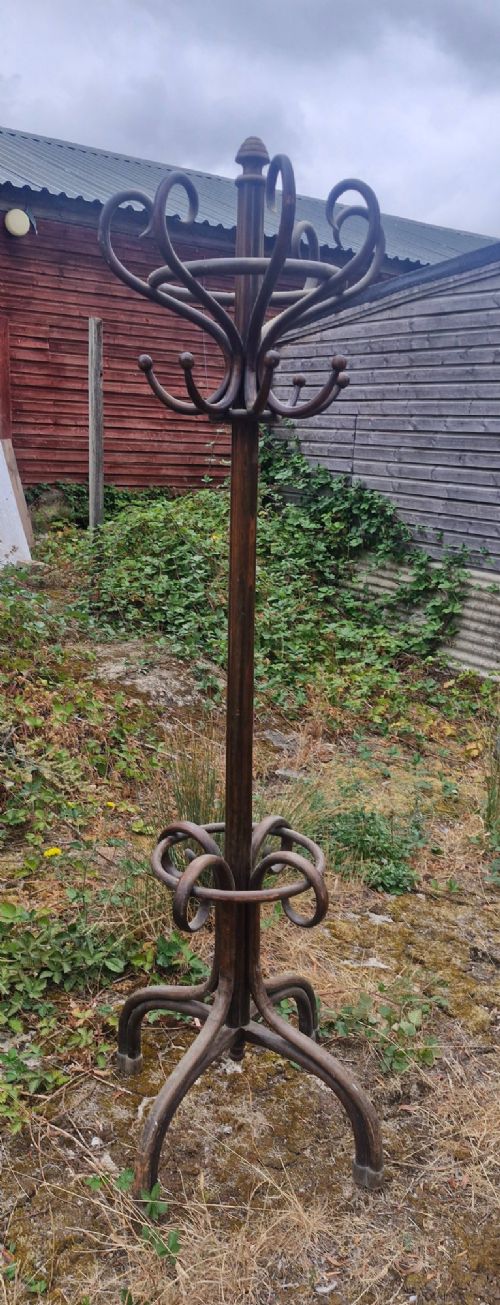
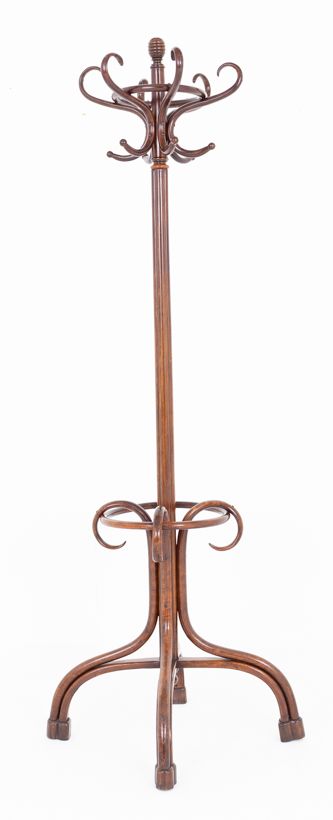
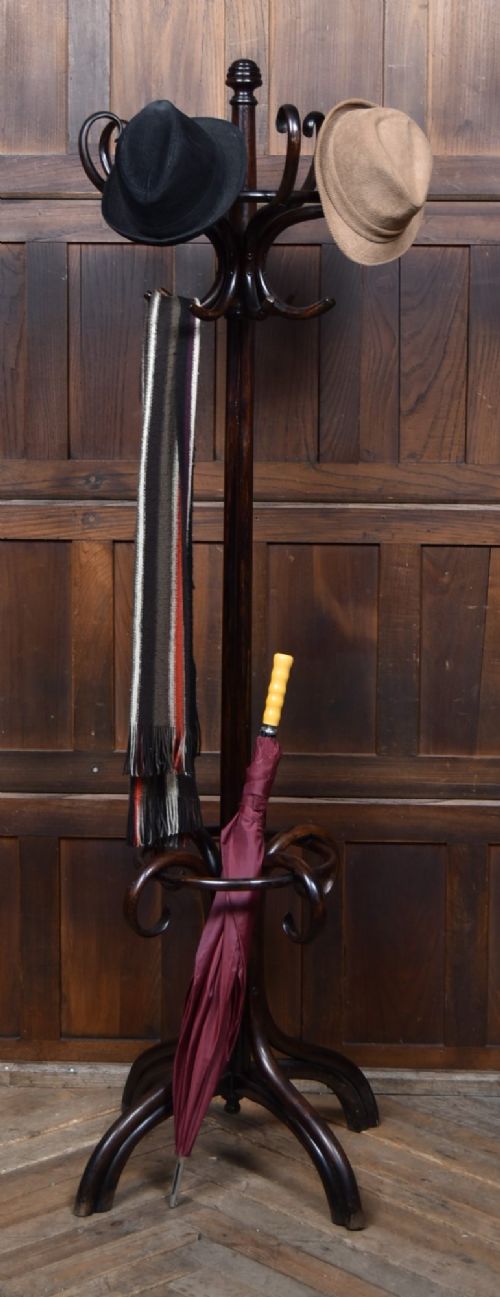
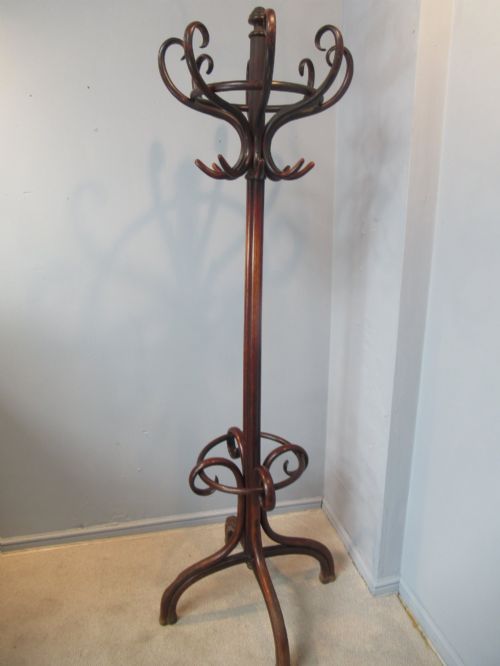
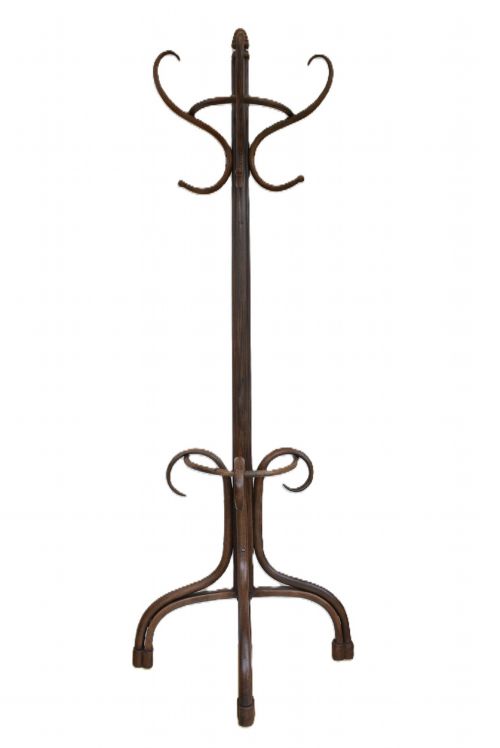
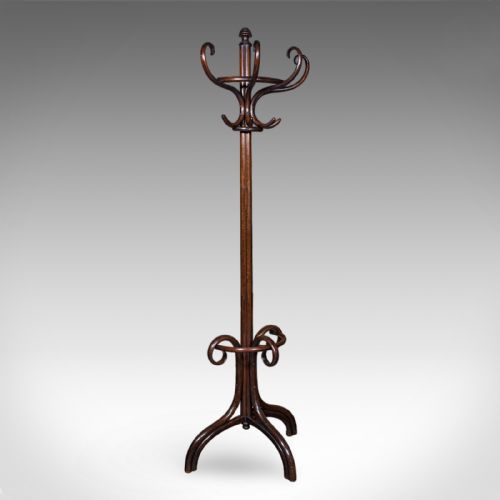
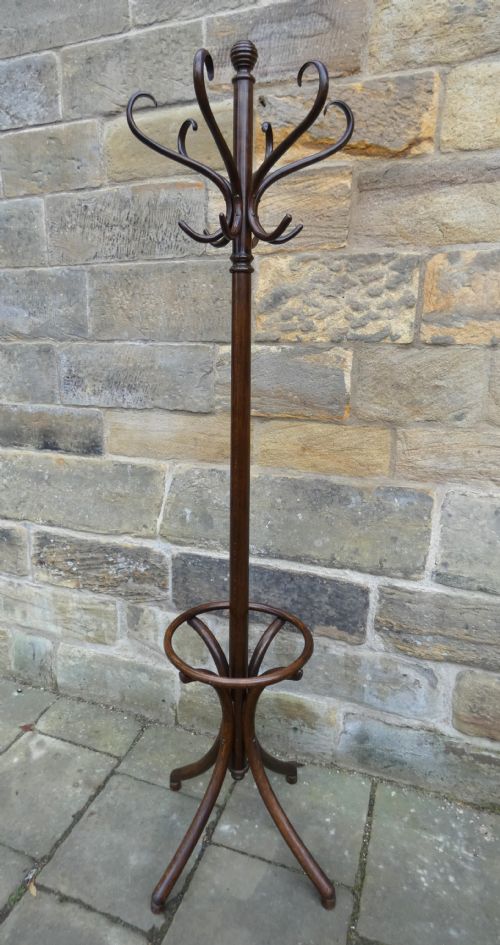
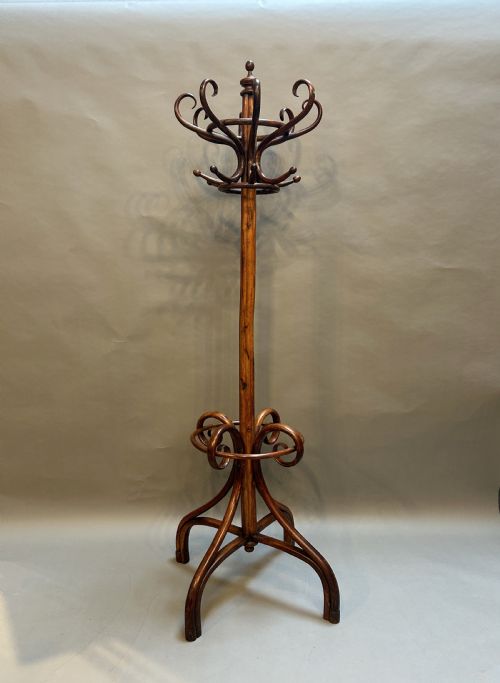
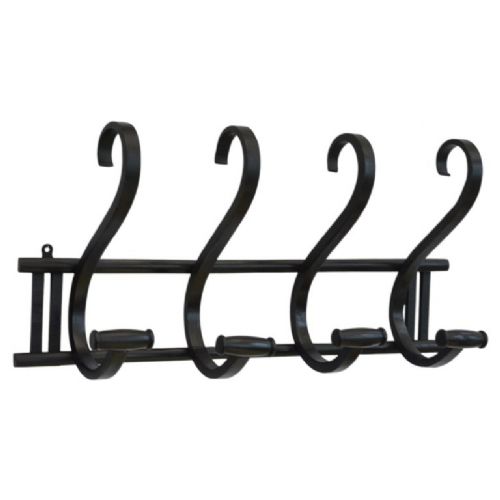
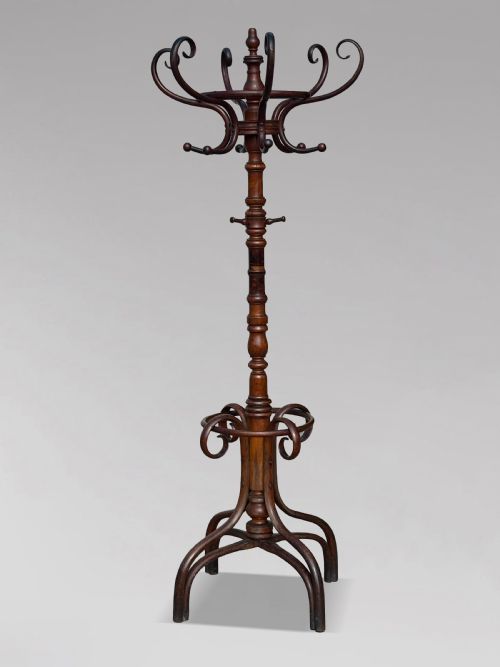
A victorian bentwood hat rack brings together vertical timber uprights and curved looping hooks designed for hallway storage. These pieces arrive in various configurations, including floor-standing coat trees with double tops, half-round hall stands, and wall-mounted racks with rows of hooks.
The selection ranges across the nineteenth century, the Edwardian era, and into the early decades of the twentieth century. While many pieces carry the specific Victorian designation or Thonet style, others date from the nineteen-tens, twenties, and thirties.
Makers such as Fischel and Thonet appear alongside Austrian and Viennese workshop origins. Buyers encounter both freestanding coat stands and wall-hanging versions intended for domestic entryways.
How they were made
Craftsmen utilised beech, beechwood, and steamed beechwood, taking advantage of the natural flexibility of timber when exposed to moisture and heat. This steaming process allowed straight lengths of wood to take on curves without snapping.
Makers bent the timber into circular rails, sweeping scrollwork, and projecting coat hooks, assembling the components with mechanical joints and screws. Surface finishes include plain polished wood, wood stain, and ebonised beech.
Period origins stretch from the nineteenth century through the Edwardian era into the nineteen-thirties.
What varies in quality
Design complexity marks the distinction between standard hall stands and exceptional pieces. Examples featuring revolving upper tiers, half-round wall profiles, or double tops demand greater joinery skill than simple wall-mounted rows of hooks.
Maker identification elevates certain pieces, particularly those bearing labels from known workshops like Fischel or Thonet. The depth of the ebonised finish or the rich tone of the stained wood also separates ordinary examples from finer specimens.
Thonet·Fischel
The Victorian Bentwood Hat Rack Glossary
- Bentwood
- Wood that has been heated with steam and bent into curved structural forms. This technique creates lightweight yet robust furniture without traditional carved joints.
- Ebonised
- Timber treated with a dark stain or finish to imitate ebony. This treatment gives the beech a glossy, formal black appearance.
- Hall stand
- A piece of hallway furniture combining coat hooks, hat receptacles, and sometimes umbrella holders or mirrors. These items anchored the entrance spaces of period homes.
- Steamed beechwood
- Beech timber softened via steam application so it can accept radical curves. It serves as the primary material for bentwood furniture due to its grain strength.
Victorian Bentwood Hat Rack: Frequently Asked Questions
How do I care for bentwood?
Keep these items away from direct heat sources and damp environments to protect the steamed timber and glue joints. Regular dusting with a dry cloth maintains the polished surface.
Avoid applying heavy liquid polishes that can build up on stained or ebonised finishes over time.
Are these pieces freestanding?
Many examples are tall floor-standing coat trees or hall stands designed to rest steadily on their own bases. Some designs feature a half-round profile intended to sit flush against an entryway wall.
Other variations are strictly wall-mounted racks with rows of hooks fixed directly to the timber backing.
What is a double top stand?
A double top stand incorporates an extra tier of curved loops positioned above the main ring of hooks. This upper section provided dedicated space for resting hats.
Such configurations represent more elaborate designs produced by Austrian and Viennese makers.
How can I date my stand?
Dating relies on stylistic clues, period markers, and occasionally manufacturer labels left on the timber. Pieces span the nineteenth century through the Edwardian period and into the nineteen-thirties.
Earlier examples often reflect Victorian or nineteenth-century production methods associated with Thonet.