
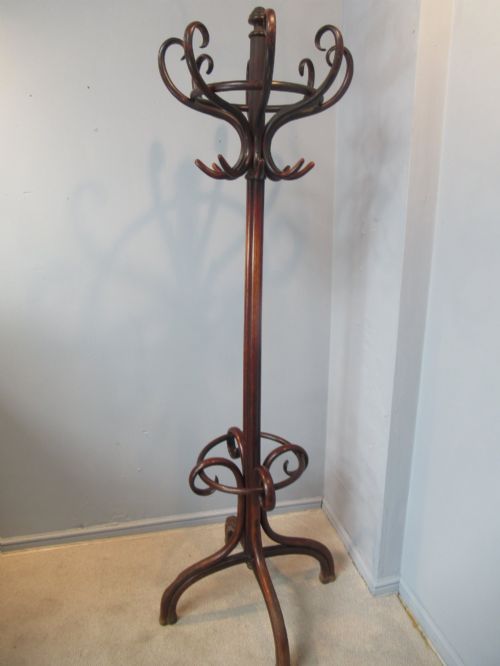
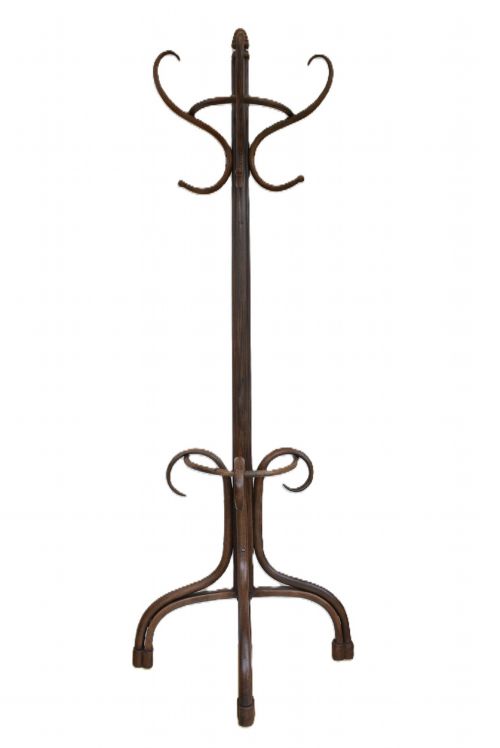
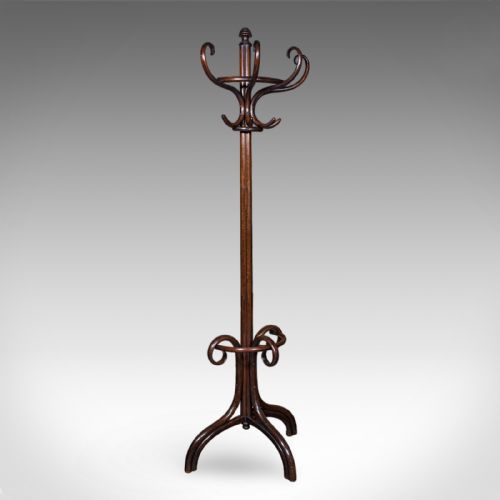
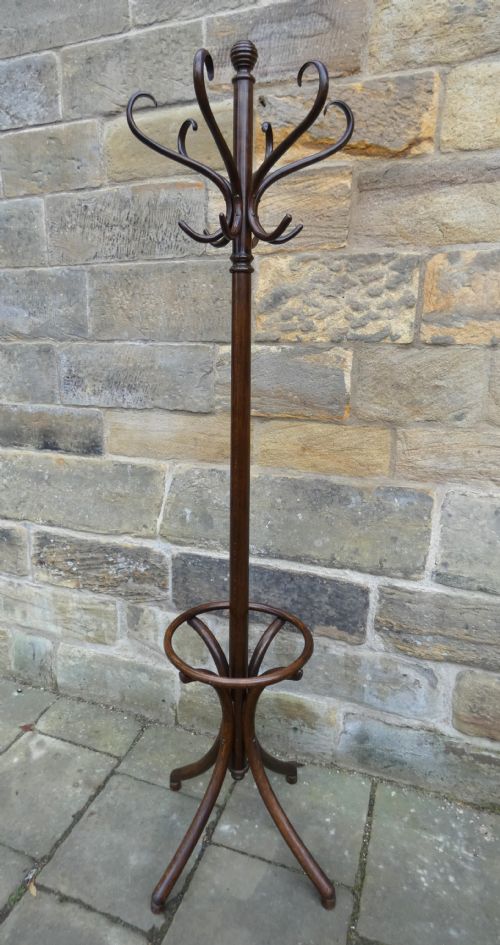
Hallway Hat Stand
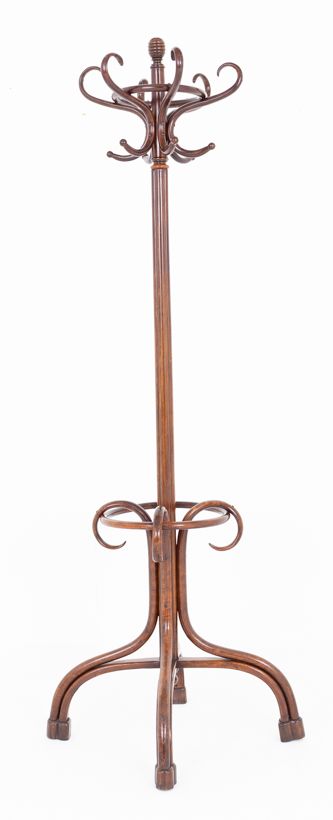
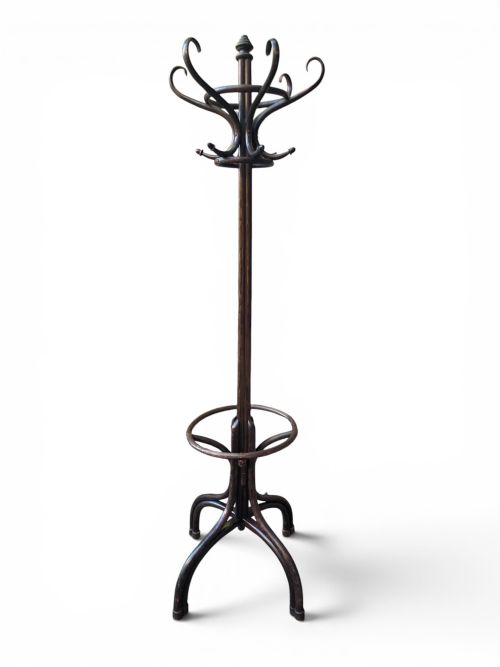
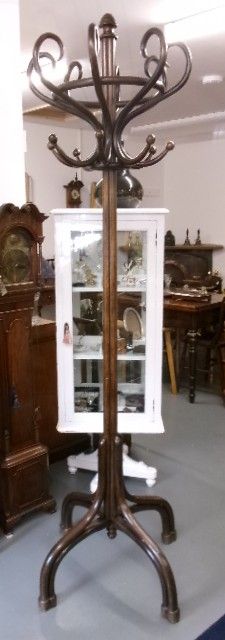
A hallway hat stand meets the visitor first, holding coats, hats and sticks in sturdy timber or bentwood.
Hallway Hat Stand
A hallway hat stand serves as a functional anchor for entrance spaces, designed to manage outdoor garments and accessories efficiently. Pieces span the Victorian, Edwardian and early twentieth century periods, reflecting changing domestic habits in domestic halls.
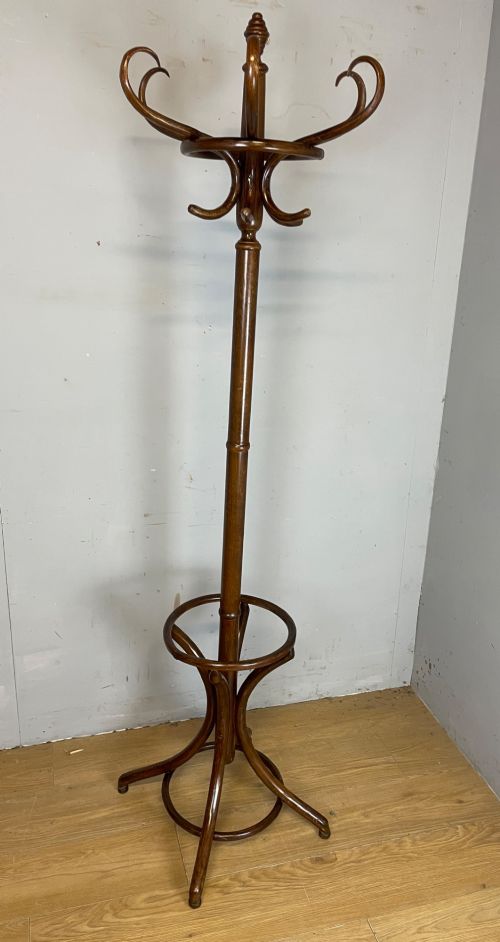
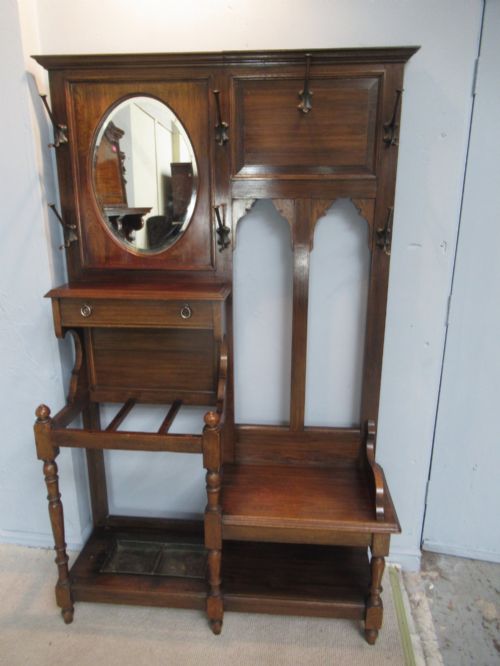
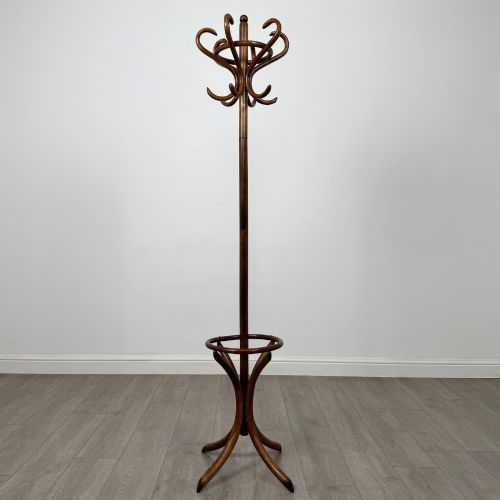
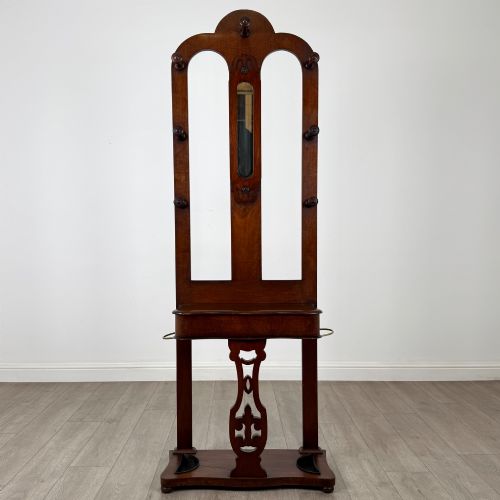
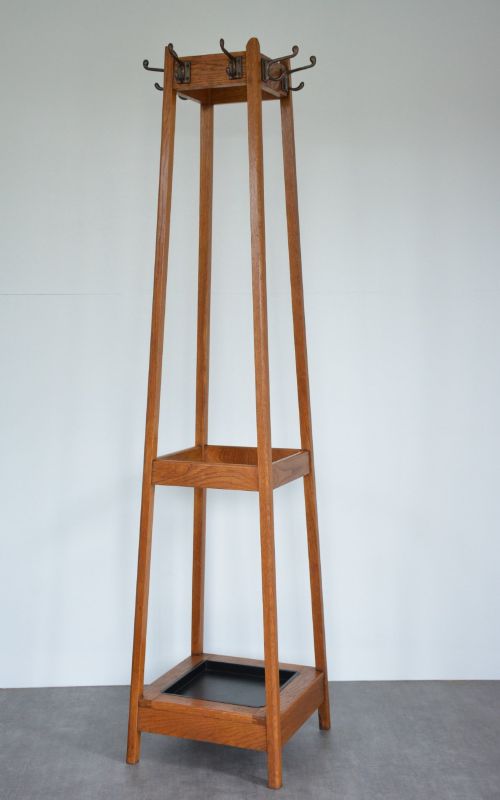
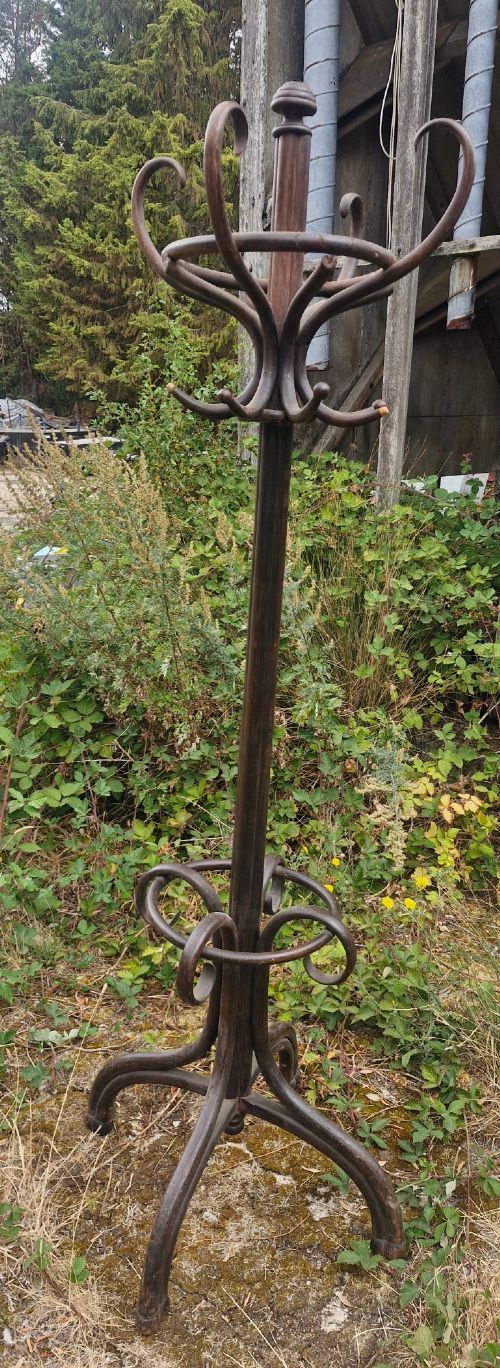
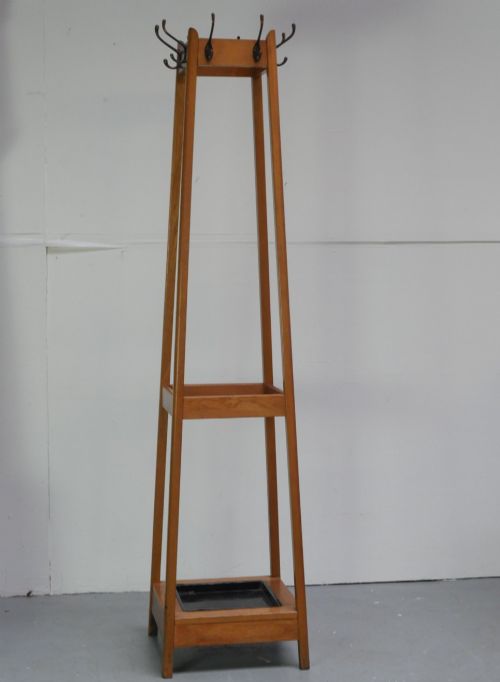
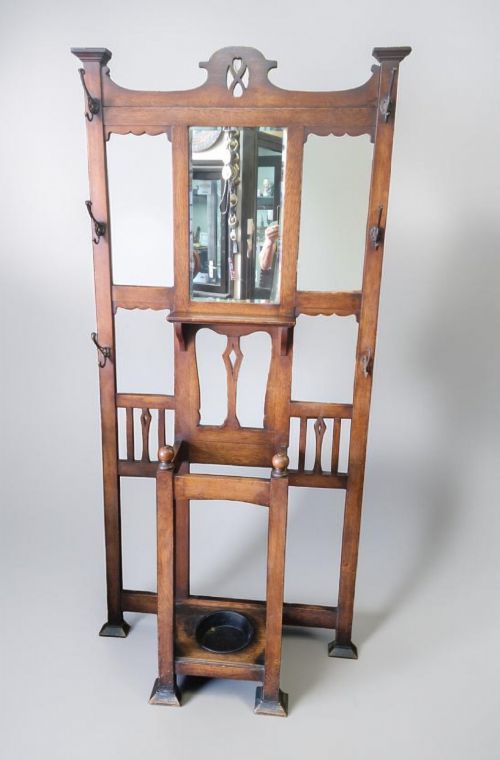
The most common formats include upright bentwood frames in beech alongside substantial oak hall stands fitted with umbrella holders and drip trays. These items vary from half-round demi-lune designs to revolving stands and large carved wooden structures.
Makers and styles draw on the Aesthetic Movement, Arts and Crafts, and Art Nouveau alongside industrial designs. Materials range from walnut and pine to cast iron and cow horn.
How they were made
Construction relies heavily on steam-bent beech in the bentwood tradition, allowing smooth curves for frames and coat hooks without heavy joints. Solid oak, mahogany and walnut provide the structural integrity for larger hall stands.
Metal components such as brass hooks, cast iron frames and zinc drip trays are integrated to withstand daily moisture from umbrellas and heavy garments. Glass inserts, carved wooden panels and cow horn details appear as decorative and functional additions.
Design styles span Arts and Crafts, Art Nouveau, Aesthetic Movement and Thonet style bentwood.
What varies in quality
Quality rests in the weight of the timber and the integrity of the steam-bent framing, where heavier gauge beech or solid oak denotes superior build. Finer examples display crisp carving on oak panels and secure metal fittings that bear regular weight without loosening.
Design complexity also separates standard utility items from notable workshop pieces, particularly those bearing maker attributions in arts and crafts or bentwood forms. The preservation of original drip trays, glass sections and brass hooks marks the better surviving instances.
Astrola·Jas Shoolbred·GW Evans
The Hallway Hat Stand Glossary
- Bentwood
- Wood softened by steam and bent into curved shapes, commonly utilised for lightweight coat and hat stands.
- Demi-lune
- A half-moon shape used for hall stands designed to sit flat against an entrance wall.
- Hall tree
- An alternative term for a freestanding piece combining hooks for hats and coats with umbrella storage.
- Drip tray
- A metal base insert designed to catch water from wet umbrellas stored in the stand.
- Aesthetic Movement
- A late nineteenth-century design style focusing on visual and material qualities rather than narrative content.
Hallway Hat Stand: Frequently Asked Questions
Where should a hallway hat stand go?
Place the stand near the primary entrance door to catch coats, hats and umbrellas as people enter the home. Half-round designs fit neatly against narrow hallway walls without blocking movement.
Ensure there is sufficient clearance around the hooks and any attached umbrella trays for everyday use.
How do I maintain bentwood?
Keep bentwood stands away from direct heat sources and damp environments to prevent the steamed timber from warping. Dust the curved frames regularly with a dry cloth to preserve the finish.
Check the fixing screws periodically to ensure the uprights remain stable under heavy winter coats.
What periods do these pieces span?
The selection covers items from the nineteenth and early twentieth centuries, including Victorian, Edwardian and Art Nouveau eras. Construction styles shift from heavy carved oak to lighter bentwood forms.
Earlier examples often feature mahogany and cast iron, while later pieces lean towards beech bentwood and oak.
How are umbrellas stored?
Most larger hall stands incorporate dedicated umbrella rings or lower rails paired with a removable metal drip tray. This catches water and prevents moisture from reaching the wooden base.
Smaller bentwood stands focus primarily on hat and coat hooks rather than umbrella storage.
Are these pieces freestanding?
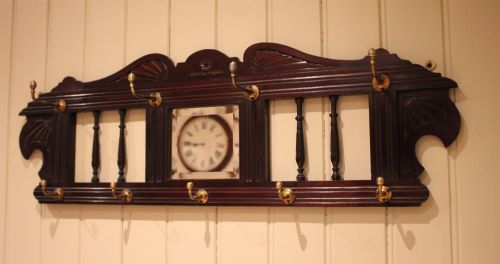
Most examples listed are freestanding poles or substantial hall trees that rest securely on the floor without wall fixings. Some wall-mounted coat racks also appear for more compact spaces.
Freestanding models rely on a wide base or weighted feet for balance when loaded with garments.