

Victorian Bedside Drawers
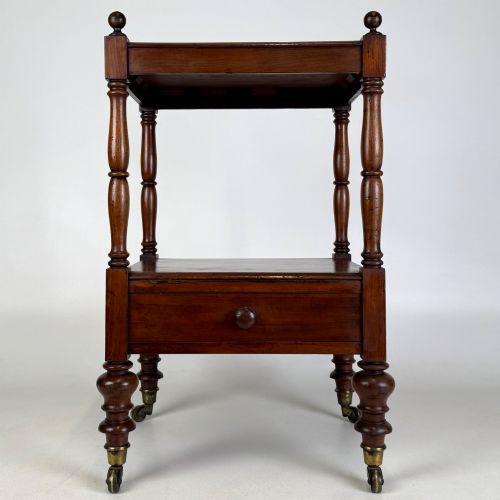
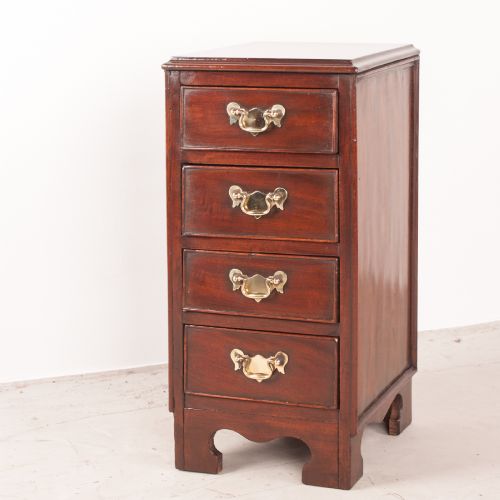
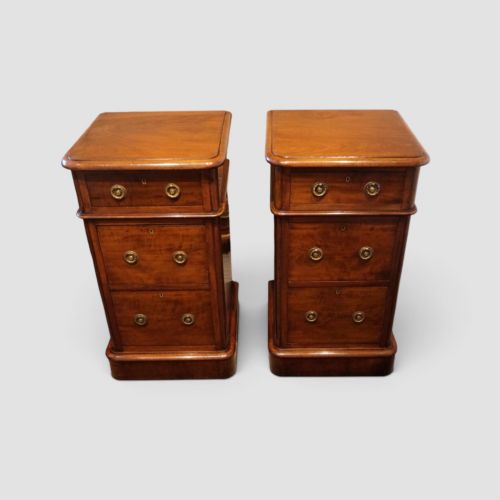
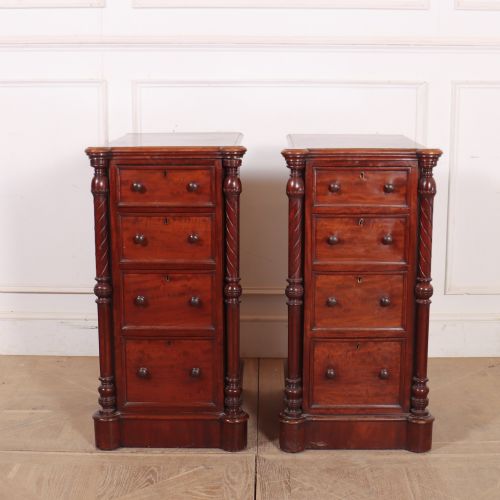
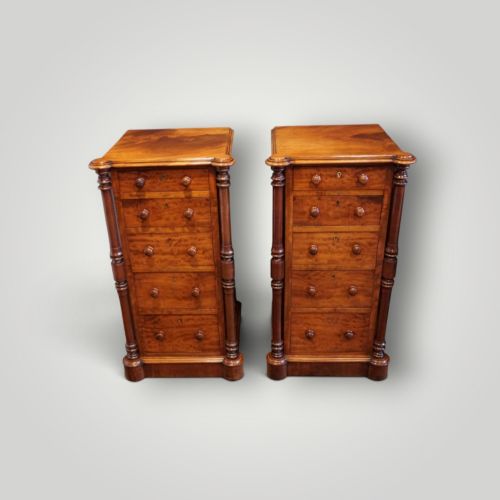
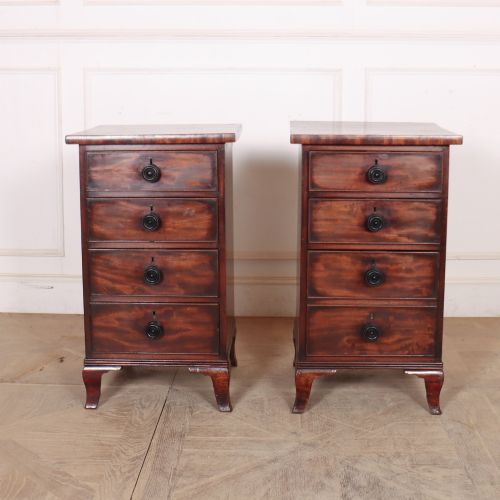
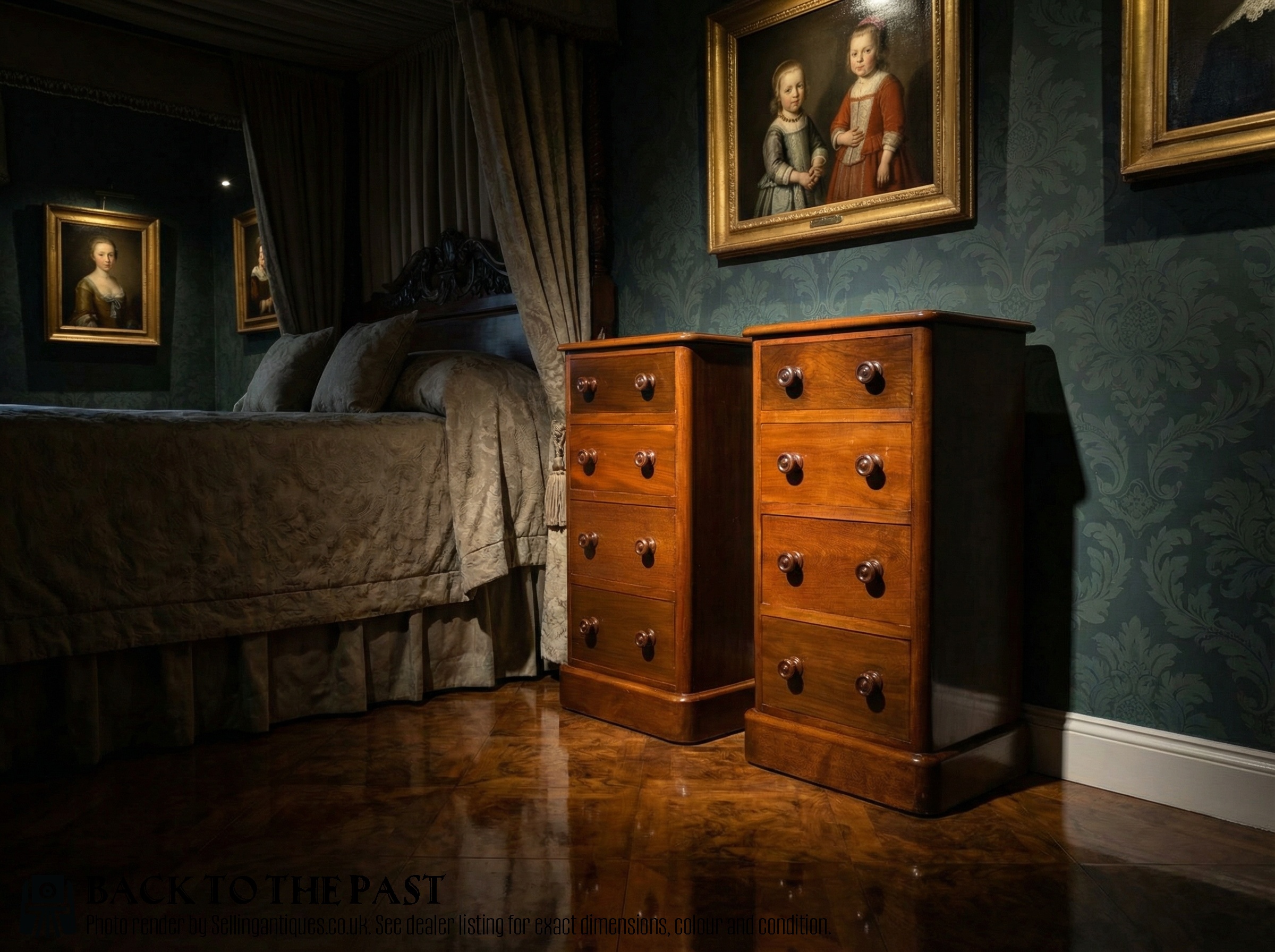
Victorian bedside drawers bring compact nineteenth-century storage to the bedroom, offering practical tiers for bedside essentials in rich traditional timbers.
Victorian Bedside Drawers
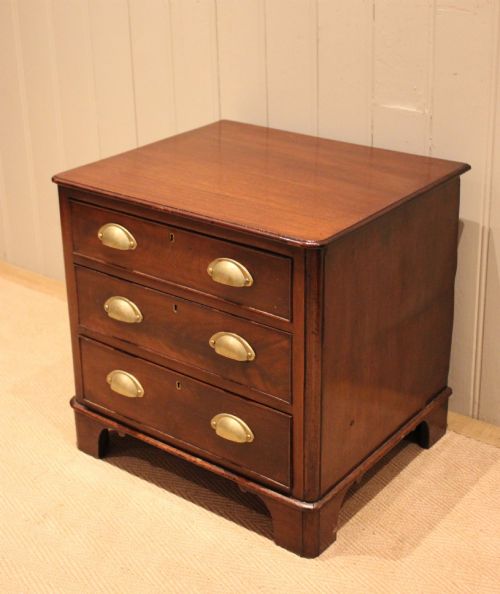
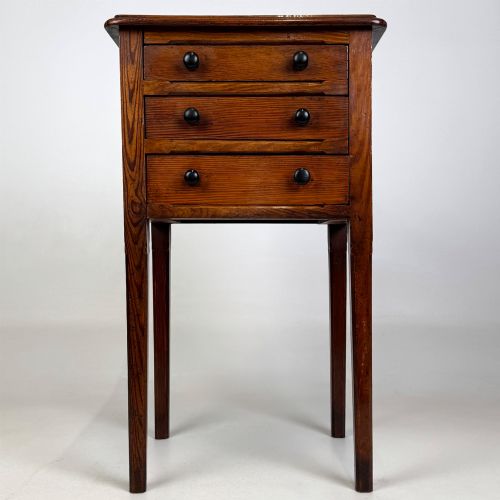
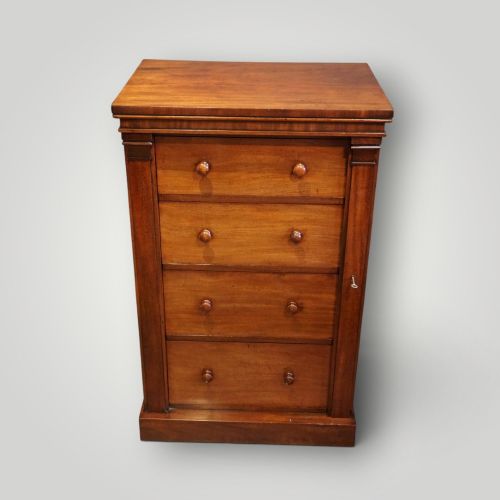
Beyond standard chests, variations include bowfront designs, low side tables with single drawers, and taller Wellington chests. Pieces span the broader Victorian era alongside related nineteenth-century iterations incorporating French revival styles or simpler country pine construction.
Distinctions in Quality
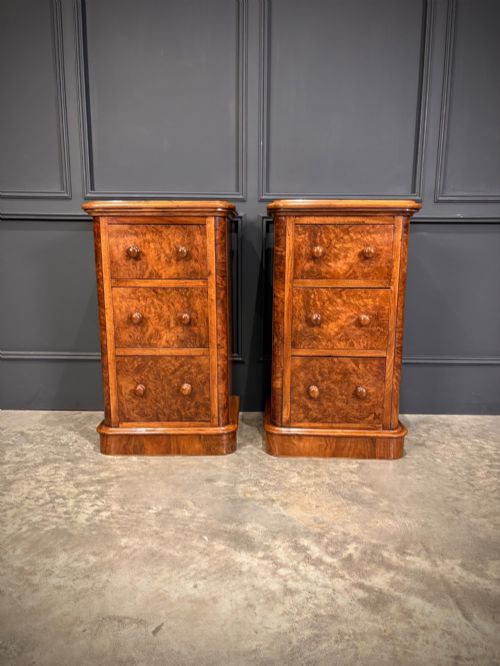
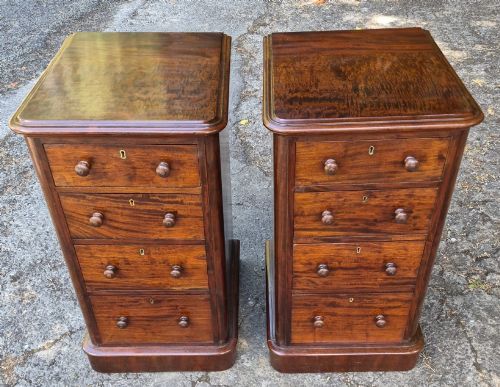
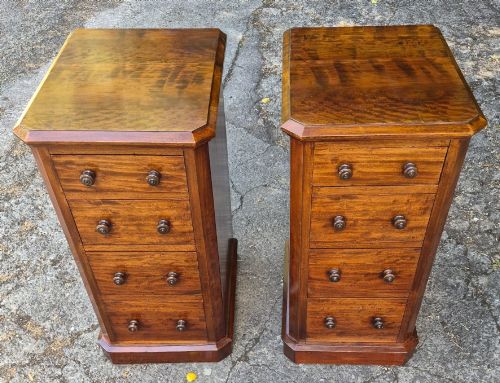
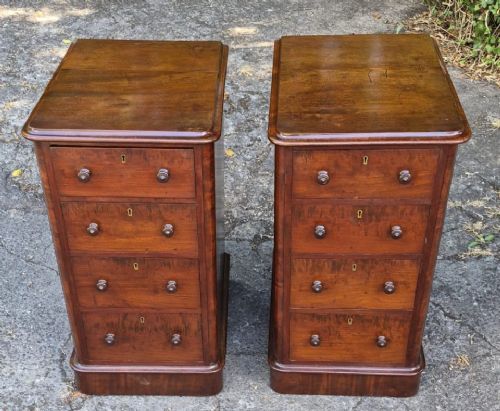
Quality rests upon the choice of timber and the precision of the cabinet work, particularly in the selection of figured veneers like burr walnut or mahogany. Superior examples maintain crisp drawer linings, tight dovetail joinery, and matching grain patterns across paired pieces.
Proportion and decorative restraint further separate standard utility items from finer chamber furniture. Well-executed details, such as integrated brass handles, subtle carving, or faithful period revival styling, elevate the standing of individual bedside chests.
Victorian Bedside Drawers Retail Price Guide 2026
Typical asking prices for victorian bedside drawers among the pieces listed under this phrase on Sellingantiques today, from the lower quarter to the upper quarter. They describe what is for sale here now, not the wider market.
Some nineteenth-century makers cleverly disguised the top tier of a bedside chest as a dummy drawer to conceal a pull-out night commode.
Warings Liverpool
The Victorian Bedside Drawers Glossary
- Wellington chest
- A tall, narrow chest of drawers secured by a hinged locking stile on one side that fastens over the drawer edges. This form originated in the nineteenth century and maximises vertical storage in tight spaces.
- Bowfront
- A curved cabinet front that swells outward in the centre, softening the geometric lines of a piece. This contour requires specialised woodworking skill to shape drawer fronts and matching frames.
- Marquetry
- The art of applying decorative pieces of veneer to a structure to form intricate picture designs or geometric patterns. It frequently appears on high-status Victorian and revival cabinets.
- Faux bamboo
- A decorative finish where wood is carved or turned to imitate natural bamboo stalks. This technique gained popularity during the late nineteenth century under Asian design influences.
- Dovetail
- A traditional interlocking joint utilised in drawer construction for maximum tensile strength. Fine nineteenth-century examples display closely spaced, hand-cut pins.
Victorian Bedside Drawers: Frequently Asked Questions
What is the difference between a bedside chest and a bedside cabinet?
Bedside chests feature stacked horizontal drawers spanning the full width of the unit, providing tiered compartmentalised storage for small personal items.
Bedside cabinets typically conceal a single interior shelf behind a hinged door, sometimes incorporating a small upper drawer disguised as part of the frieze.
Are Victorian bedside drawers usually found in pairs?
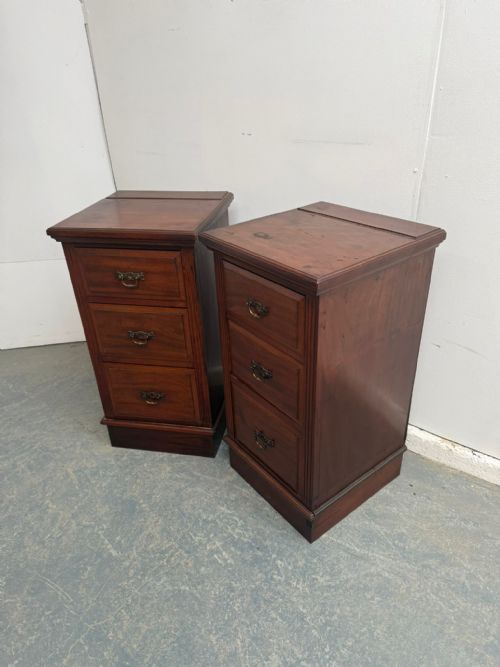
Many surviving nineteenth-century bedside chests and cabinets were manufactured and preserved as matched pairs to flank a double bed. Single pieces also appear frequently, originating from smaller rooms or single-bed chambers.
Matching pairs command distinct interest from collectors seeking symmetrical bedroom layouts.
How do I identify mahogany versus walnut on these pieces?
Mahogany displays a straight, tight grain with reddish-brown tones that darken gracefully over time through traditional waxing. Walnut exhibits a richer, darker brown hue with more pronounced, undulating grain patterns and contrasting colour variation.
Burr walnut further introduces intricate swirling knot formations across the drawer surfaces.
What does adapted mean in a listing description?
An adapted piece indicates that a furniture item has been altered from its original nineteenth-century form to serve a new function, such as reducing the height of a larger chest into a bedside proportion.
These alterations utilise period timber and techniques but represent modified historical furniture rather than untouched original production.