


Victorian Barrel Chair
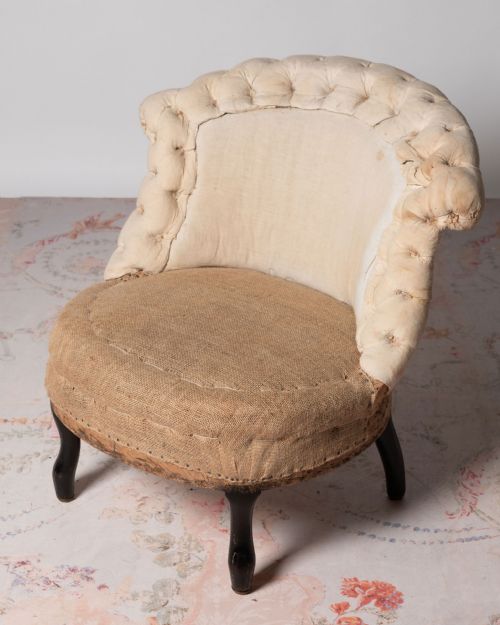
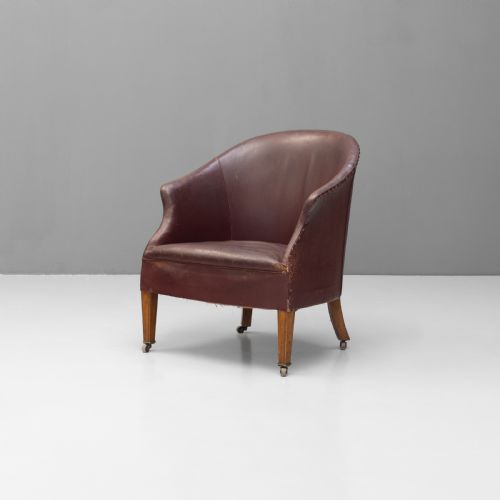
A victorian barrel chair wraps the sitter in a continuous curved back, offering deep comfort and solid nineteenth-century timber framing.
Victorian Barrel Chair
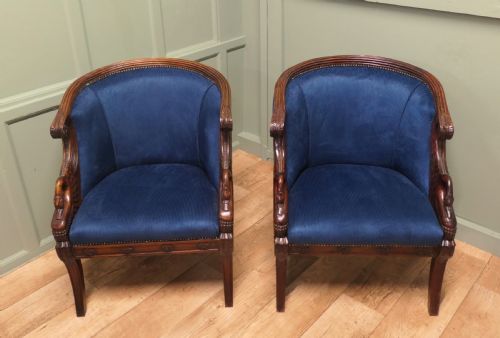
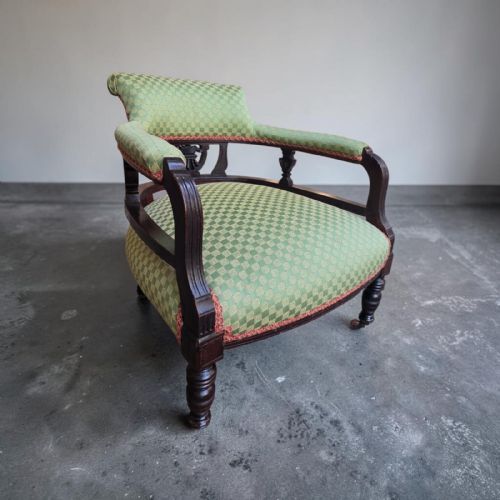
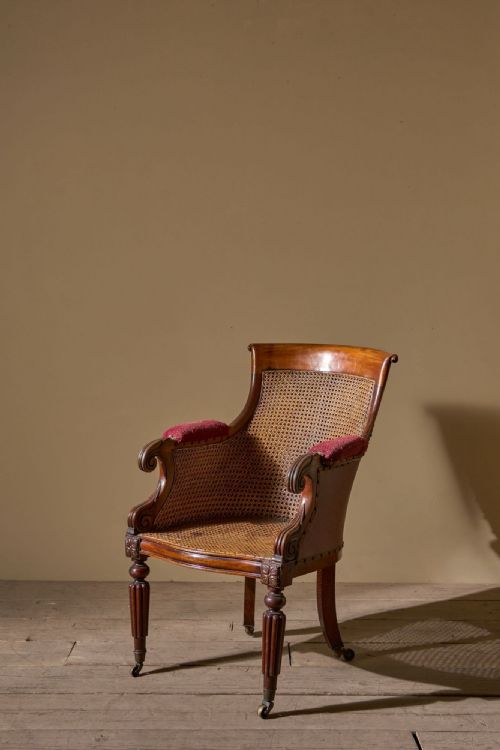
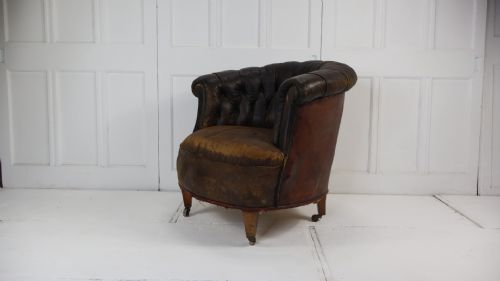
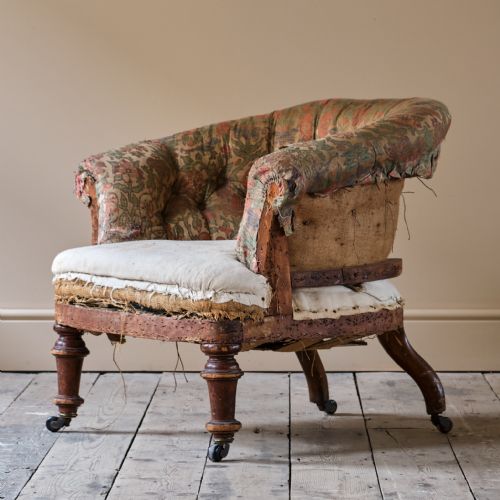
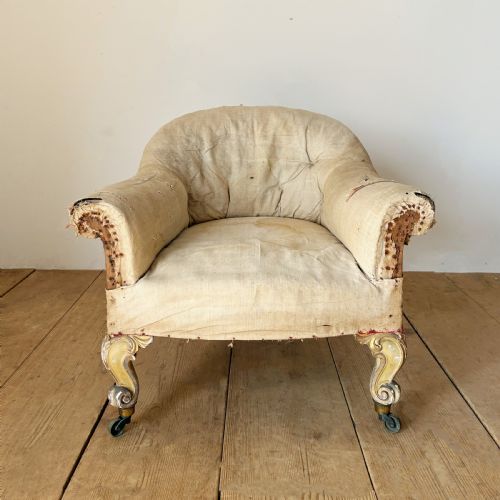
A victorian barrel chair stands out through its signature rounded backrest that flows seamlessly into low arms, creating a protective enclosure for the sitter. The evidence shows these seating forms emerging in various iterations across the nineteenth century, including library chairs, desk chairs, and large club armchairs.
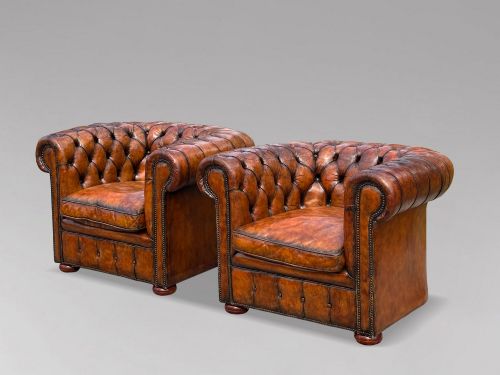
Most pieces seen here date from the Victorian era, alongside related examples from the Regency, Edwardian, and early twentieth-century periods. The rounded silhouette takes several structural paths, appearing as a plain tub chair, a button-backed shell, or a ribbed barrel back wing armchair.
Makers utilised sturdy woods like mahogany, walnut, oak, and rosewood for the foundational frames, often pairing the exposed timber with brass castors or turned supports. The scale ranges from compact parlour musicians' chairs to large, imposing library and club suites.
Materials and construction methods
Cabinet makers built the structural frames of a victorian barrel chair from dense hardwoods such as mahogany, walnut, and oak, ensuring the curved back rails maintained structural integrity under daily use. Joinery techniques relied on solid timber framing, sometimes incorporating ebonised finishes or showwood mahogany accents.
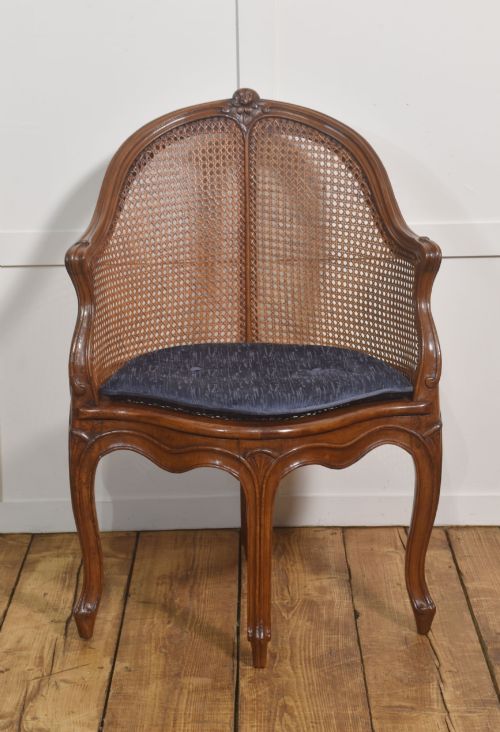
Upholstery formed a central part of the manufacturing process, utilising heavy leather, cane panels, or woven fabrics like velvet, damask, and standard upholstery cloth. Craftsmen often applied deep buttoning, ribbed fluting, or horsehair stuffing to shape the curved barrel shells and support the seat platforms.
Listings feature wood types including mahogany, walnut, oak, and rosewood, paired with leather, cane, velvet, and damask fabric.
Assessing quality in a victorian barrel chair
Quality rests upon the integrity of the curved wooden frame and the precision of the joinery where the arms meet the back rail. Pieces built with dense mahogany or walnut maintain tighter tolerances along their curved structures than softer woods.
The standard of upholstery and the choice of covering material dictate the seating grade, moving from standard woven fabrics to hand-dyed leathers or detailed buttoning. Retaining original cane work, structural brass elements, or branded maker details elevates an individual piece above standard workshop production.
Harrods·Howard and Sons
The Victorian Barrel Chair Glossary
- Tub chair
- A fully upholstered armchair featuring a low, continuous curved back and arms that form a cylindrical or tub-like enclosure. This form appears frequently across nineteenth-century listings.
- Barrel back
- A seating design where the backrest curves forward in a deep, semi-circular sweep resembling the stave construction of a barrel. It provides substantial side support to the occupant.
- Showwood
- Exposed timber framing on an upholstered chair where the polished wood of the arms, legs, or crest rail remains visible around the fabric. Mahogany and walnut are typical showwood materials.
- Button-back
- An upholstery technique where indentations are pulled deep into the padding using buttons arranged in a geometric diamond pattern. This method secures the internal stuffing and adds texture.
Victorian Barrel Chair: Frequently Asked Questions
What is a victorian barrel chair?
A victorian barrel chair is an upholstered or timber-framed seat characterised by a continuous curved backrest that wraps around the user. These pieces date primarily from the nineteenth century.
The design provides an enclosed, supportive seating experience, appearing in domestic settings as library chairs, desk chairs, and parlour armchairs.
How do I style a victorian barrel chair?
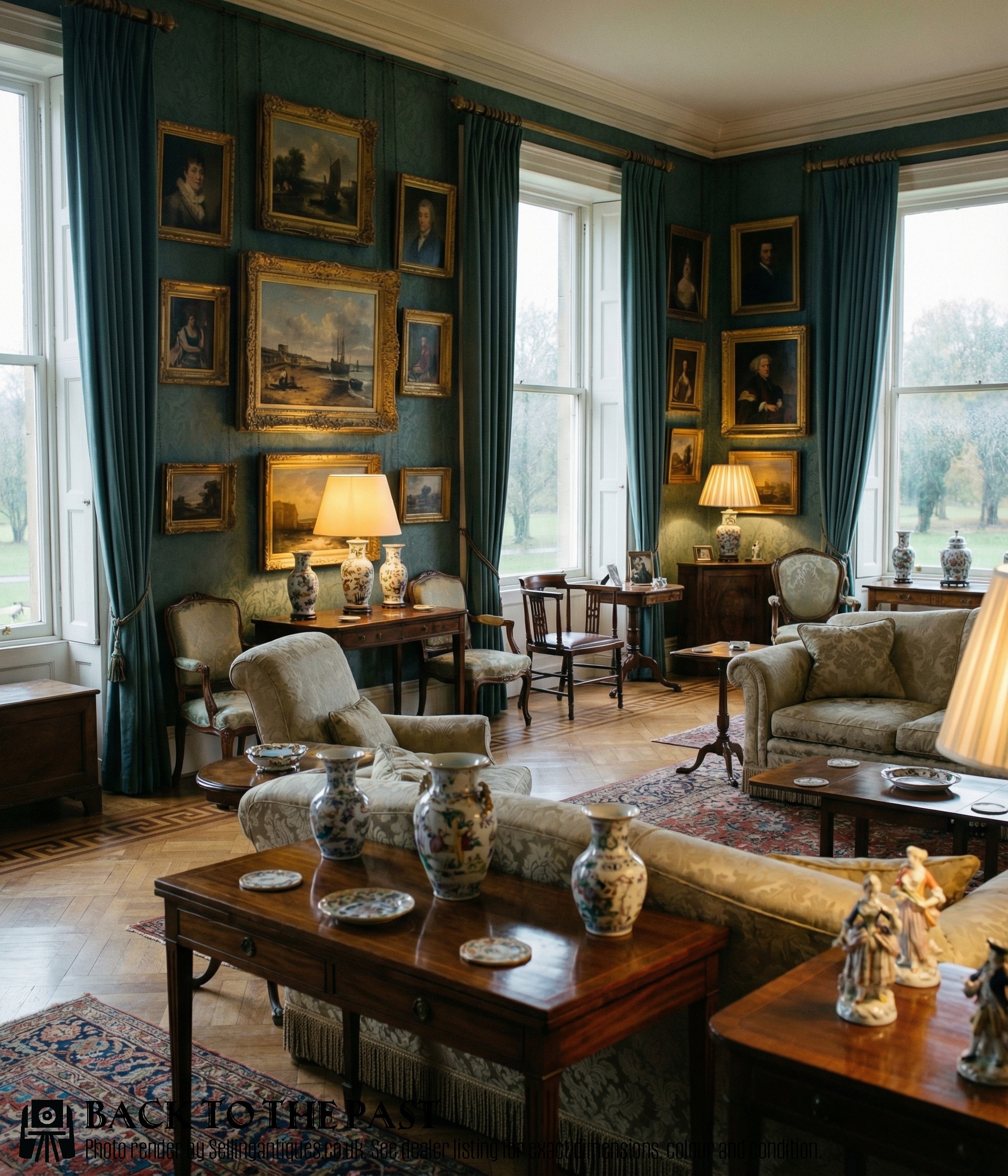
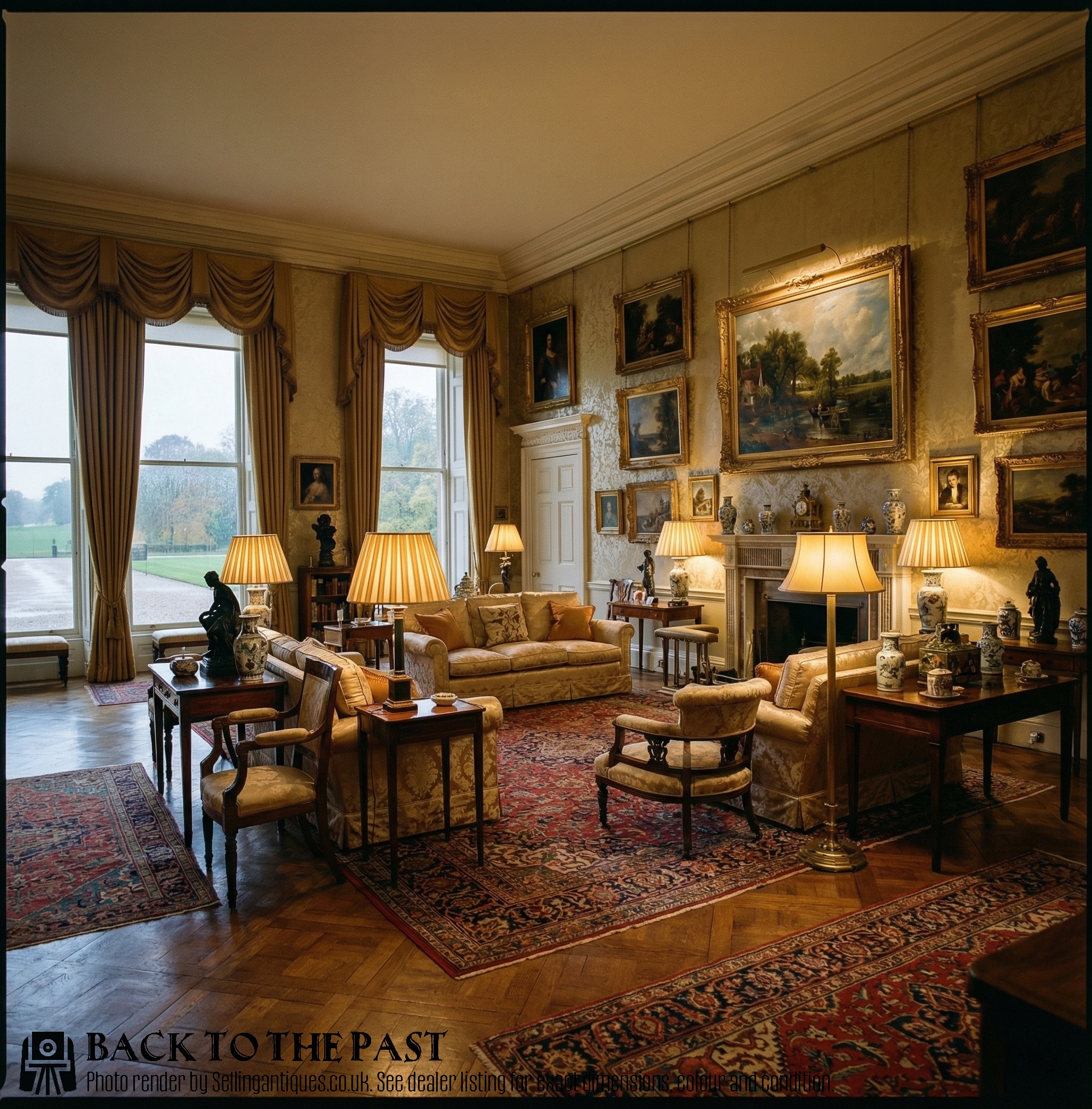
These chairs fit well into traditional studies, living rooms, and bedrooms where their curved silhouettes soften straight architectural lines. They pair naturally with wooden side tables and reading lamps.
Leather club versions suit heavier library settings, while cane and mahogany variations work well in lighter drawing rooms.
Were these chairs used at desks?
Yes, many nineteenth-century examples served as office or library seating. Solid oak and mahogany desk chairs often incorporated revolving mechanisms or cane seats for functional utility.
The curved back provided steady support during long hours of reading and writing.
How do I tell different periods apart?
Regency models display earlier classical influences with clean lines, while Victorian examples often feature heavier proportions, button upholstery, and rich mahogany frames. Edwardian pieces tend to be lighter in scale.
Materials and upholstery styles help narrow down the decade of production when combined with structural clues.