
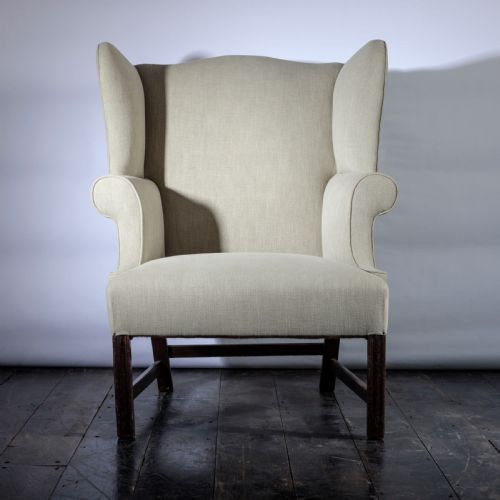


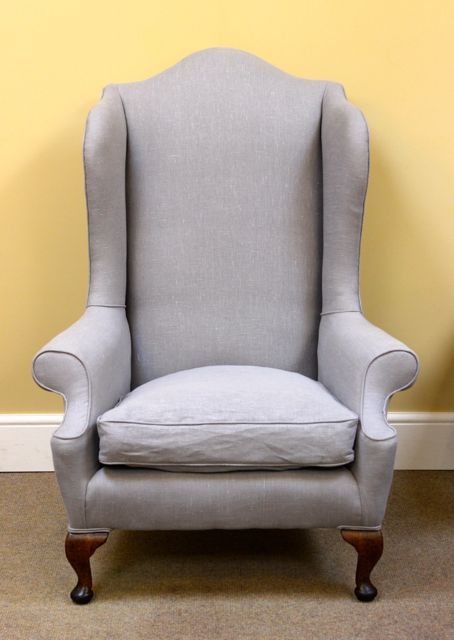


Linen Wingback Chair
These linen wingback chair examples offer deep comfort and period presence, spanning eighteenth-century origins to Edwardian sitting rooms.
Linen Wingback Chair
A linen wingback chair provides high sides designed to trap heat from a fireplace and shield the sitter from draughts. The pieces seen here encompass forms from the eighteenth century, the Victorian era, and the Edwardian period.
Most examples function as reading or library chairs, featuring upholstered wings and sturdy frames. The selection includes mahogany and walnut frameworks alongside barrel back and deep buttoned variations.
How they were made
The foundational frames utilise timber, specifically mahogany and walnut, constructed to support upholstered bodies. Wood frames provide the structural rigidity necessary for heavy daily seating.
Outer coverings rely on linen upholstery fabric, often paired with internal padding and occasionally secured with brass details. Frame construction relies on traditional joinery suited to each period.
Linen Wingback Chair Retail Price Guide 2026
Typical asking prices for linen wingback chair among the pieces listed under this phrase on Sellingantiques today, from the lower quarter to the upper quarter. They describe what is for sale here now, not the wider market.
Early wingbacks doubled as personal micro-climates, trapping hearth heat before central heating ruined the fun.
What varies in quality
Quality rests upon the integrity of the wooden frame and the precision of the upholstery work. Pieces featuring substantial walnut or mahogany structures demonstrate greater enduring stability.
The refinement of the proportions and the execution of the wing shape distinguish standard domestic seating from finer library and reading chairs.
The Linen Wingback Chair Glossary
- Wingback
- A chair design featuring protective sides or wings attached to the arms and back to block draughts. This form originated to keep sitters warm near open hearths.
- Linen upholstery
- A durable natural fabric covering utilised for centuries on seating frames. It offers a firm texture that wears well over time.
- Barrel back
- A seating style where the upholstered back curves continuously into the arms in a circular shape. This configuration wraps closely around the sitter.
- Deep buttoned
- An upholstery technique where buttons are pulled tight through the padding to create a quilted diamond pattern. This method secures internal stuffing while adding visual depth.
Linen Wingback Chair: Frequently Asked Questions
Where did people put wingback chairs?
These seats traditionally stood near hearths and fireplaces in living rooms and libraries. The high sides shielded occupants from cold air currents.
Later periods saw them placed in bedrooms and reading corners as occasional seating. Their generous proportions suited quiet spaces dedicated to books and relaxation.
How do I identify an eighteenth-century chair?
Eighteenth-century examples typically display mahogany or walnut frames with hand-carved details. Their proportions reflect the cabinet-making standards of the Georgian era.
Construction methods involve traditional joinery without modern fasteners. Examining the underside and frame joints reveals the hand-worked timber characteristic of this period.
How should I care for linen upholstery?
Linen fabric requires gentle vacuuming with a soft brush attachment to remove dust and debris. Avoid harsh chemical cleaners that might weaken natural fibres.
Professional textile cleaning is recommended for deeper maintenance. Keeping the fabric away from direct sunlight prevents premature fading.