




Victorian Balance Scales
Victorian balance scales bring functional nineteenth-century precision into modern rooms through polished brass and rich timber bases.
Victorian Balance Scales
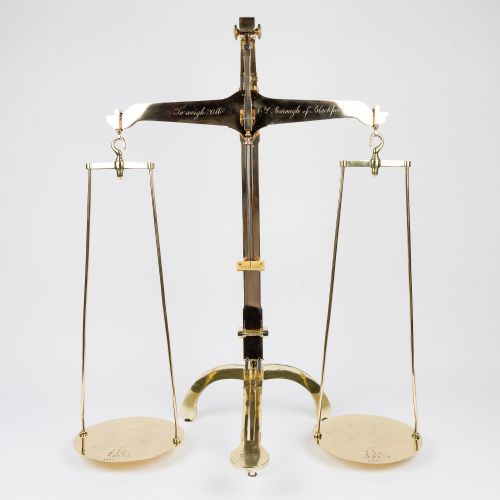
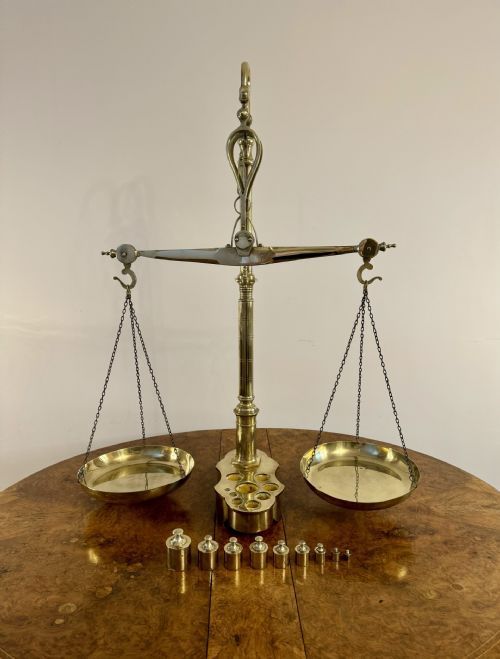
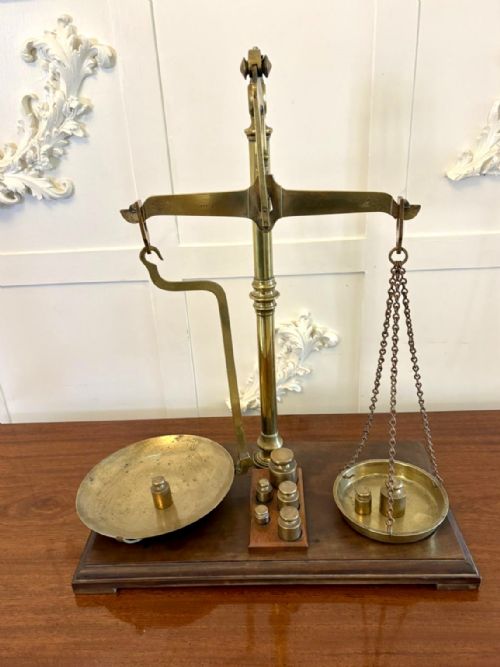
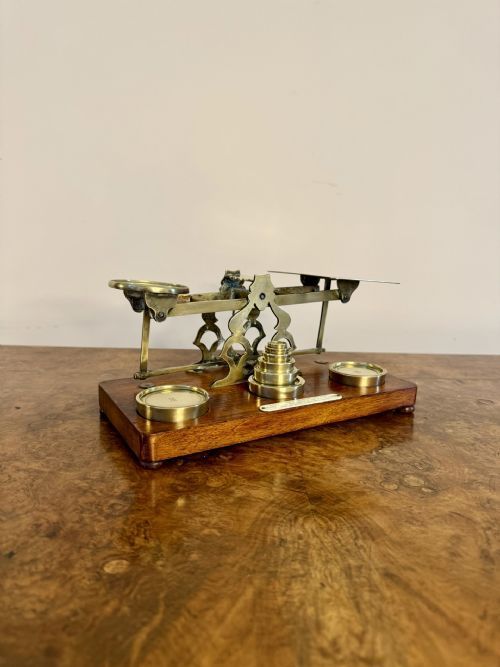
Victorian balance scales comprise mechanical weighing instruments designed for domestic, commercial, and scientific use during the nineteenth century and adjacent decades. Buyers frequently encounter postal scales mounted on mahogany, walnut, or oak bases alongside heavy brass beam scales intended for shops and apothecaries.
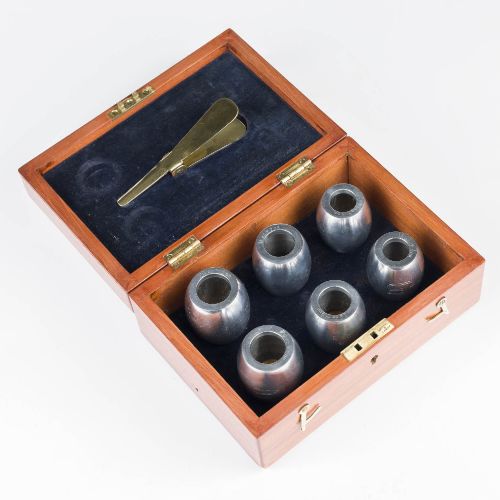
The selection ranges from compact letter scales featuring matched brass weights to monumental floor-standing butcher scales and verification balances. Many pieces retain original ceramic pans, brass bell weights, or maker inscriptions from prominent British firms.
Materials and construction
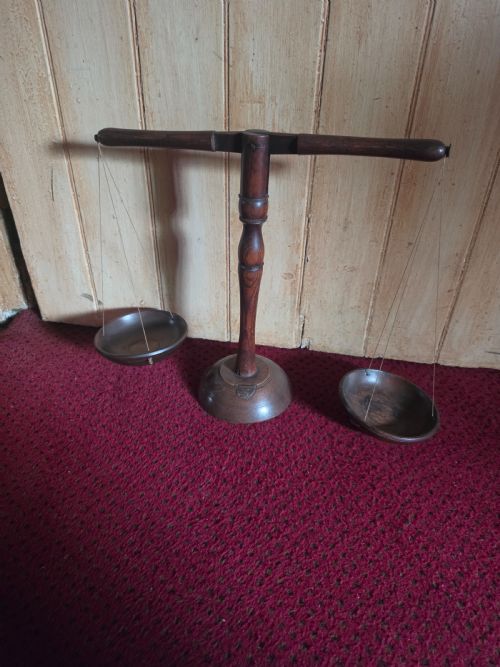
These instruments rely on combinations of cast iron, copper, and bright brass for the beams, pans, and hardware. Wood bases utilise dense timbers like mahogany, walnut, oak, and treen, frequently shaped with raised mouldings and fitted compartments for weights.
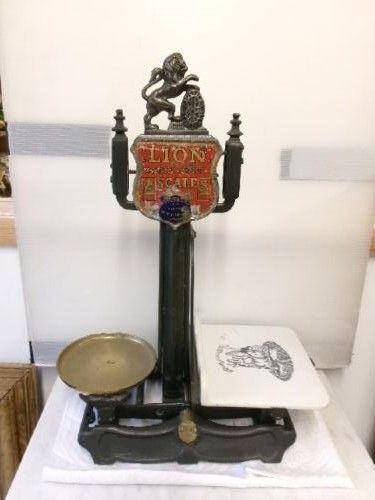
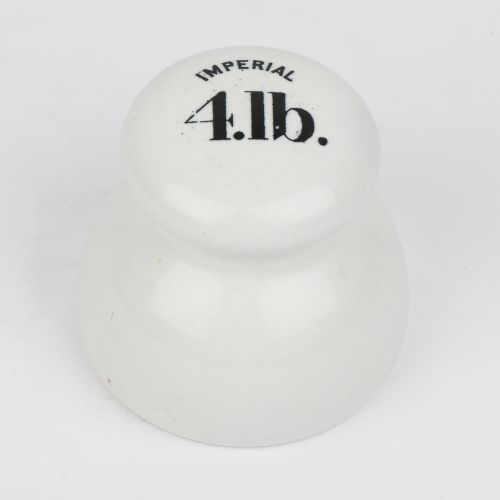
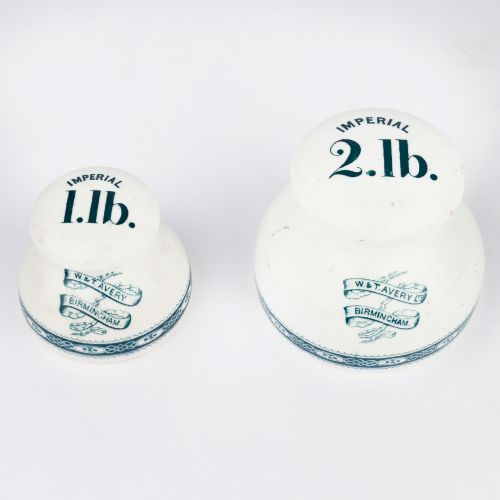
Makers incorporated ceramic elements through glazed scale pans and heavy stoneware weights produced by potteries. Precision mechanisms required hand-finished balancing arms and engraved verification markings stamped directly into the metal.
Palethorpes sausage scales keep watch over history with built-in advertising for pork products.
Distinctions in quality
Quality rests in the crispness of maker signatures, the integrity of the timber bases, and the presence of complete matching weight sets. Superior examples retain original lacquering on the brass and crisp vernier markings without excessive wear to the pivot points.
Commercial and verification scales built for municipal authorities or named manufacturers display heavier gauge metals and more robust joinery than standard domestic letter balances. The survival of specialised components, such as original glass pans or fitted wooden weight blocks, elevates the standing of an individual piece.
De Grave Short & Co·W & T Avery·Day & Millward·S Mordan & Co·Parnall & Sons·Ratcliff Birmingham·Bartlett & Sons·Hunt & Co
The Victorian Balance Scales Glossary
- Balance scale
- A weighing device operating on a central pivot with two suspended pans. Objects are weighed by placing standard masses on one side until the beam levels.
- Postal scale
- A compact countertop balance utilised for weighing letters and small parcels. These typically feature flat brass platforms or stepped wooden boards with nesting weight sets.
- Bell weight
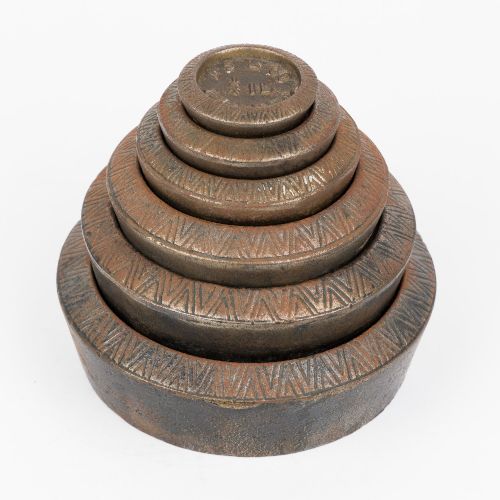
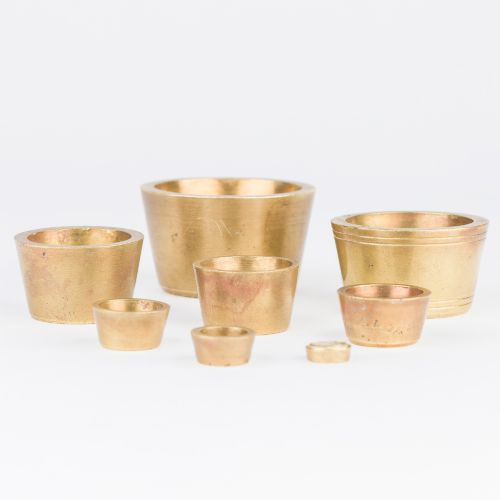
- A heavy brass weight shaped like a small bell with a vertical loop handle. These sit securely on shop scales and often bear official inspection stamps.
- Apothecary balance
- A sensitive precision instrument used by chemists for measuring medicine ingredients. They feature delicate brass beams enclosed within glass cases or mounted on fitted wooden drawers.
- Treen
- Small domestic objects fashioned from turned wood. In weighing sets, this refers to turned wooden containers and housings for miniature weights.
Victorian Balance Scales: Frequently Asked Questions
How do I use Victorian balance scales?
Place the object to be weighed on one pan and add matching calibration weights to the opposite side until the central metal pointer rests at the absolute centre. The total mass of the added weights equals the item.
Ensure the scale rests on a completely level surface before attempting to weigh anything. Uneven placement causes the delicate pivot beam to bind against the housing.
Were these scales used in homes?
Smaller postal and letter scales were standard fixtures in nineteenth-century studies and libraries for calculating postage costs before dispatching mail. Kitchen and dairy balances also saw domestic service for preparing ingredients.
Larger beam scales and butcher balances remained strictly within commercial shops, markets, and municipal offices rather than private residences.
How are postal scales different from shop scales?
Postal scales are generally mounted on decorative wooden bases made from mahogany or walnut, featuring a flat platform or small cradle specifically sized for letters. They prioritize neatness and desk presentation alongside weighing capacity.
Shop scales utilise heavier iron frames, massive brass beams, and suspended chains holding large brass bell weights or deep copper pans designed for daily commercial trade.
How do I care for brass and mahogany?
Dust the timber bases gently with a dry cloth and feed the wood occasionally with appropriate furniture wax to preserve the finish. Avoid abrasive cleaners that strip the historic patina from the grain.
Leave the brass unpolished or wipe it lightly with a soft cloth. Removing the natural dark oxidation diminishes the age appearance prized by collectors.