




Victorian Ash Seating
Victorian ash seating brings solid English vernacular forms into domestic spaces, offering sturdy vernacular construction built for everyday use.
Victorian Ash Seating
Victorian ash seating encompasses regional kitchen chairs, Windsor armchairs, and ladderback forms produced across the nineteenth century. These pieces serve as practical furniture designed for English country houses and farmhouses.
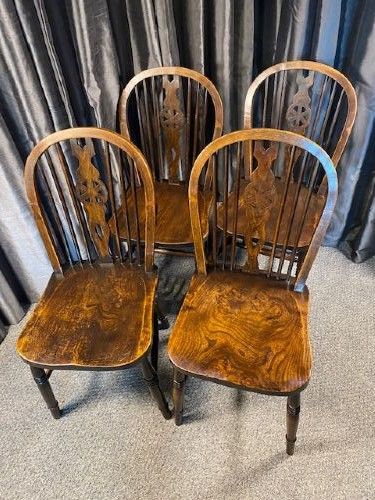
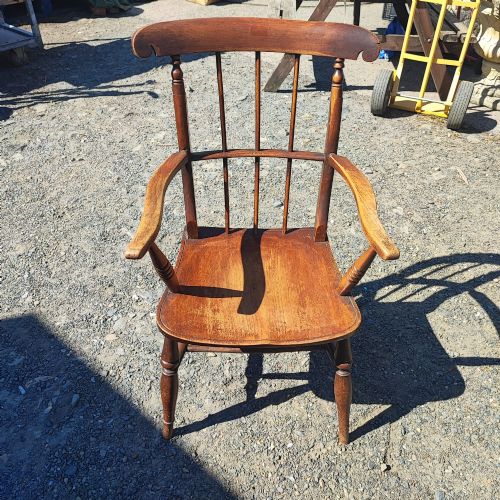
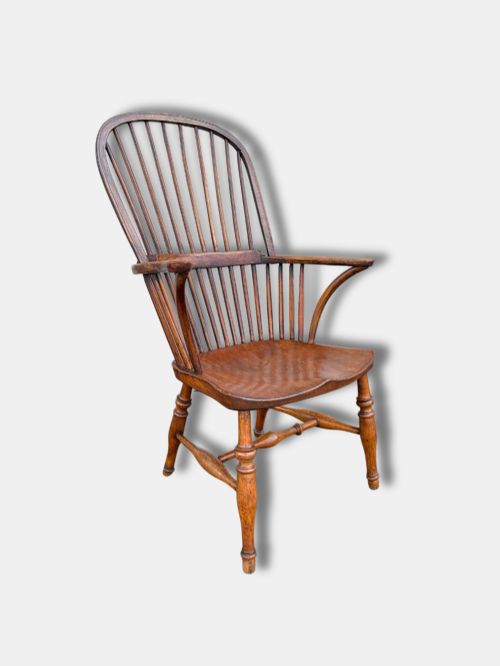
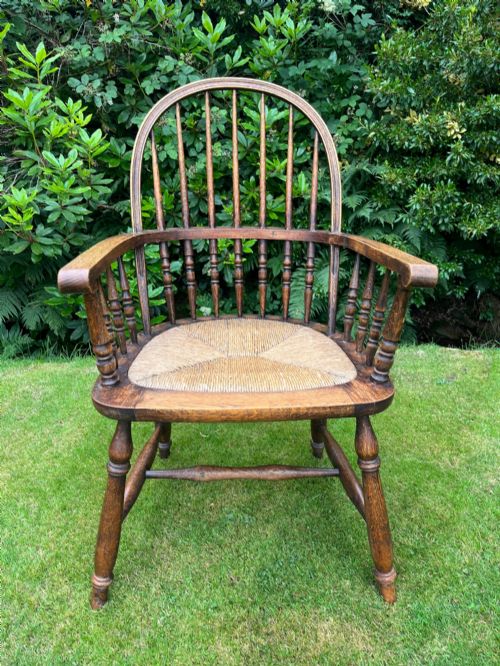
The most common form on this page is the Windsor chair, combining an ash frame with an elm seat. Such pieces range from low-back stick backs to broader kitchen carvers.
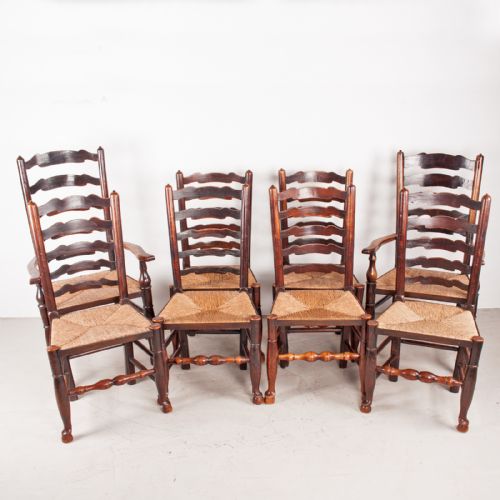
Makers in rural workshops constructed these chairs in sets as well as single pieces, spanning stick backs, hoop backs, and spindle backs.
Assessing quality
Quality rests in the handling of the timber, particularly the depth and comfort of the sculpted elm seat and the balance of the turned spindles. Better pieces display strong grain figures in the ash and well-defined arm scrolls.
Proportion and structural integrity distinguish finer workshops, with superior examples retaining original turned members and tight joinery across the undercarriage.
Listings feature nineteenth-century periods alongside materials including ash, elm, rush, beech, yew, alder, and oak.
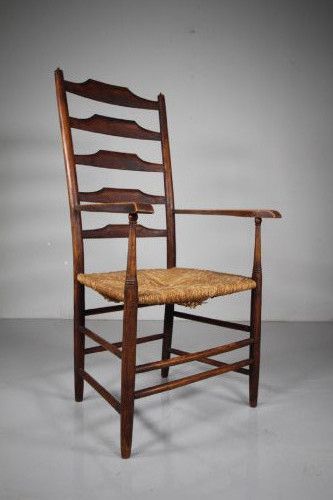
Philip Clissett·Ormskirk
The Victorian Ash Seating Glossary
- Windsor chair
- A chair built with a heavy wooden seat into which the legs and back spindles are driven directly. This form relies on a central bow or stick frame for support.
- Smoker's bow
- A low-backed Windsor armchair with a continuous curved armrail resting on short spindles. These comfortable seats are also known as captain's chairs.
- Ladderback
- A chair back constructed from horizontal slats set between two upright posts. These frames frequently support woven rush seats.
- Stick back
- A chair design featuring plain vertical wooden spindles inserted into the seat and top rail. This vernacular style is common in kitchen seating.
Victorian Ash Seating: Frequently Asked Questions
Where were these chairs used?
These pieces originated in English farmhouses, country houses, and rural kitchens. They functioned as everyday seating for dining and general household tasks.
Their robust construction made them suitable for continuous daily use in busy domestic environments.
How do I spot a smoker's bow?
A smoker's bow is characterised by a low, curved backrail that wraps around to form the armrests. Short turned spindles support this continuous rail above a low back.
They offer a compact armchair profile commonly found in nineteenth-century settings.
Are ladderback chairs comfortable?
Ladderback chairs rely on horizontal wooden slats and woven rush seats to provide support. The rush material yields slightly to the sitter.
These chairs frequently appear in sets for dining use around farmhouse tables.