


Rustic Child Armchair
These rustic child armchairs bring miniature craftsmanship and vernacular design into any room, offering historic seating built for younger generations.
Rustic Child Armchair
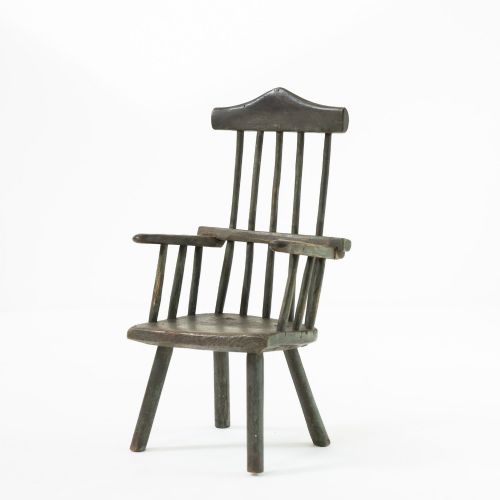
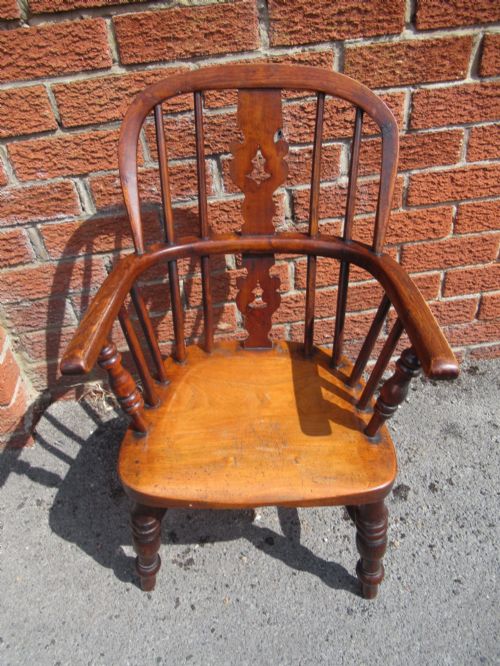
A rustic child armchair represents scaled-down domestic seating shaped by regional vernacular traditions. These pieces reflect adult furniture forms adapted for children, ranging from stick-back chairs to Windsor armchairs.
The versions most commonly met on this page span the eighteenth, nineteenth, and early twentieth centuries. Makers constructed them using local woods for everyday use in country homes.
Forms include ladderback high chairs, Windsor models, and hoop-back stick chairs. Each piece shows the distinct structural characteristics of English, Welsh, and Scandinavian country design.
Materials and construction methods
Makers utilised native timbers such as elm, ash, oak, yew, beech, and hard woods to build sturdy frames. Combinations like ash and elm appear frequently, offering contrasting grains and structural resilience.
Techniques relied on traditional vernacular joinery, including turned spindles, steam-bent bows, and pegged joints. Rush seating and painted surfaces also appear, reflecting the specific regional styles of the maker.
Listings feature periods spanning from the eighteenth century to the 1930s, utilising elm, ash, oak, yew, beech, paint, and rush.
Judgements of quality
Quality rests in the balance of proportion between the scaled-down frame and its structural integrity. Better examples maintain harmonious lines and retain original surface treatments without heavy intervention.
The selection of timber significantly affects the character of the piece. Yew and figured elm show a higher degree of material choice compared to standard utility hardwoods.
The Rustic Child Armchair Glossary
- Windsor chair
- A chair built with a solid wooden seat into which the legs and back spindles are direct-inserted. This construction provides strong support through a combination of turned components.
- Stick back
- A chair design where the back consists of simple turned or cleft sticks fitted into the seat. These form a light yet rigid structure characteristic of vernacular furniture.
- Ladderback
- A chair featuring horizontal slats or bars between the rear upright posts. This traditional form often incorporates rush seating.
- Vernacular furniture
- Domestic objects made by local craftspeople using regional materials and traditional designs rather than high-style workshop conventions. These pieces serve immediate functional needs.
- Rush seat
- A seating surface woven from dried marsh grasses or rushes. This technique creates a durable, textured platform for seating.
Rustic Child Armchair: Frequently Asked Questions
What periods do these chairs come from?
The listings include pieces spanning from the eighteenth century through the Victorian era and into the early twentieth century. Examples encompass Georgian, nineteenth century, and 1930s periods.
Craftsmen produced these vernacular seats across various decades using traditional methods that evolved slowly over time.
How were these child armchairs used?
Families used these miniature seats for everyday domestic life in rural and country households. They provided functional seating for children at table or hearth.
Some specialised forms, such as high chairs, specifically elevated younger children to table height during meals.
What woods were used to build them?
Makers relied on native hardwoods available in their local regions, selecting timber for strength and availability. Common materials include elm, ash, oak, beech, and yew.
Combinations of different woods within a single chair, such as ash frames with elm seats, occur regularly across the inventory.
How do you distinguish regional styles?
Regional differences appear in the specific stick placement, turning patterns, and framing techniques. Welsh vernacular pieces often feature distinct stick-back or hoop-back arrangements.
Scandinavian and English country models display their own local interpretations of vernacular seating forms.