



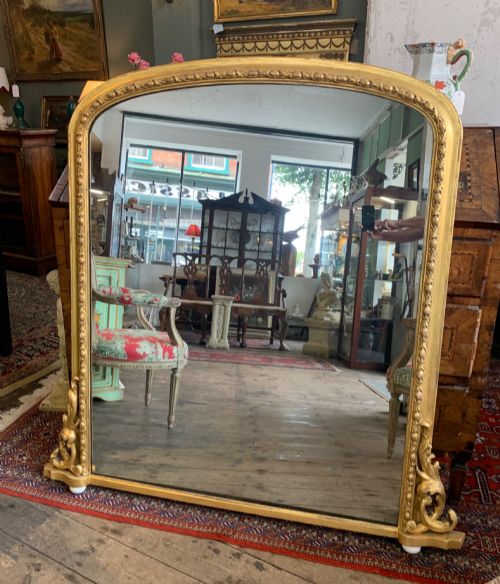
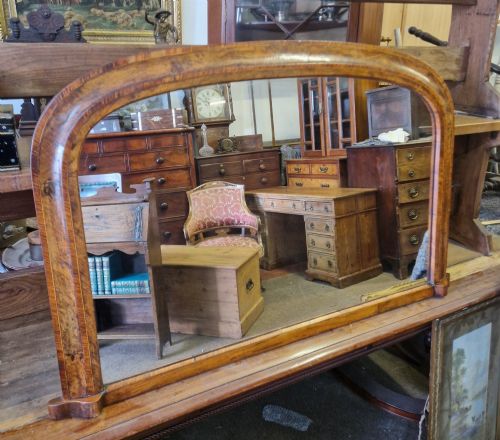
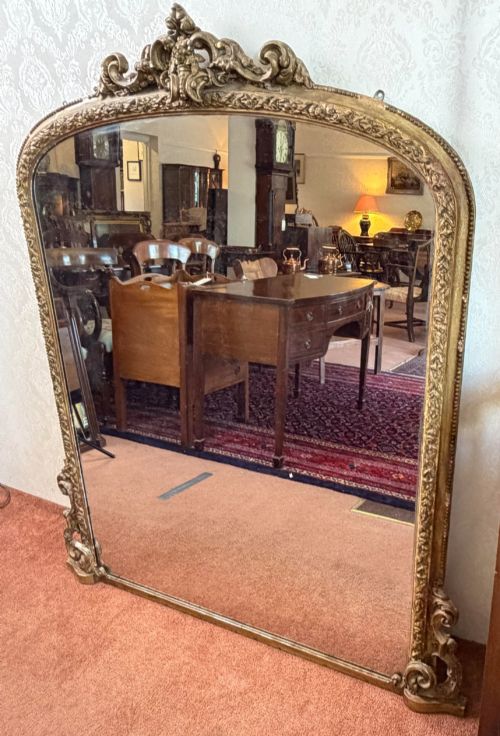
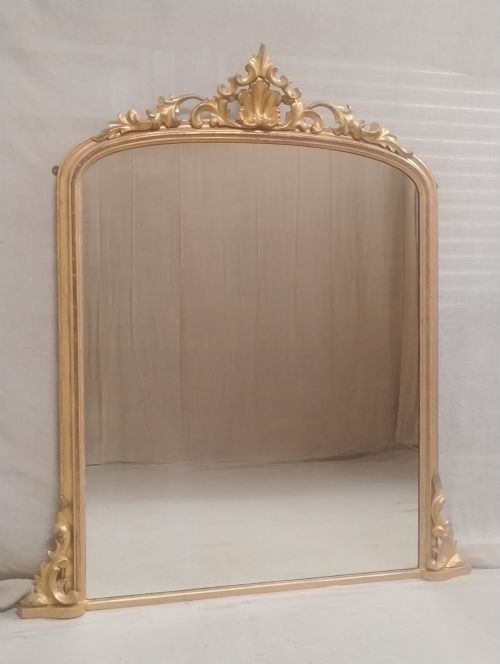
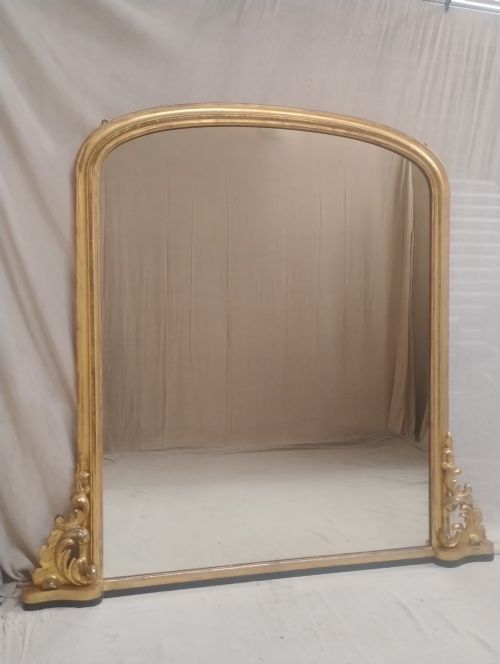
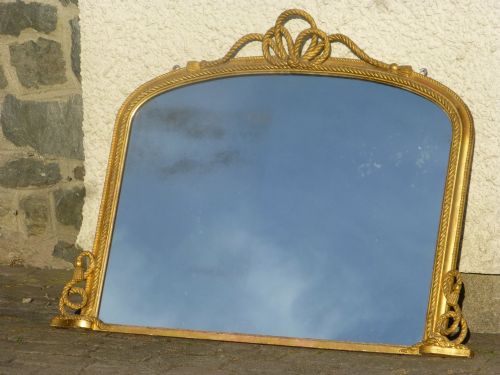
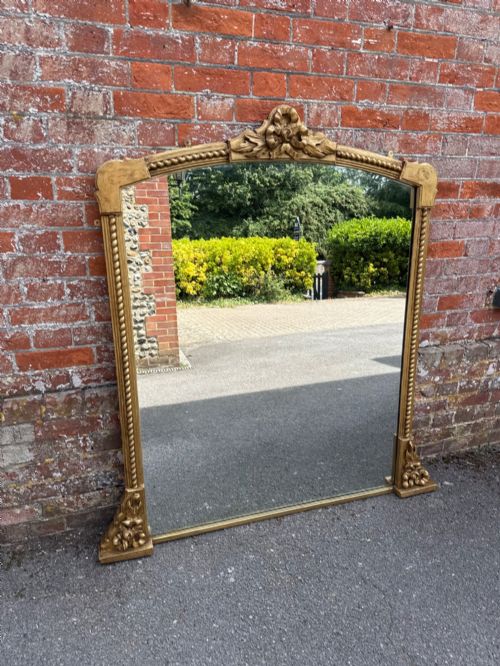
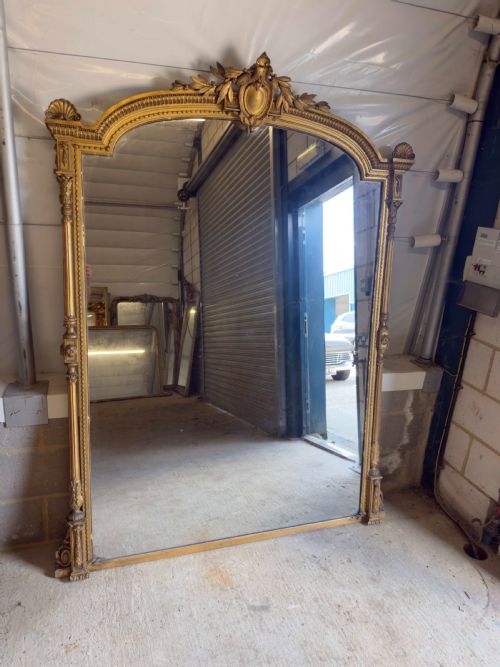
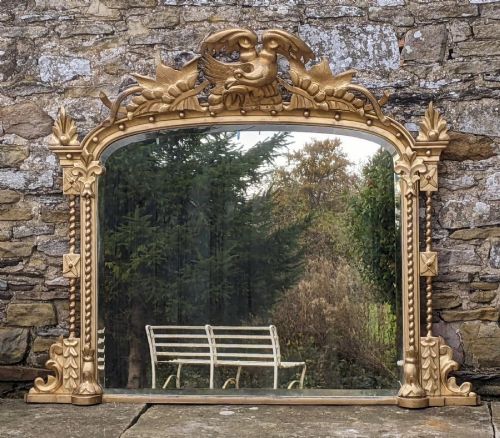
Victorian Arched Mantel Mirror
A victorian arched mantel mirror brings height and reflected light to a room, sitting naturally above a fireplace grate.
Victorian Arched Mantel Mirror
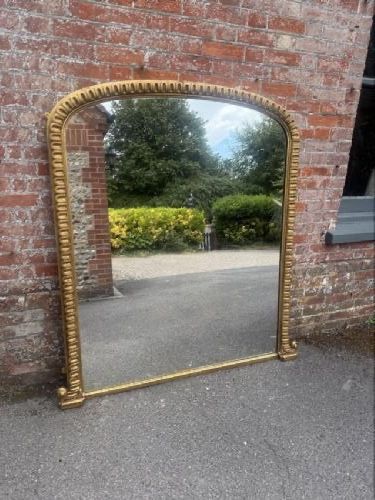
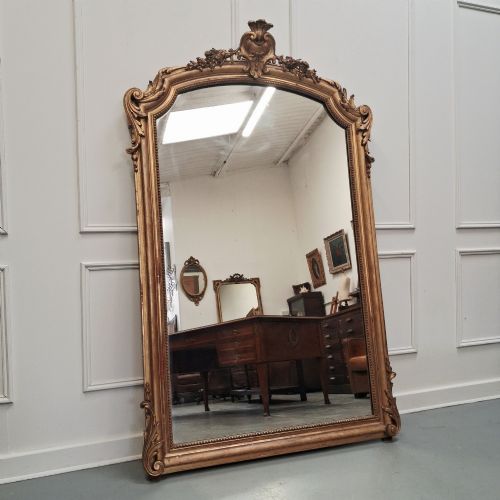
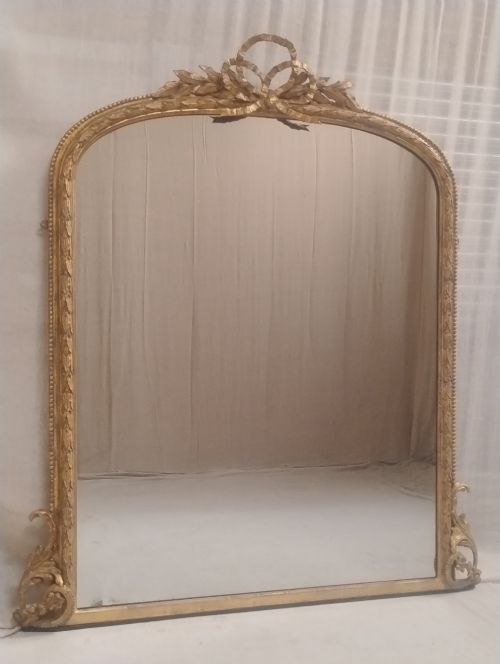
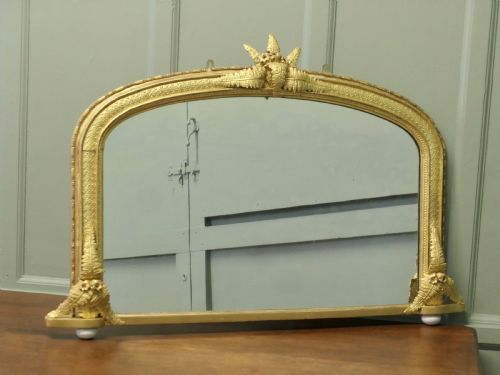
A victorian arched mantel mirror is a large wall-hanging glass panel designed specifically to occupy the space above a chimney breast. These pieces span periods from early Victorian to the late nineteenth century, taking the form of overmantel mirrors, wall mirrors, and large decorative arched frames.
Materials and construction
Frames rely on carved wood foundations built from timber such as walnut or pine, which provide structural stability for the heavy glass. Artisans applied layers of gesso and composition moulding over the wood base to build up intricate decorative motifs before gilding.
Finishes utilise gold leaf, silver, or paint to coat the gesso mouldings, often incorporating rope twist details, fern leaf decorations, or central cartouches. The mirror glass itself sits securely within these heavy frames, occasionally showing the subtle foxing expected from nineteenth-century silvering techniques.
Listings feature pieces spanning the nineteenth century, incorporating French rococo revival alongside English overmantel designs.
Assessing quality
Quality rests upon the crispness of the carved wood and the depth of the gesso mouldings applied to the frame. Superior examples display sharp relief in details like rope twists and central cartouches, whereas lesser pieces show softer, shallower ornament where composition mouldings have worn.
The integrity of the original gilding and the condition of the glass plate also define the upper tier of these mirrors. Retaining original gold leaf and authentic mirror plates separates finer collector pieces from those subjected to later repainting or reglazing.
The Victorian Arched Mantel Mirror Glossary
- Gesso
- A plaster-like mixture applied to wooden frame bases to create a smooth surface for gilding. It allows artisans to carve intricate relief decorations.
- Giltwood
- Timber that has been coated with thin sheets of gold leaf or gold paint. This finish creates the bright metallic appearance seen on nineteenth-century frames.
- Overmantel
- A large mirror specifically proportioned to hang on the wall directly above a fireplace mantel. These pieces were designed to reflect firelight and brighten Victorian rooms.
- Cartouche
- An ornamental frame or tablet resembling a scroll or unrolled parchment, often placed centrally on the crest of a mirror. It provides a focal point for decorative carving.
- Composition
- A moulded mixture of whiting, resin, glue, and linseed oil pressed into shapes. It was used extensively on Victorian frames as a faster alternative to hand carving.
Victorian Arched Mantel Mirror: Frequently Asked Questions
How do I hang a heavy overmantel mirror?
These mirrors require robust wall fixings secured directly into masonry or heavy wall studs to support their substantial weight. Professional mirror hangers usually employ heavy-duty steel brackets attached to the back frame.
Position the mirror so the bottom edge sits comfortably above the mantel shelf, leaving enough clearance to prevent the frame from resting directly on the marble or wood.
Did these mirrors always sit on mantelpieces?
While primarily manufactured as overmantels to anchor the chimney breast, many large nineteenth-century examples functioned equally well as freestanding wall or hall mirrors.
Their proportions allow them to stand on the floor leaning against a wall or hang securely in entrance halls to create an illusion of greater depth.
How do I clean nineteenth-century mirror glass?
Use a soft microfibre cloth and a mild, ammonia-free glass cleaner applied to the cloth rather than directly onto the mirror surface. This prevents moisture from seeping behind the glass plate.
Exercise caution around the edges where the original silvering may be fragile or degraded, avoiding excessive pressure on foxed areas.
What indicates an early Victorian mirror?
Early Victorian and William IV examples often feature simpler architectural lines, heavier timber construction, and restrained classical ornamentation compared to later rococo revival pieces.
The presence of original hand-beveled glass plates and traditional gesso over carved wood without synthetic resin substitutes points towards earlier nineteenth-century production.