

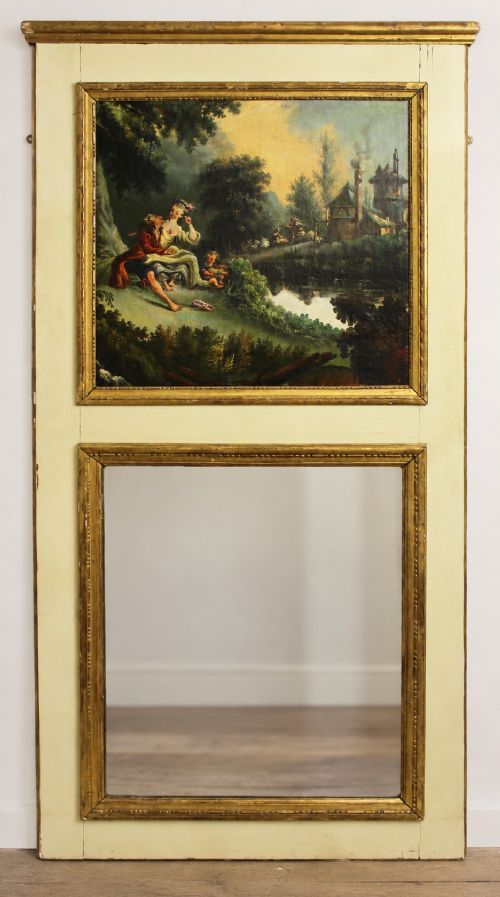
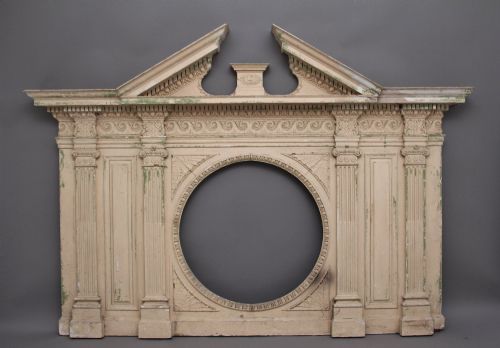


Antique Painted Chimneypiece Mirror
These antique painted chimneypiece mirror pieces anchor a room with period proportion and reflected light.
Antique Painted Chimneypiece Mirror
An antique painted chimneypiece mirror sits above a fireplace to lift the eye and bounce daylight around the room. You meet these primarily as overmantel mirrors and architectural trumeau mirrors originating from the eighteenth and nineteenth centuries.
The selection here draws heavily on Victorian, Regency, and Georgian periods. Makers shaped these frames to sit precisely on the mantelpiece shelf, spanning architectural styles from Neoclassical and Rococo Revival to the Aesthetic Movement.
How they were made
Craftsmen built the underlying structure using wood, frequently pine, before applying layers of gesso to build up decorative moulding and carved detail. Artisans then finished the surfaces with paint, gold leaf, or parcel-silvered touches.
Mirrors relied on mirror glass set within heavy wooden frames, often enhanced by composition ornamentation moulded and applied by hand.
Antique Painted Chimneypiece Mirror Retail Price Guide 2026
Typical asking prices for painted chimneypiece mirror among the pieces listed under this phrase on Sellingantiques today, from the lower quarter to the upper quarter. They describe what is for sale here now, not the wider market.
Some mirrors still hold the faint aroma of Victorian coal fires after centuries above the hearth.
What varies in quality
The distinction between ordinary and superior examples lies in the depth of the carving and the subtlety of the painted surface. Hand-carved wooden details and layered gesso show greater finesse than mass-produced composition ornament.
Original glass plates with soft silvering and foxing carry more character than modern replacements. The integrity of the original paint and parcel gilding also determines the standing of the piece.
The Antique Painted Chimneypiece Mirror Glossary
- Overmantel mirror
- A large mirror designed specifically to hang or stand upon the mantelpiece above a fireplace. These frame domestic hearths across Victorian and earlier interiors.
- Trumeau mirror
- An architectural wall mirror often incorporating a painted panel or oil painting above the glass. Eighteenth-century examples draw on classical symmetry.
- Gesso
- A plaster-like mixture applied to wood frames to create a smooth surface for gilding and paint. Artisans carve and mould this material to achieve ornate relief decoration.
- Parcel gilt
- Partially gilded decoration where gold leaf highlights specific carved areas against a painted background. This technique adds depth to Regency and Victorian frames.
Antique Painted Chimneypiece Mirror: Frequently Asked Questions
How do I clean an antique mirror glass?
Use a soft, dry microfiber cloth to remove dust gently from the glass and the painted frame. Avoid chemical sprays that might seep behind the aged glass plates and damage the original silvering.
Take care around areas of distressed paint and gold leaf, as vigorous rubbing can lift historic finishes.
Can I place these mirrors in a hallway?
While originally built for the chimneypiece, large overmantel and wall mirrors suit entrance halls and reception rooms. Their scale expands narrow spaces and reflects natural light effectively.
Ensure the wall construction supports the substantial timber and gesso weight of nineteenth-century frames.
How do I spot an eighteenth-century frame?
Early frames show hand- carved pine structures beneath the gesso, often displaying architectural proportions rooted in Georgian and Neoclassical design. The joinery and tool marks differ markedly from later Victorian production methods.
Examine the backboards and fixings for age indicators such as handmade nails and oxidised iron screws.