

Victorian Apprentice Chest Drawers
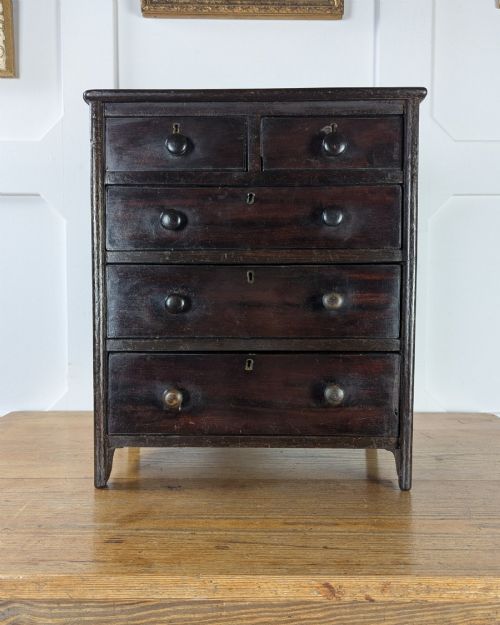
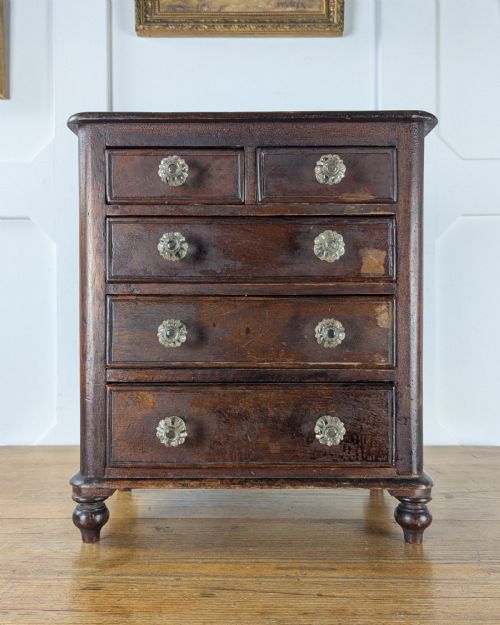
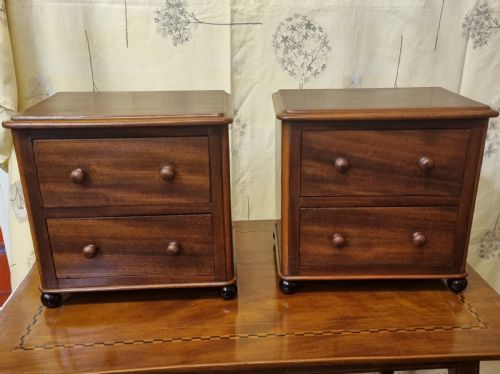
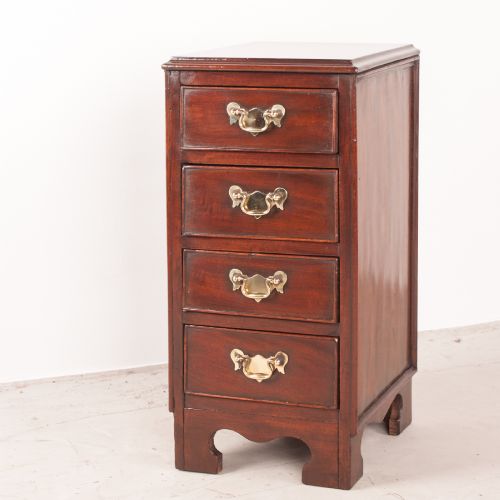
These miniature pieces known as a victorian apprentice chest drawers offer functional tabletop storage scaled down from full-size furniture.
Victorian Apprentice Chest Drawers
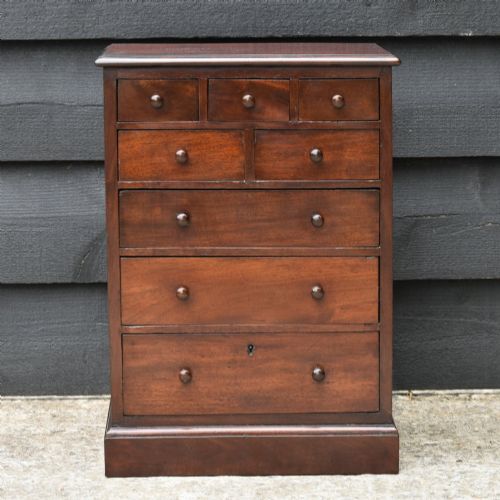
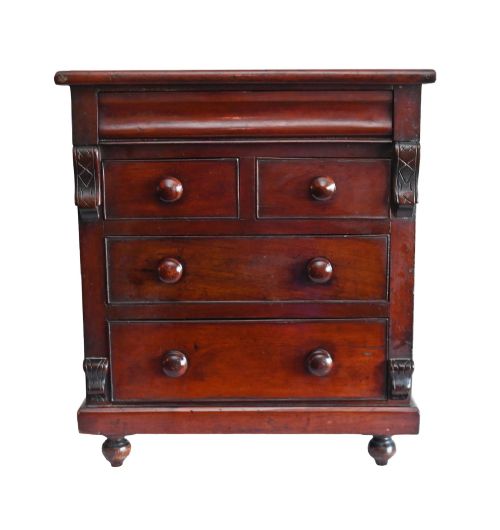
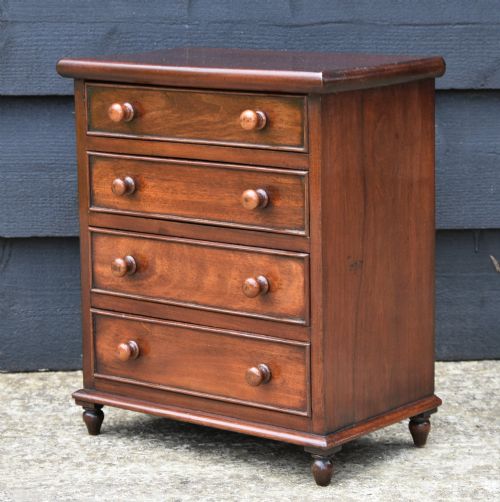
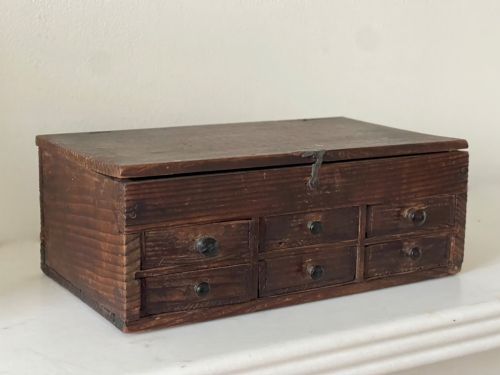
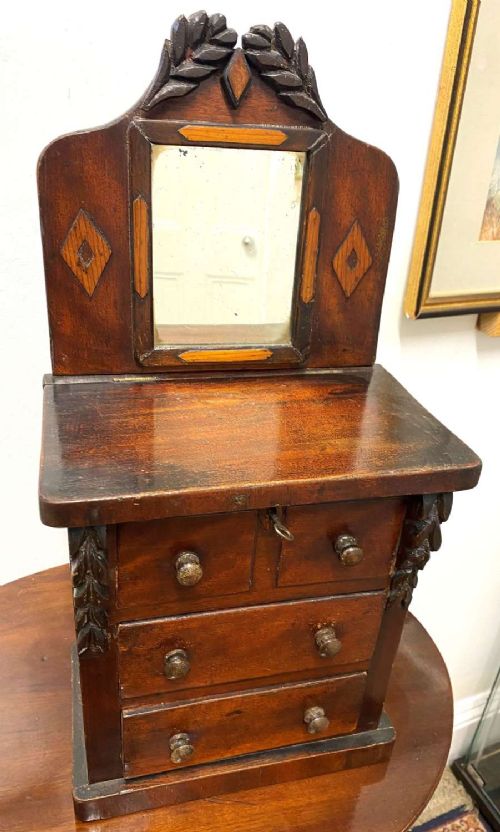
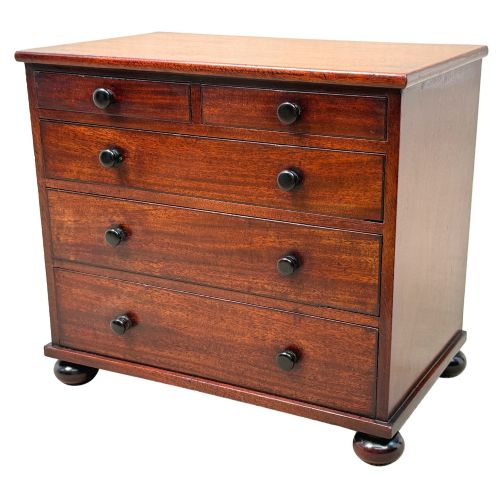
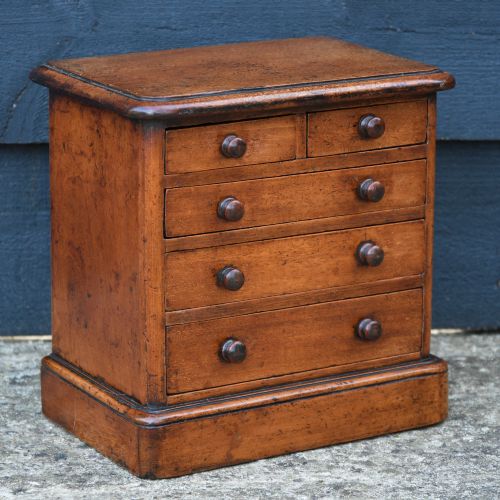
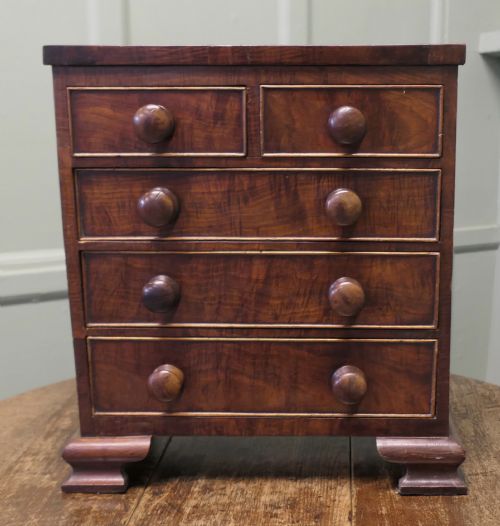
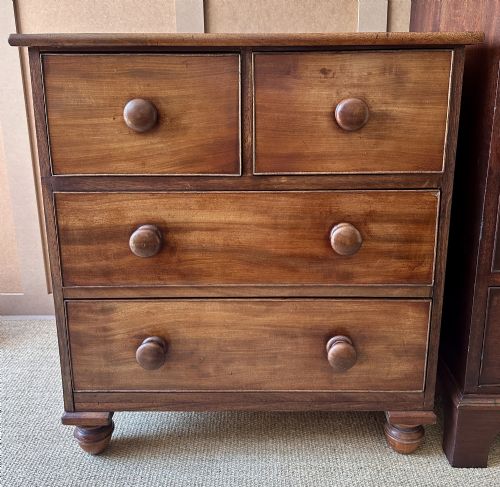
When searching for a victorian apprentice chest drawers, collectors encounter small-scale furniture designed as cabinetmakers' demonstration pieces or specialised desktop storage. These items replicate full-sized proportions in formats such as bowfronts, Wellington chests, and Scotch chests.
The objects originate primarily from the nineteenth century, spanning periods from early Victorian epochs through to the later decades of the eighteen-eighties and eighteen-nineties. Tabletop formats and jewellery boxes dominate the forms met on this page.
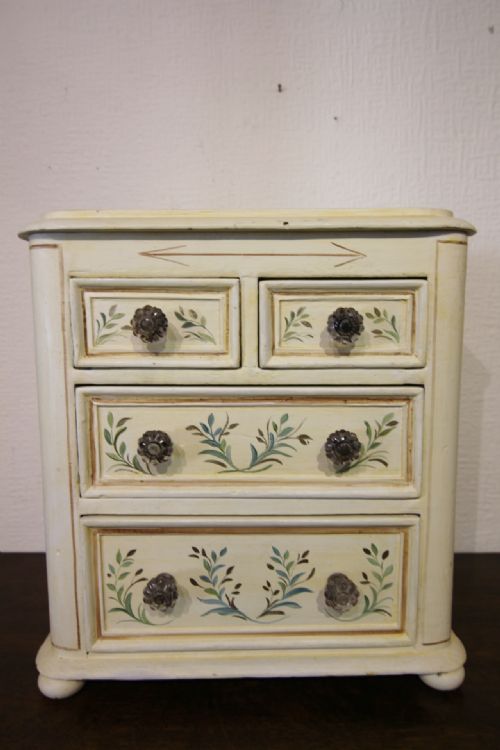
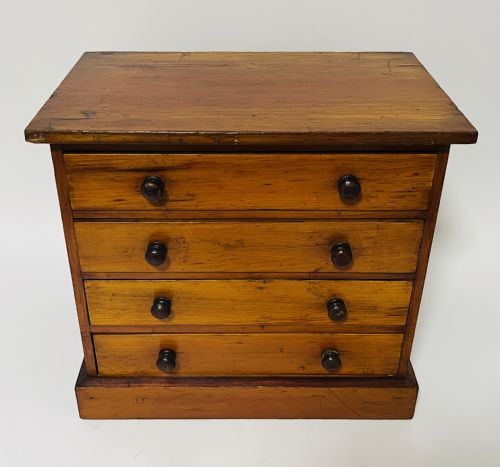
Makers utilised various timber species to construct these scaled-down drawer units, ranging from utilitarian painted pine to figured hardwoods intended for domestic display.
Judging build and material quality
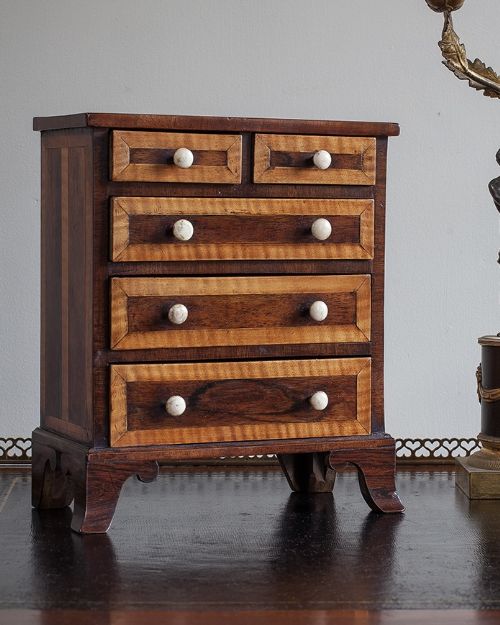
Quality in these small pieces depends on the selection of timber figures, such as highly figured walnut or premium mahogany, contrasted against plain painted or stained pine variants.
Superior examples display finer joinery details, including crisp cockbeading, well-turned feet, and integrated secret drawers, whereas simpler pieces serve utilitarian storage functions without decorative veneers.
Victorian Apprentice Chest Drawers Retail Price Guide 2026
Typical asking prices for victorian apprentice chest drawers among the pieces listed under this phrase on Sellingantiques today, from the lower quarter to the upper quarter. They describe what is for sale here now, not the wider market.
Archive records show frequent appearances of bowfront, Wellington, and Scotch cabinet forms.
Maple and Co
The Victorian Apprentice Chest Drawers Glossary
- Apprentice piece
- A miniature furniture item created by a trainee cabinetmaker to demonstrate proficiency to a guild or master craftsman.
- Bowfront
- A convex, curved front elevation popular on chests of drawers during the nineteenth century.
- Wellington chest
- A tall, narrow chest of drawers secured by a hinged locking stile on one side.
- Specimen cabinet
- A small chest designed for housing natural history collections, coins, or mineral samples.
- Patina
- The surface sheen and coloration developed through age, handling, and polishing of wood over generations.
Victorian Apprentice Chest Drawers: Frequently Asked Questions
Were these chests made by trainees?
Cabinetmakers traditionally produced these scaled-down items as test pieces to demonstrate advanced joinery skills to guild masters.
Many examples served alternative domestic roles as jewellery boxes or tabletop collectors cabinets after initial production.
How do I date a miniature chest?
Dating relies on identifying timber choices, handles, and structural traits characteristic of specific nineteenth-century decades.
Mahogany and early Victorian proportions typically indicate the mid-century, while walnut and Arts and Crafts details point to later periods.
What were these small drawers used for?
Owners utilised these compact chests on tabletops to store precious items, correspondence, or small personal accessories.
Interior compartments frequently adapted to function as bespoke jewellery boxes or specimen storage cases.
Are all miniature chests apprentice pieces?
Makers produced miniature furniture for various purposes, including salesman samples, window displays, and domestic desk storage.
Designers applied the term apprentice piece broadly to describe high-quality nineteenth-century small-scale cabinetry.