


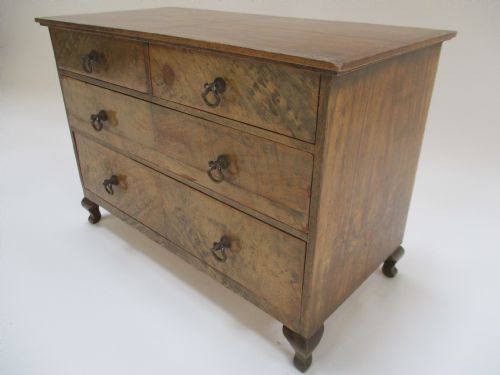
Burr Walnut Miniature Cabinet
A burr walnut miniature cabinet brings rich timber grain and compact scale to a room, offering clever storage for small treasures.
Burr Walnut Miniature Cabinet
A burr walnut miniature cabinet is a small-scale piece of furniture designed for tabletop display or specialised storage. These items include miniature chests of drawers, table cabinets, jewellery cabinets, specimen chests, and writing escritoires.
The selections span from the 18th century and the Georgian period through to the Victorian era and 1910. The most frequent versions encountered on this page are Victorian and 19th-century burr walnut tabletop cabinets and miniature chests of drawers.
Collectors seek these smaller forms for their intricate craftsmanship and the striking patterned wood used across their construction. They serve as desktop organisers or decorative focal points in a study or drawing room.
Materials and Construction
Cabinetmakers constructed these pieces primarily using burr walnut veneers, plain walnut, mahogany, fruitwood, and occasional wood inlay. The distinctive swirling patterns of burr walnut were carefully applied to the main facades and drawer fronts to catch the light.
Hardware such as brass hinges, escutcheons, locks, and handles were integrated to secure small compartments and drawers. Glass panels also appear on display cabinets and tabletop versions designed to showcase contents.
Burr Walnut Miniature Cabinet Retail Price Guide 2026
Typical asking prices for burr walnut miniature cabinet among the pieces listed under this phrase on Sellingantiques today, from the lower quarter to the upper quarter. They describe what is for sale here now, not the wider market.
Listings feature items spanning the Georgian period, the Victorian era, and the early 20th century up to 1910.
Judging Quality and Execution
Quality rests upon the selection and matching of the burr walnut veneer across the primary surfaces. Finer pieces demonstrate symmetrical grain alignment and careful timber preparation that highlights the natural swirls.
The integration of working brass locks, neat internal drawer construction, and secondary woods like fruitwood separates standard items from superior examples. The precision of the joinery at such a small scale dictates the standing of the piece.
The Burr Walnut Miniature Cabinet Glossary
- Burr walnut
- A specialised timber cut from the warted growths on walnut trees, prized for its swirling, organic grain patterns. It provides a highly decorative surface on fine cabinetry.
- Escritoire
- A small writing cabinet fitted with a sloping lid or drop-front desk surface. These often conceal small internal drawers and pigeonholes.
- Tabernacle
- A central architectural feature or cupboard set within the interior of a larger cabinet. It often revolves or opens independently to reveal secret compartments.
- Specimen chest
- A small cabinet fitted with multiple shallow drawers intended for storing natural history samples or small collections. The drawers often feature protective linings.
Burr Walnut Miniature Cabinet: Frequently Asked Questions
What were miniature cabinets used for?
These small cabinets served multiple practical purposes in historic homes, ranging from desktop stationery storage to housing valuable jewellery and personal trinkets.
Specimen chests held natural history items, while apprentice pieces demonstrated the advanced woodworking skills of their makers.
How do I date a burr walnut cabinet?
Dating relies on examining the secondary timbers, construction methods, hardware styles, and overall aesthetic characteristics.
Georgian and 18th-century examples typically show different internal drawer dovetailing compared to Victorian pieces from the 1860s and 1880s.
Where should I place a miniature cabinet?
Their compact scale makes them ideal for tabletops, desks, sideboards, or dedicated display shelves where they can be viewed closely.
Keep them away from direct sunlight and fluctuating heat sources to protect the delicate burr walnut veneer and polished finish.
What is the difference between an apprentice chest and a miniature chest?
Apprentice chests were traditionally made by learners to prove their competency in joinery and woodworking techniques.
Miniature chests were produced simply as scale models or specialised high-end furnishings for domestic use.