


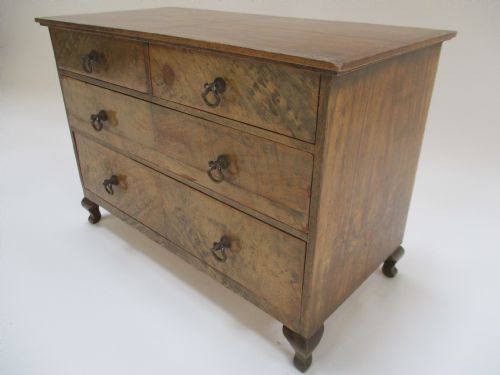
Burr Walnut Tabletop Cabinet
A burr walnut tabletop cabinet brings figured timber and compact presence to a desk or surface.
Burr Walnut Tabletop Cabinet
A burr walnut tabletop cabinet gathers small-scale storage forms from the eighteenth, nineteenth, and early twentieth centuries into a single tabletop category. You encounter table cabinets, miniature chests of drawers, jewellery cabinets, escritoires, and games boxes designed to sit upon furniture rather than stand on the floor.
The Victorian era provides many examples on this page, including brass-mounted table cabinets and locked compartments, alongside earlier Georgian iterations from the eighteenth century. These pieces serve as miniature architecture, holding documents, trinkets, or games sets within compact boundaries.
Forms range from simple apprentice chests and small lockable cabinets to complex symphonium music boxes and revolving tabernacle escritoires. Walnut and burr walnut dominate the construction, often paired with mahogany and fruitwood internal elements.
How they were made
Cabinetmakers utilised figured burr walnut veneers over solid secondary timbers, selecting swirling grain patterns to cover visible drawer fronts and exterior surfaces. Brass hardware, including locks, escutcheons, and campaign-style handles, provides functional contrast to the dark timber.
Secondary woods such as mahogany and fruitwood support the internal structure of drawers and compartments, while glass panels appear on display variants. Wood inlay details and careful joinery unite these miniature chests and cabinets into durable portable objects.
Burr Walnut Tabletop Cabinet Retail Price Guide 2026
Typical asking prices for burr walnut tabletop cabinet among the pieces listed under this phrase on Sellingantiques today, from the lower quarter to the upper quarter. They describe what is for sale here now, not the wider market.
The listings span from the eighteenth century to nineteen-ten, uniting walnut, mahogany, and fruitwood across tabletop forms.
What varies in quality
The distinction between standard examples and exceptional pieces rests upon the intensity of the burr walnut figuring and the precision of the cabinetmaker's joinery. Superior items display harmonious veneer selection across every drawer front and panel.
Fittings such as original working locks, fitted brass handles, and intact internal compartments elevate a piece above simpler variants with replaced hardware or plain timber surfaces.
The Burr Walnut Tabletop Cabinet Glossary
- Burr walnut
- A figured veneer sliced from the knotty growth of a walnut tree. This material yields complex, swirling patterns prized by cabinetmakers for decorative exterior surfaces.
- Tabletop cabinet
- A miniature storage piece designed to rest on a desk, table, or chest rather than the floor. These items enclose drawers, shelves, or compartments behind lockable doors.
- Escritoire
- A small writing cabinet featuring a sloping or drop-front writing surface. Tabletop versions often incorporate internal pigeonholes and secret compartments.
- Apprentice chest
- A small-scale chest of drawers traditionally made by a woodworker to demonstrate mastery of the craft. These pieces mirror the construction methods of full-sized furniture.
- Tabernacle
- A central architectural feature within a cabinet interior, often revolving or housing specialised compartments. It draws the eye inward through symmetrical arrangement.
Burr Walnut Tabletop Cabinet: Frequently Asked Questions
What did people store in a tabletop cabinet?
These cabinets housed valuables, letters, and small personal items away from dust and casual view. Their fitted interiors kept jewellery, documents, and collectibles organised on a desk.
Owners utilised them in private studies, drawing rooms, and bedrooms where portable security and neat arrangement mattered.
How do I tell an 18th century cabinet from a Victorian one?
Eighteenth-century pieces, often termed Georgian, display simpler linear proportions and distinct secondary woods like fruitwood or early walnut. Victorian examples frequently incorporate heavy brass mounts, burr walnut veneers, and specialised functions like games compendiums.
Examining the construction methods inside the drawers and the style of the locks helps clarify the manufacturing period.
Are miniature chests the same as apprentice pieces?
Miniature chests cover a broad range of small drawer units made for domestic use or display. Apprentice chests represent specific demonstration pieces created to prove a woodworker's skill.
Both forms share identical dovetail joinery and timber selection on a reduced scale.
Where should I place a table cabinet in my home?
A tabletop cabinet sits comfortably on a sturdy desk, chest of drawers, or side table where its details remain visible at eye level. Placing it away from direct heat sources protects the walnut veneer and polished surface.
Ensure the supporting surface balances the weight, particularly with larger brass-mounted or mechanism-heavy boxes.