




Victorian Alarm Clock
A victorian alarm clock brings mechanical precision and burnished brass to the bedside, offering a dependable mechanical summons that modern devices cannot match.
Victorian Alarm Clock
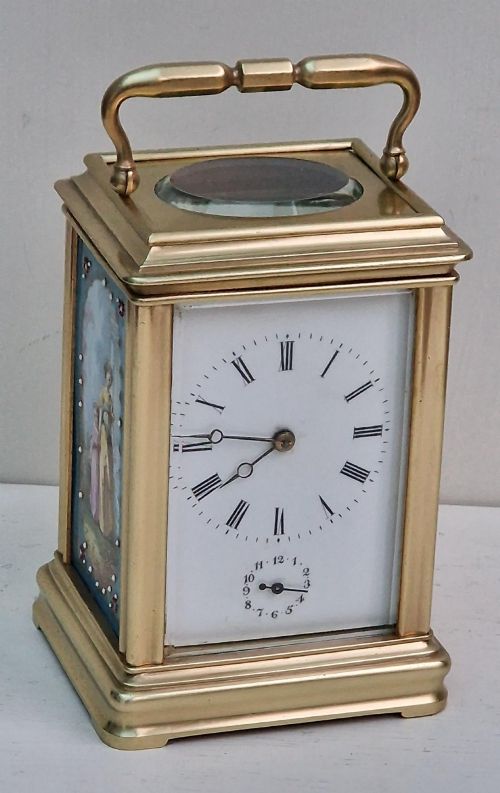
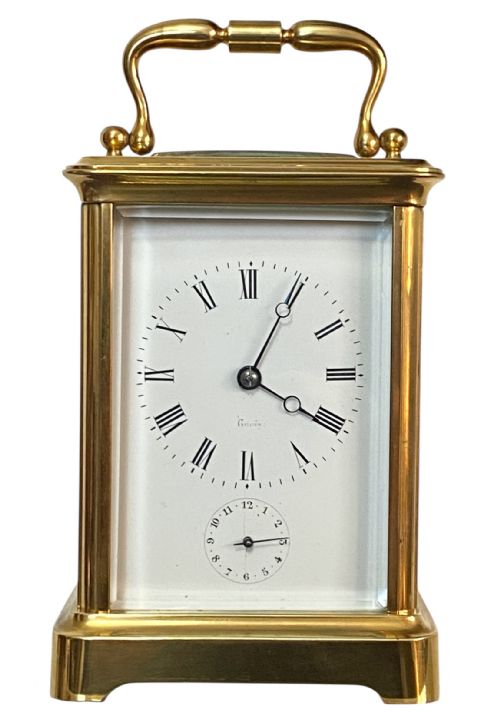
When you search for a victorian alarm clock, you encounter portable timepieces built during the nineteenth century, primarily taking the form of carriage clocks and desk clocks. These pieces combine standard timekeeping with an audible alarm function, designed for travel or domestic use.
The versions you meet most frequently on this page originate from French workshops adhering to Victorian and Second Empire styles. They span decades from the eighteen-fifties through the Edwardian transition, reflecting steady mechanical refinement.
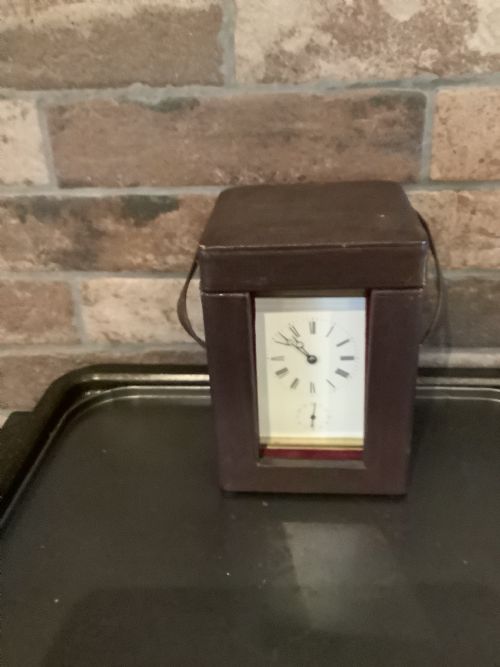
Most examples appear as brass or gilt brass cases enclosing white enamel dials, often accompanied by original leather travel cases. Miniature formats and gorge cases represent specific variations within this established group of portable mechanical clocks.
Materials and construction
Maker workshops built these mechanisms using steel components housed within heavy brass, gilt brass, or gilded bronze frames. Glass panels enclose the movement, permitting a direct view of the escapement and gear trains from multiple angles.
Enamel dials provide the primary background for painted numerals, paired with porcelain panels or engraved brass masks in more elaborate instances. Leather appears in fitted outer travel cases designed to protect the polished metal and glass housing during transit.
Some nineteenth century travellers relied on a repeating button to whisper the hours into the dark without lighting a candle.
Standards of craftsmanship
Quality reveals itself in the depth and execution of case engraving, transforming plain structural brass into ornate architectural surfaces. Fully engraved plates across all sides demand considerable skill from the maker, separating standard production models from exceptional commissions.
Mechanical complexity dictates the upper tier of the range, distinguishing simple striking mechanisms from grand sonnerie and quarter repeating systems. The presence of original fitted boxes, keys, and working patent mechanisms preserves the historical integrity of the piece.
Antoine Redier·DROCOURT·J. F. Bautte Et Cie·E. White
The Victorian Alarm Clock Glossary
- Carriage clock
- A portable spring-driven timekeeper originally designed for officers and travellers during the nineteenth century. These clocks typically feature a rectangular brass frame with glass panels and a swing handle on top.
- Gorge case
- A distinct rectangular brass case style characterised by moulded tiers and stepped pillars at the corners. This architectural housing forms the structural chassis for many French carriage clocks.
- Sonnerie
- A striking mechanism that automatically sounds the hours and quarters as they pass without requiring manual intervention. Grand sonnerie systems ring both hours and quarters on every quarter hour.
- Repeating movement
- A mechanical function that causes the clock to repeat the last struck hour or quarter when a button or pendant is pressed. This allows owners to check the time audibly in total darkness.
- Platform escapement
- The horizontal regulating assembly mounted visibly near the top of the clock movement. It replaces the pendulum, enabling portable clocks to maintain accuracy while moving.
Victorian Alarm Clock: Frequently Asked Questions
How do I wind a carriage clock?
Insert the matching key into the arbors located on the underside or back plate of the movement. Turn gently until resistance indicates the mainspring is fully tensioned.
Take care not to overwind the mechanism, as older steel springs remain susceptible to fatigue. Winding the alarm train requires a separate arbor, usually marked clearly on the backplate.
How do I set the alarm?
Rotate the alarm hand on the dial using the dedicated small hand-setting arbor at the back of the movement. Position the hand to point at the desired hour for the alarm to sound.
Ensure the alarm spring is wound fully via its own separate winding square. The mechanism will release the hammer against the internal bell or gong once the hour hand reaches the set position.
How do I tell if a clock is French?
Examine the back plate of the movement for maker stamps, serial numbers, or characteristic layout patterns typical of Parisian workshops. French makers frequently integrated platform escapements and numbered train layouts.
Stylistic cues such as gorge framing, fire gilding, and inset painted porcelain panels also point directly to French manufacturing traditions of the nineteenth century.
Can I travel with these clocks?
Historical carriage clocks were engineered specifically for travel, often accompanied by heavy leather cases lined with velvet. The robust brass frames and integrated swing handles support mobility.
Modern transit requires securing the platform escapement or removing the key, alongside placing the clock inside a padded container to protect the glass panels from impact.