


Victorian Alabaster Bust
These Victorian alabaster bust carvings bring the quiet dignity of classical portraiture straight into a room.
Victorian Alabaster Bust
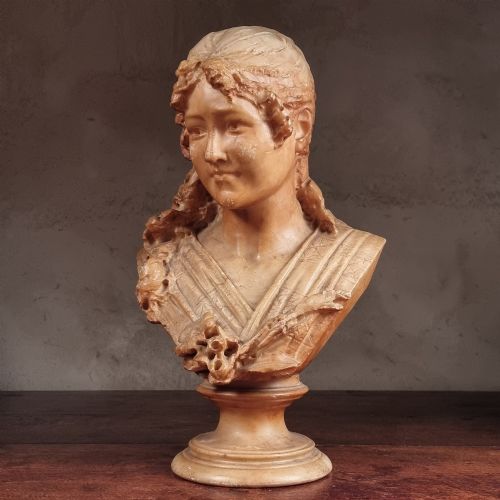
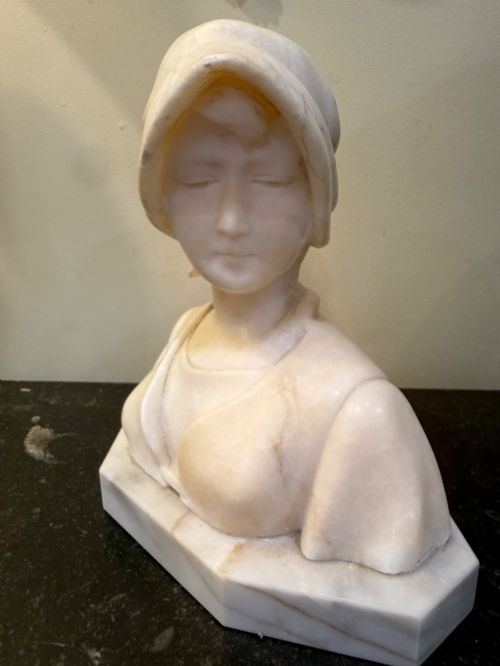
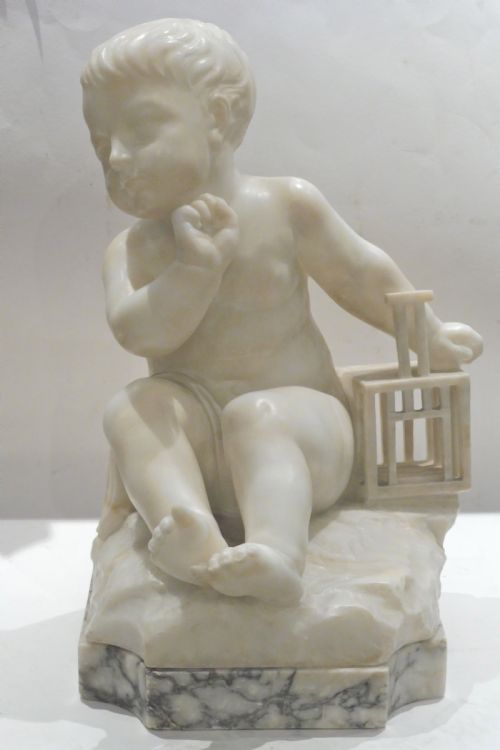
A victorian alabaster bust captures the likeness of young ladies, maidens, gentlemen, and children in carved stone. These portrait sculptures often follow neoclassical or art nouveau lines, portraying subjects with serene expressions and finely detailed drapery or hair.
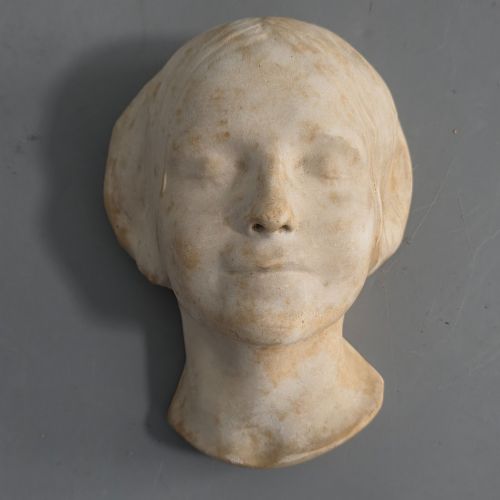
The versions most commonly met here originate from nineteenth-century European workshops, spanning the decades from eighteen fifty to nineteen hundred. Alongside traditional portraiture, the selection includes related forms such as death masks and companion plant stands.
Makers ranged from Italian studios to named sculptors working across the continent. Their subjects vary from anonymous youths to orientalist figures and specific historical models.
How they were made
Craftsmen shaped these sculptures from soft alabaster and denser marble using traditional hand-carving chisels and rasps. The stone allows for a translucent quality that catches the light differently than standard marble.
Certain pieces combine the primary stone bust with subsidiary materials such as bronze finish, spelter, or mahogany bases. Surface finishes rely on careful polishing to accentuate the natural grain and smoothness of the mineral.
One young boy is caught forever playing with an eager puppy, frozen in stone after Joseph Gott.
What varies in quality
The finesse of the facial carving and the depth of undercut details separate the finest portraiture from simpler studio output. Master carvers achieved realistic texture in hair, fabric folds, and skin that lesser pieces simply skim over.
Mieczyslaw Leon Zawiejski·Joseph Gott·Pugi
The Victorian Alabaster Bust Glossary
- Alabaster
- A fine-grained, translucent stone that carves easily and has been used for centuries for sculptural portraits and decorative objects. Its softness gives portrait busts a warm, lifelike glow compared to harder marbles.
- Neoclassical
- A style rooted in the art and culture of classical antiquity that emphasises proportion, restraint, and classical dress. Victorian sculptors often drew directly upon these ancient Greek and Roman ideals.
- Spelter
- A zinc alloy commonly utilised as a substitute for bronze in nineteenth-century decorative figures and bases. It is typically given a bronze finish to mimic heavier metal.
Victorian Alabaster Bust: Frequently Asked Questions
How do I clean a Victorian alabaster bust?
Alabaster is water-soluble and remarkably soft, meaning moisture will permanently pit and damage the polished surface. Dust the sculpture gently with a dry, soft microfibre cloth without applying chemical cleaning agents.
Keep the piece away from direct sunlight and damp environments to prevent the stone from drying out or discoloring over time. Regular dry dusting is all that is required to maintain the finish.
Where should I display a bust in my home?
These sculptures suit tabletops, sideboards, and dedicated plant stands where adequate light can illuminate the translucent stone. Placing them at eye level allows the fine details of the carving to be appreciated properly.
Ensure the supporting surface is entirely stable because heavy stone pieces require secure foundations. Avoid high-traffic zones where the protruding edges of the sculpture might suffer accidental knocks.
How can I tell alabaster from marble?
Alabaster is notably softer than marble and can generally be scratched with a fingernail or a copper coin in an inconspicuous spot, though testing is rarely advised. It also possesses a distinctive waxy translucence when held near a light source.
Marble tends to feel colder and heavier with a crystalline structure rather than the uniform density found in alabaster. Visual examination of the grain often reveals the denser veining typical of marble compared to the milky appearance of alabaster.
What does an orientalist figure signify?
Orientalist subjects reflect nineteenth-century European artistic fascination with the cultures of North Africa and the Middle East. These busts typically depict individuals in traditional regional dress and headwear.
Sculptors used these themes to explore exoticism and detailed textile work within portraiture. They represent a specific cultural current in European decorative arts during that era.