


Art Nouveau Alabaster Bust
An art nouveau alabaster bust brings fluid, naturalistic grace to a room through the soft translucency of carved stone.
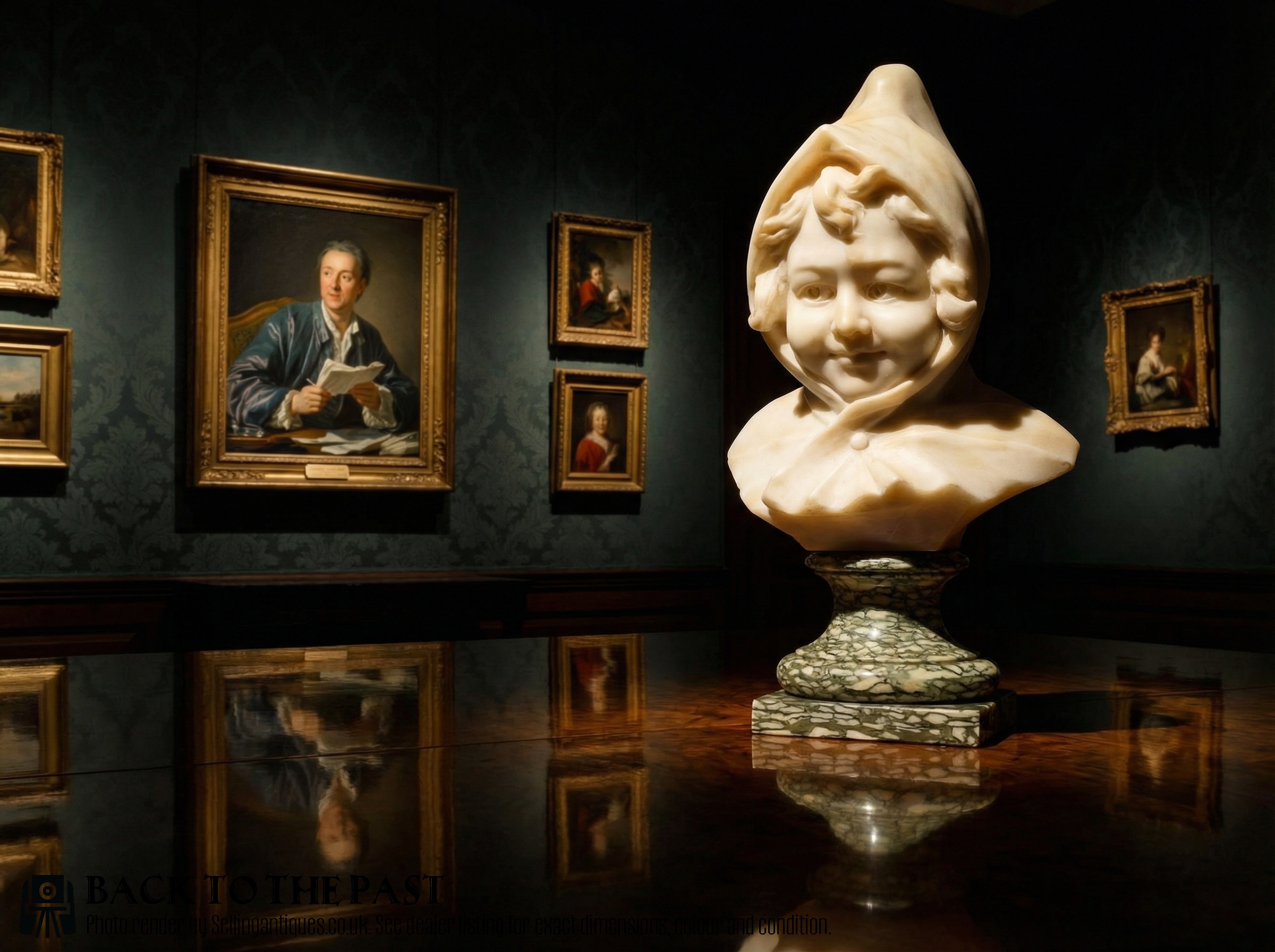
Art Nouveau Alabaster Bust
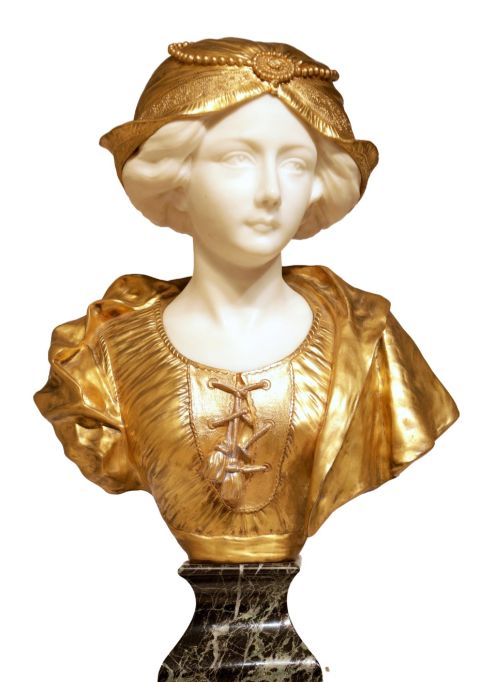
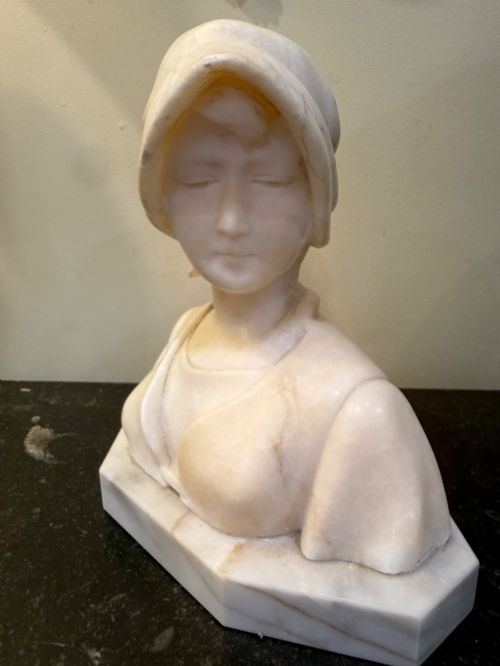
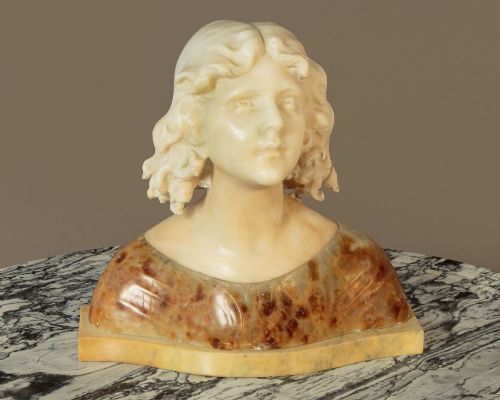
An art nouveau alabaster bust captures the flowing lines and organic motifs characteristic of the late nineteenth and early twentieth centuries. These portrait sculptures most frequently depict young women or girls, often styled with long, cascading hair and subtle drapery.
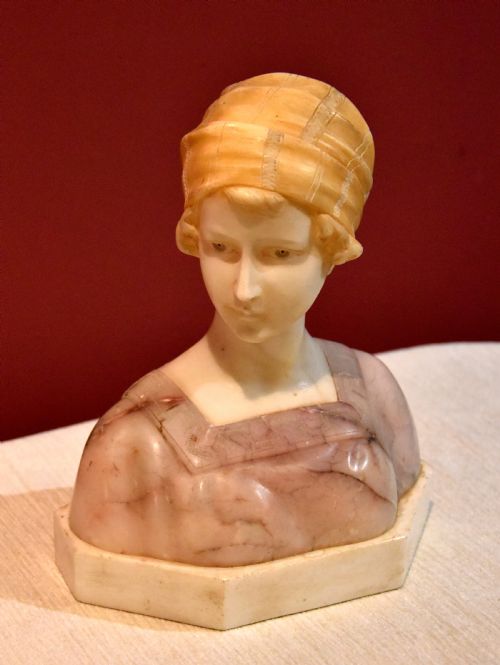
The versions you encounter most often span the nineteenth century through the 1920s, originating largely from French and Italian workshops. They range from modest shelf-sized carvings to larger sculptural works mounted on pedestals or paired with marble bases.
How they were made
Carvers shaped soft alabaster using chisels and fine abrasives to achieve the smooth, skin-like finish essential to the style. Artisans often combined this stone with contrasting materials such as marble, gilt bronze, or ormolu for collars, robes, and bases.
Foundries also produced related female models in bronze and spelter during the same period. These metal casts utilised patination and bronze finishes to emulate the tonal depth found in carved stone works.
Listings show these sculptures spanning from the 1880s through the 1920s, predominantly featuring alabaster, marble, and gilt bronze.
What varies in quality
The distinction between standard commercial pieces and superior works lies in the subtlety of the carving and the purity of the stone. Finer examples display delicate facial expressions, deeply undercut hair, and minimal natural flaws within the alabaster itself.
The integration of mixed media also dictates quality. Pieces that incorporate finely cast ormolu, gilt bronze mounts, or integrated marble plinths demonstrate a higher tier of craftsmanship than plain stone carvings.
Affortunato Gory·Auguste Henri Carli·George Van Der Straeten·G.V. Vaerenbergh·R. Lusili·A. Cipriani
The Art Nouveau Alabaster Bust Glossary
- Alabaster
- A fine-grained, translucent stone that accepts intricate carving and imitates the softness of human skin. It has been utilised for portrait sculptures and decorative objects for centuries.
- Ormolu
- Gilt bronze applied to mounts and bases, providing a bright metallic contrast to the matte surface of stone. This technique was frequently employed by French makers.
- Spelter
- A zinc alloy used as a cost-effective alternative to bronze in figure casting. It is often given a bronze finish to mimic heavier metal work.
- Patina
- The surface sheen and coloration developed through age or chemical treatment. On metal elements, it adds depth to the contours of the casting.
Art Nouveau Alabaster Bust: Frequently Asked Questions
How do I clean an alabaster bust?
Alabaster is a relatively soft and porous material that absorbs liquids easily. Dust the surface gently with a dry, soft brush rather than using water or chemical cleaners.
Keep these sculptures away from direct sunlight and damp environments to prevent discoloration and surface degradation over time.
Are these busts heavy?
Carved stone pieces possess considerable weight due to the density of alabaster and marble bases. Even smaller examples require a sturdy, stable surface for display.
Larger sculptures or those mounted on pedestals should be placed securely away from foot traffic to prevent accidental tipping.
How can I tell the period?
Stylistic markers such as flowing hair, organic drapery, and specific lettering on signatures point towards the late nineteenth and early twentieth centuries. Examining the materials used, such as combined ormolu and marble, helps narrow down the timeframe.
Signatures from known sculptors working between 1880 and 1920 provide a reliable anchor for dating these decorative works.