


Edwardian Alabaster Sculpture
Edwardian alabaster sculpture captures the delicate portraiture of the early twentieth century, offering a tactile warmth that draws collectors to its soft, translucent carved surfaces.
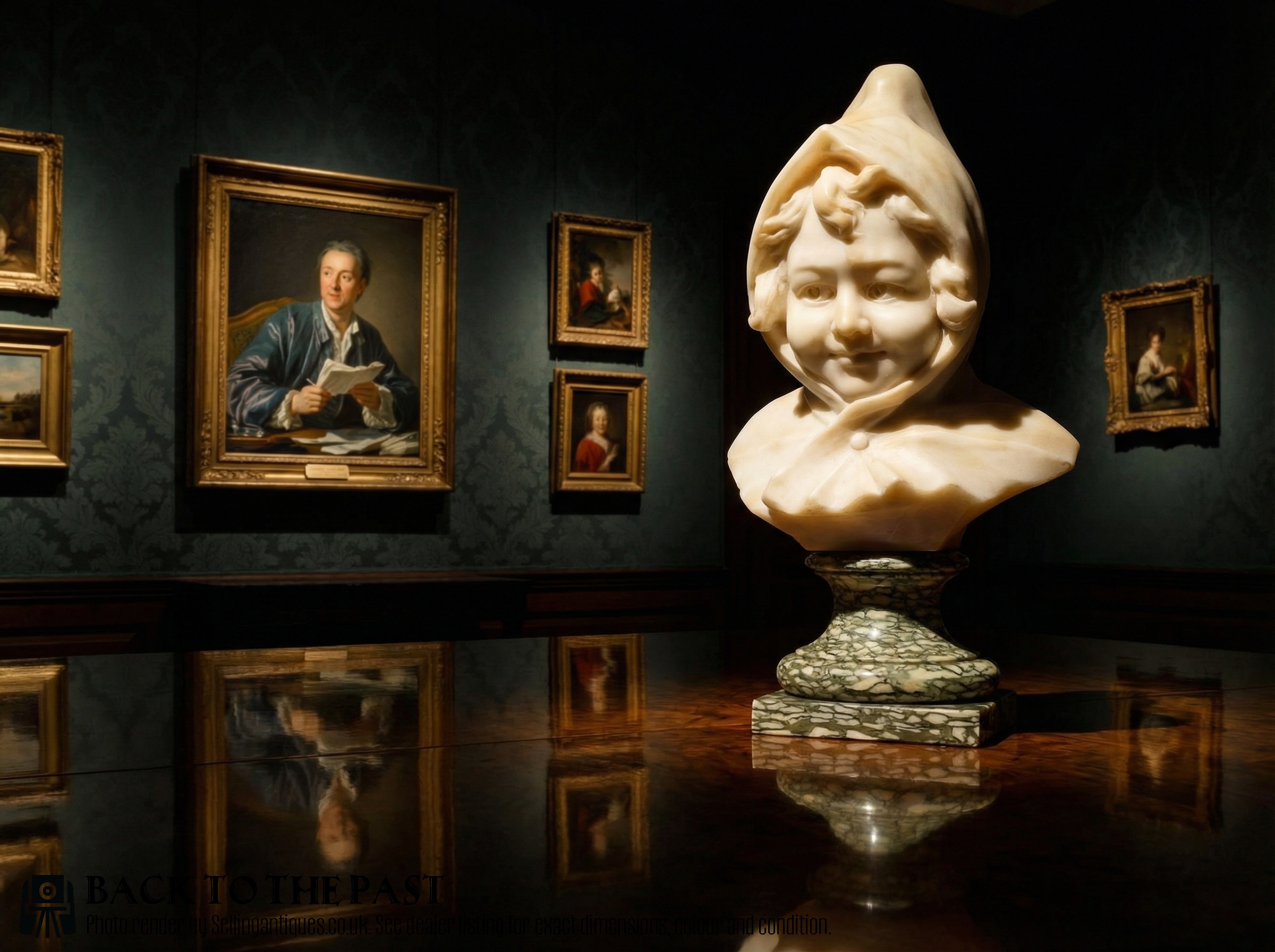
Edwardian Alabaster Sculpture
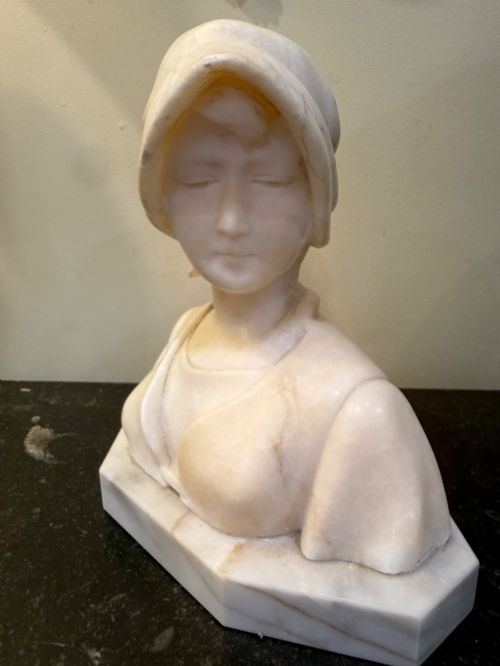
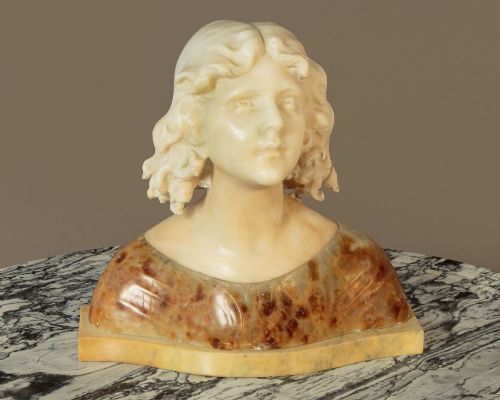
Edwardian alabaster sculpture encompasses finely carved portrait busts and figurative statues produced around the turn of the twentieth century. These pieces frequently depict young women or girls rendered with naturalistic expression and elaborate period hairstyles.
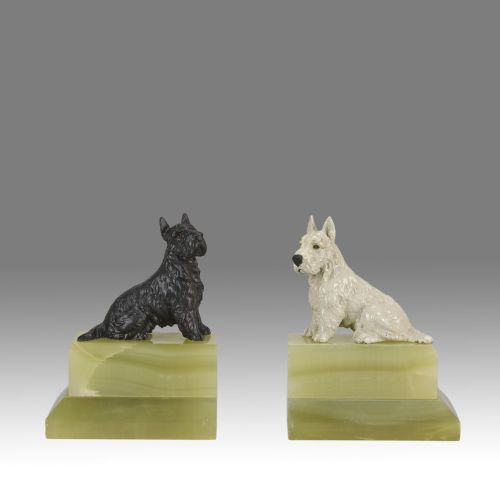
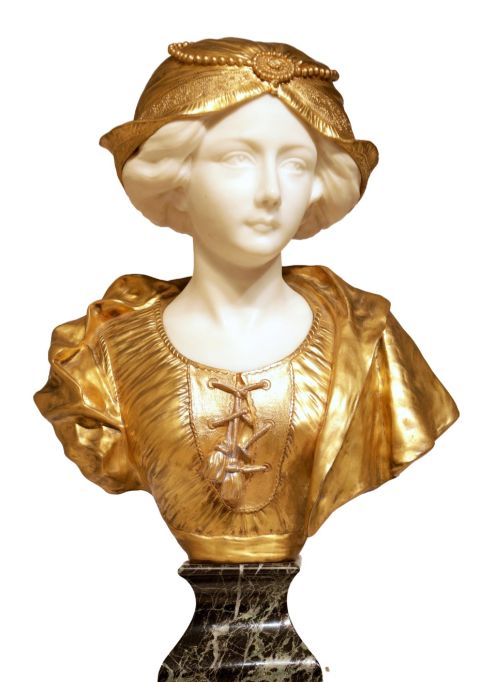
The objects seen on this page range from modest portrait busts to larger standing figures, sometimes combining stone with contrasting materials such as gilt bronze or ormolu. Such works reflect the transition from nineteenth-century academic realism into the flowing lines of the Art Nouveau movement.
Materials and Construction
Carvers shaped these works primarily from soft, fine-grained alabaster and marble, utilising the natural translucency of the stone to mimic the softness of skin and fabric. Workshops also incorporated cold-painted bronze, onyx, and gilt ormolu to highlight drapery, hair, and structural mounts.
Makers combined stone carving with metal casting techniques, securing sculpted busts onto decorative bases or framing them with cast metal details. This mixed-media approach required precision in joining heavy stone components to delicate metallic elements.
Listings for this phrase combine nineteenth-century traditions with Edwardian and Arts and Crafts sensibilities, focusing heavily on portrait busts.
Assessing Quality and Execution
The choice of materials also elevates a work, with pure translucent alabaster and the integration of fine cold-painted bronze elements marking the upper tier of production. Pieces that display a harmonious balance between stone and metal components command greater appreciation.
Affortunato Gory·G.V. Vaerenbergh
The Edwardian Alabaster Sculpture Glossary
- Alabaster
- A soft, fine-grained stone valued for its pale colour and translucent quality when carved thinly. It allows light to penetrate just beneath the surface, giving sculpted figures a lifelike glow.
- Ormolu
- Gilded bronze applied to decorative mounts, bases, or clothing details on mixed-media sculptures. The technique involves treating brass or bronze with a mercury-gold amalgam to achieve a rich golden finish.
- Portrait Bust
- A sculpted representation of a person from the chest or shoulders up. In this period, they often captured young women in idealized poses with expressive gazes.
- Cold-Painted Bronze
- Bronze sculpture painted with natural pigments that are left to dry without kiln firing. This method provided vibrant colour to the garments and hair of figurative bronzes.
- Art Nouveau
- An international design style characterised by organic, sinuous lines and flowing natural forms. It heavily influenced the presentation and clothing details of figurative sculpture around nineteen hundred.
Edwardian Alabaster Sculpture: Frequently Asked Questions
How should I clean and care for alabaster?
Alabaster is a relatively soft and porous stone that dissolves easily in water, meaning it requires gentle dusting with a dry, soft cloth.
Avoid using liquid cleaners, polishes, or damp cloths, as moisture can permanently stain or damage the sensitive carved surface.
How do I distinguish Edwardian pieces from Victorian works?
Edwardian sculpture tends to lean towards lighter, more naturalistic styling and often incorporates Art Nouveau fluidity compared to earlier Victorian academic strictness.
The clothing, hairstyles, and associated metal mounts generally reflect the aesthetic shifts occurring around nineteen hundred.
Where were these sculptures originally displayed?
Sculptures of this scale were designed to sit on mantelpieces, desks, or dedicated pedestals within domestic drawing rooms and libraries.
They served as refined decorative accents that showcased the homeowner's appreciation for fine craftsmanship and classical portraiture.