
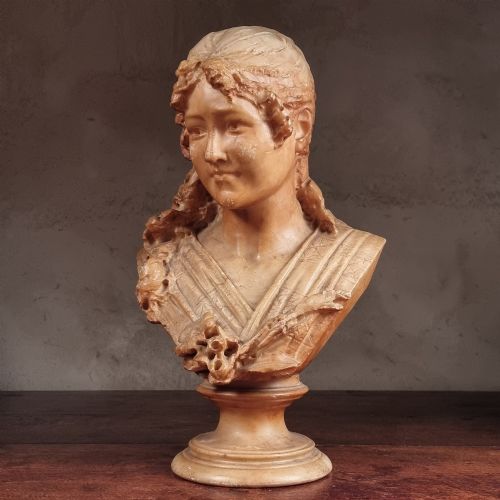
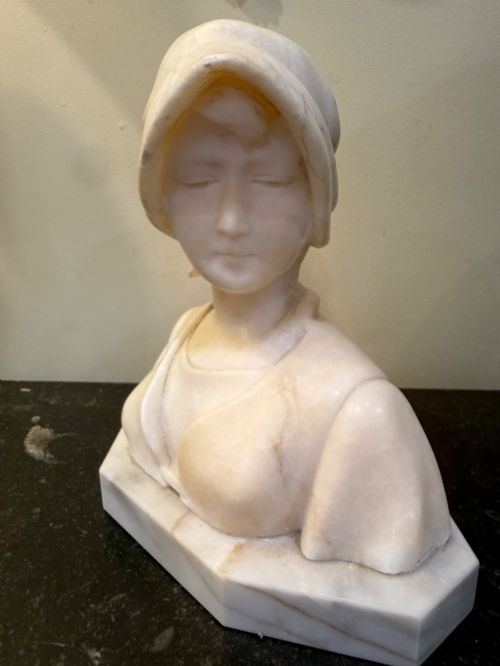


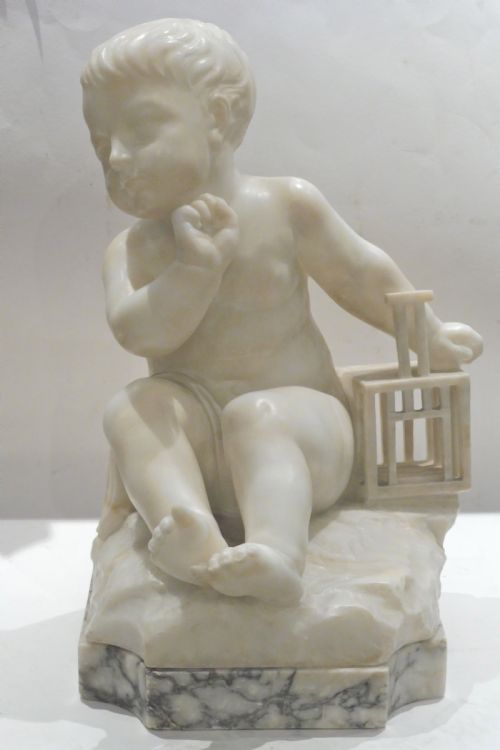
Victorian Alabaster Figure
These Victorian alabaster figure pieces capture nineteenth century portraiture and classical form, offering tactile carved stone for the collector.
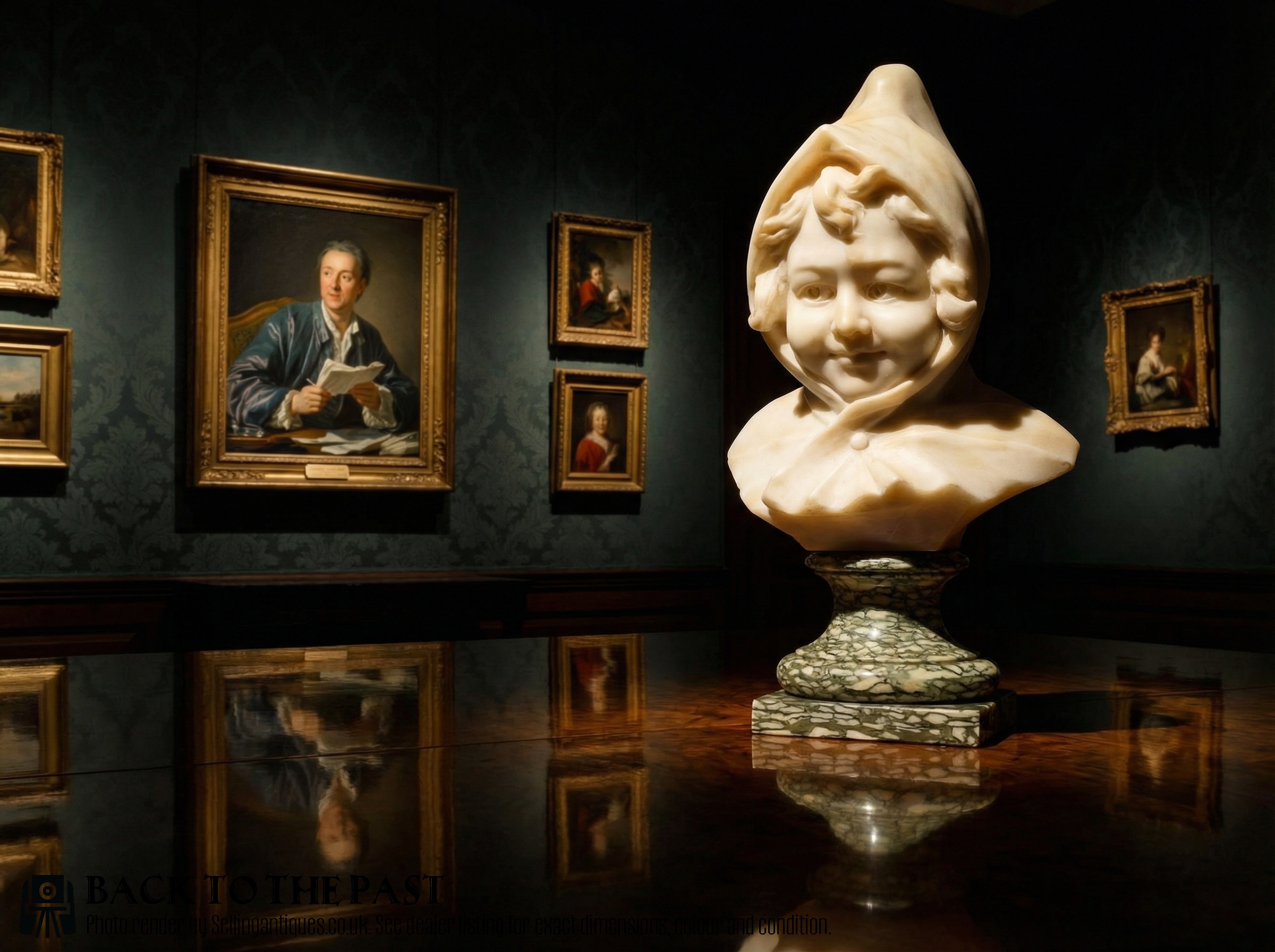
Victorian Alabaster Figure
A victorian alabaster figure brings nineteenth century sculptural work into the home through portrait busts, animal studies, and full figures. The selection on this page centres on carved stone works alongside related marble compositions, spanning dates from eighteen fifty to nineteen hundred.
Buyers encounter subjects ranging from young women and gentlemen to classical figures and animal groups, often shaped within Victorian, Neoclassical, and Art Nouveau stylistic traditions.
Materials and Carving Methods
These works rely primarily on alabaster and marble, including Carrara and Derbyshire varieties, shaped by hand to achieve smooth contours and fine textural details. Some pieces incorporate complementary elements such as gilt metal, enamel, or glass.
Makers utilised skilled subtraction and polishing techniques to reveal the soft translucency inherent in gypsum-based stone, creating lifelike drapery and facial expressions.
Listings incorporate both standard alabaster and veined Carrara marble, alongside mixed media examples featuring spelter and gilt metal.
Judging Quality in Carved Stone
The presence of a known maker's signature or workshop mark elevates a piece, as does the preservation of the crisp surface detail without excessive restoration or repair.
Bright And Sons·P Emilio Fiaschi·Joseph Gott·Pugi
The Victorian Alabaster Figure Glossary
- Alabaster
- A fine-grained, soft stone often used for sculpture and ornamental objects because it is relatively easy to carve and possesses a warm, translucent quality. It requires gentle handling to prevent surface scratching.
- Carrara Marble
- A type of white or blue-grey marble from the city of Carrara in Italy, prized since classical antiquity for its purity and consistent grain. Nineteenth-century sculptors frequently imported it for portrait busts.
- Portrait Bust
- A sculpted representation of a person's head, shoulders, and upper chest, designed to capture likeness and character. They were popular in Victorian interiors as scholarly or commemorative ornaments.
- Spelter
- An alloy of zinc and other metals used as a cheaper alternative to bronze or carved stone, often painted to resemble other materials. It appears in nineteenth-century figurative works alongside stone pieces.
Victorian Alabaster Figure: Frequently Asked Questions
How do I clean a victorian alabaster figure?
Alabaster is a soft and water-soluble mineral, so it demands dry dusting with a soft brush rather than liquid cleaners.
Moisture can permanently stain or dissolve the polished surface, meaning conservation efforts must remain entirely dry.
Where were these figures displayed in homes?
Nineteenth-century households placed portrait busts and sculptures on mantelpieces, pedestals, and library tables to signal taste and education.
They served as focal points in drawing rooms and studies alongside clocks and decorative objects.
How do I distinguish alabaster from marble?
Alabaster is significantly softer than marble and can be scratched with a coin or fingernail, while marble resists such pressure.
Alabaster also displays a warmer translucency when held to the light, whereas marble tends to appear more opaque.
What is the difference between Neoclassical and Art Nouveau styles?
Neoclassical pieces draw upon ancient Greek and Roman ideals of balance, symmetry, and severe classical drapery.
Art Nouveau works favour fluid, organic lines inspired by natural forms, featuring asymmetrical compositions and softer contours.