
Victorian Aesthetic Side Table
These pieces combine late nineteenth-century design reform with compact utility, offering a decorative surface suited to both traditional and modern rooms.
Victorian Aesthetic Side Table
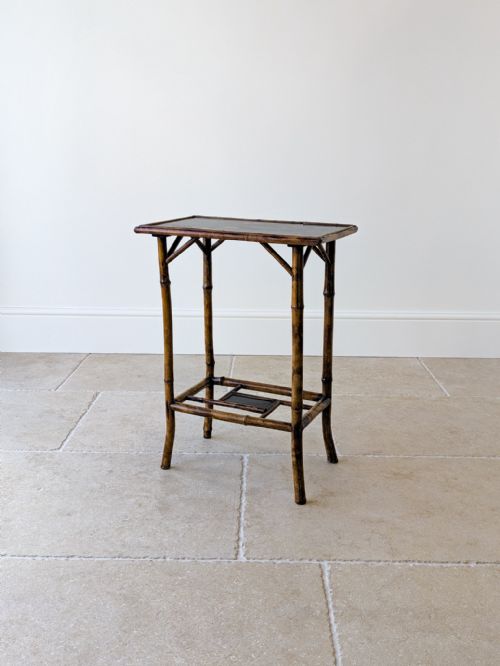
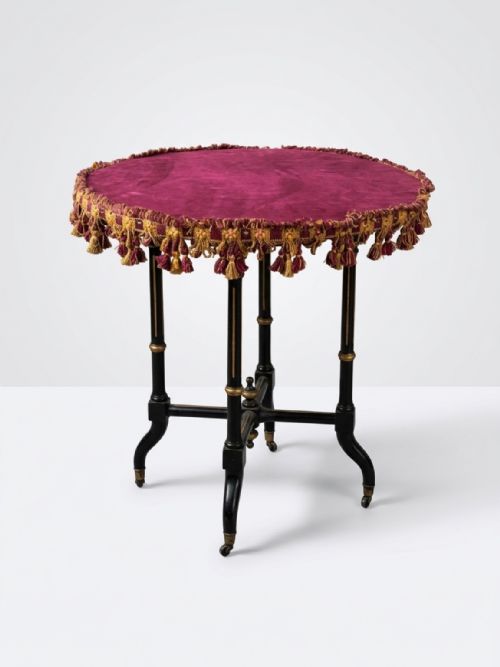
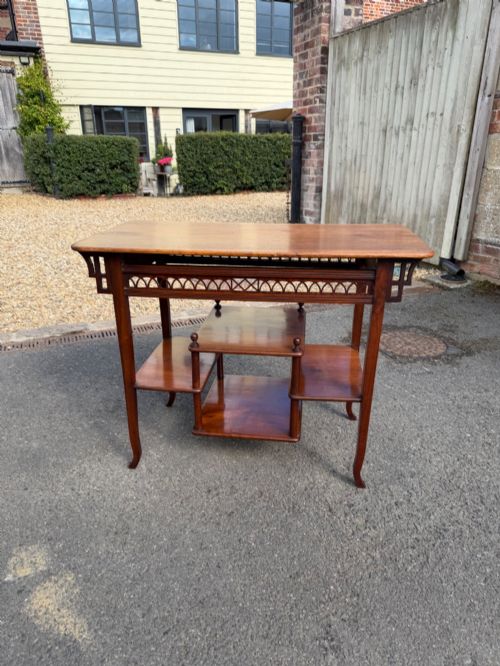
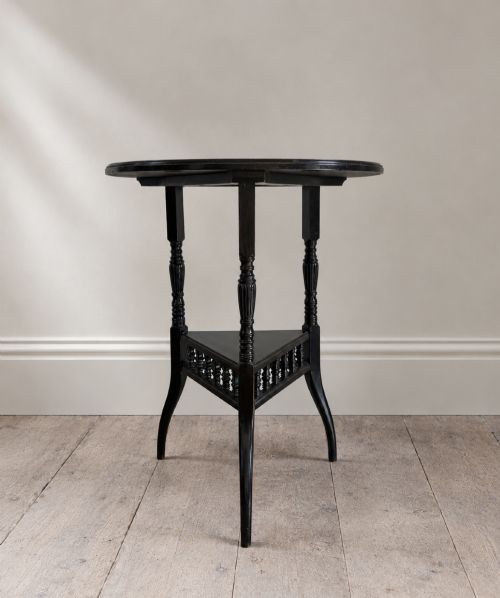
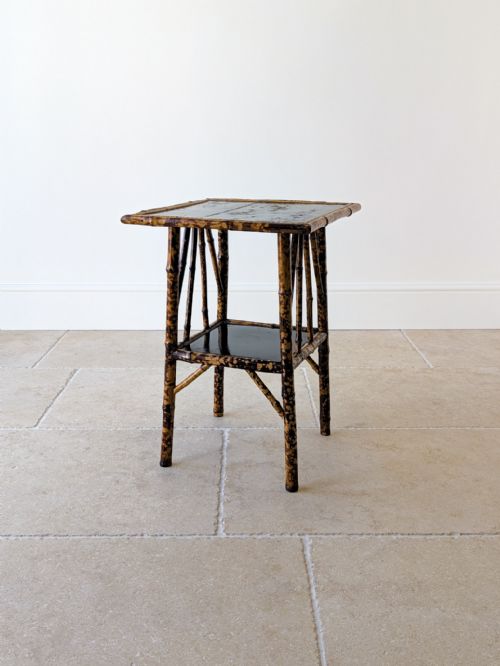
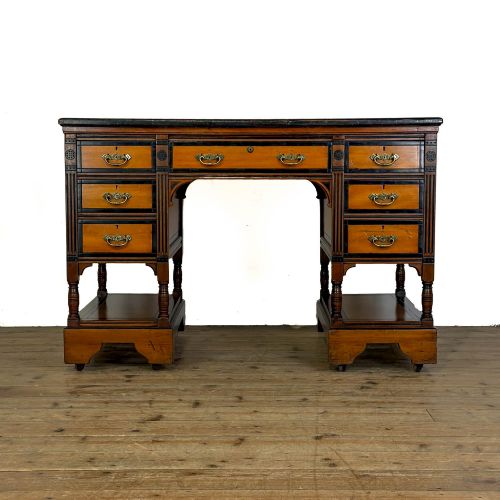
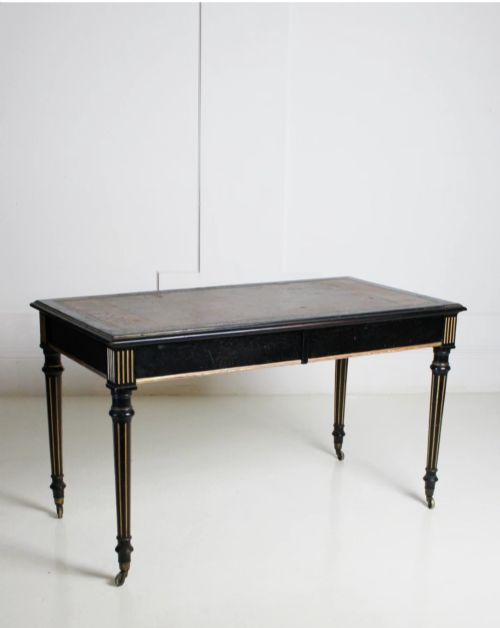
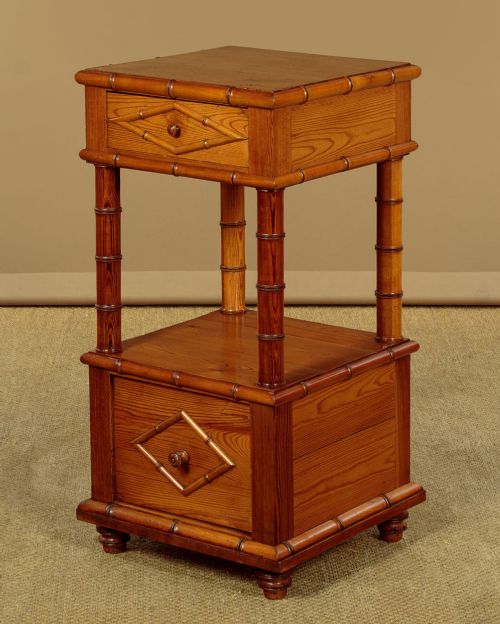
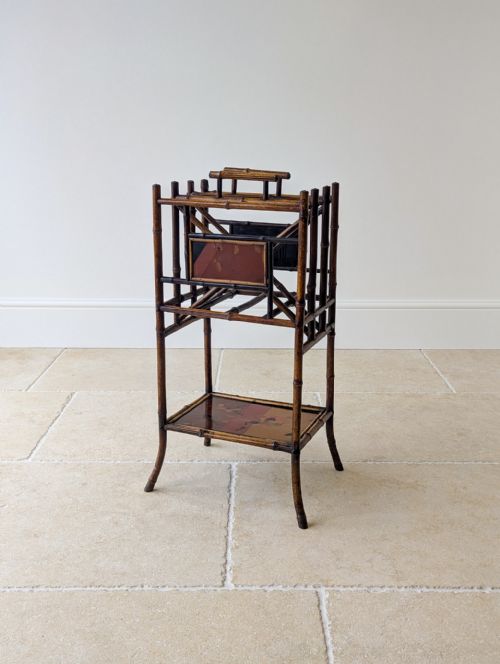
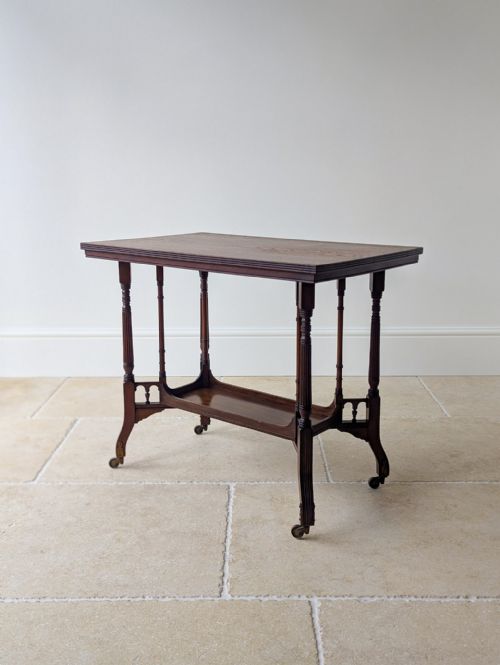
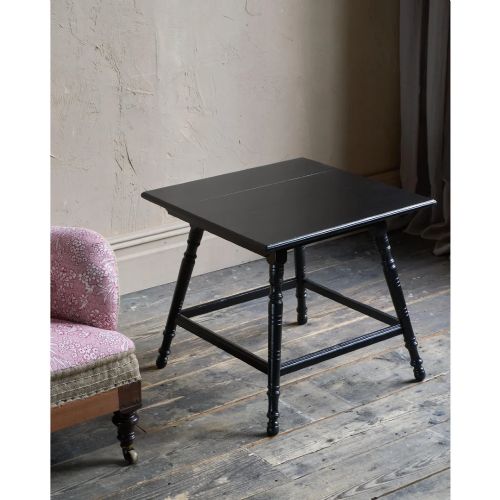
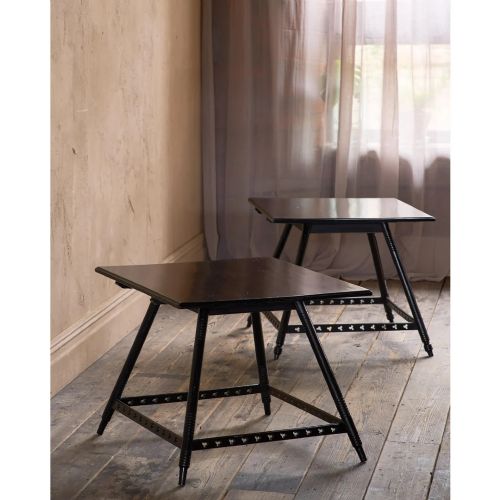
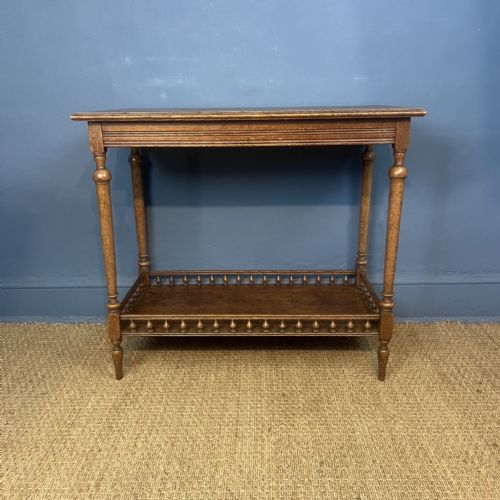
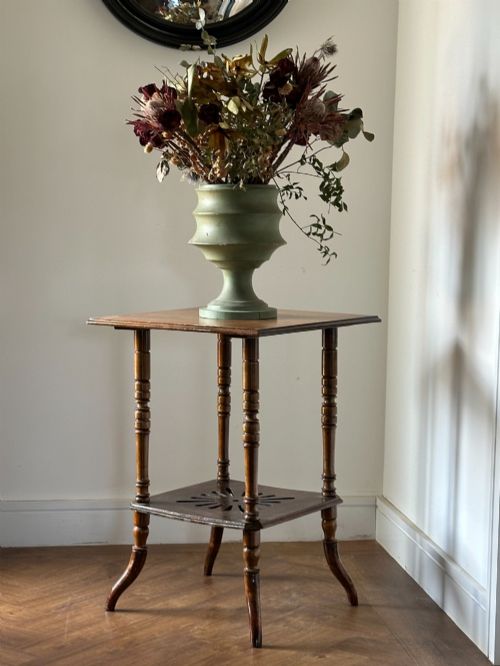
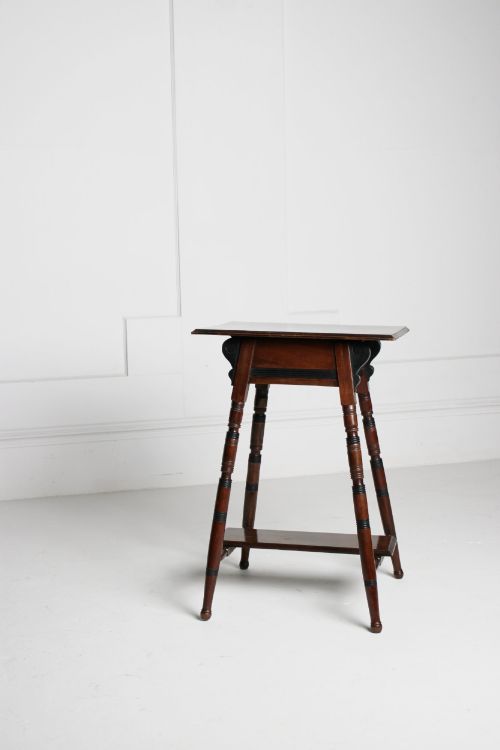
A victorian aesthetic side table represents the progressive design movement of the late nineteenth century, stepping away from heavy historicism towards lighter, art-focused forms. You will frequently encounter ebonised wood finishes, bamboo frames, and mahogany structures across these occasional, centre, and gypsy tables.
Makers often drew inspiration from Anglo-Japanese design and Moorish revival motifs, creating versatile surfaces for lamps, books, or display. These tables reflect a period of artistic experimentation where furniture was conceived as a complete work of interior art.
How they were made
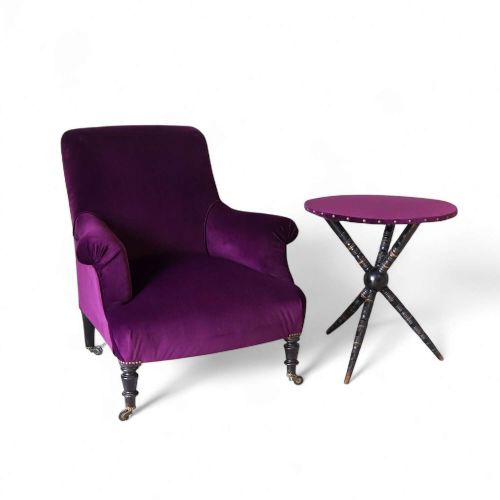
Makers utilised ebonised hardwoods to simulate expensive Japanese lacquer, applying deep black finishes that contrasted sharply with inlaid brass, amboyna, or lighter secondary timbers. Bamboo and faux bamboo also emerged as popular lightweight materials, often paired with leather tops or decoupage decoration.
Cabinetmakers constructed these forms using traditional jointing adapted for slender profiles, supporting octagonal, rectangular, and circular tops without excess bulk. Inlays of exotic woods and subtle turnings gave the surfaces visual interest while maintaining structural integrity.
Several bamboo tables feature whimsical decoupage surfaces, proving Victorian households loved a bit of DIY craft.
What varies in quality
The distinction between standard production and top-tier pieces lies in the precision of the joinery and the selection of cabinet timbers. Superior examples incorporate costly hardwoods like rosewood or amboyna, complemented by meticulous brass stringing and hand-cut inlay rather than superficial surface decoration.
Attribution to documented retail houses or notable designers elevates a piece, as does the retention of original finishes and undisturbed patination. Balance and proportion in slender bamboo or ebonised legs also separate exceptional workshop output from simpler commercial items.
Gregory and Co·Hindley and Sons·Druce and Co London·Liberty and Co·Collingson and Lock
The Victorian Aesthetic Side Table Glossary
- Ebonised
- Wood treated with a dark stain or finish to imitate ebony. This technique was widely utilised during the aesthetic period to achieve stark visual contrast.
- Gypsy table
- A lightweight occasional table with a circular fabric or wooden top supported by three slender legs. They gained popularity as portable display surfaces in Victorian drawing rooms.
- Anglo-Japanese
- A design style blending British furniture construction with decorative principles from traditional Japanese art. It is characterised by clean lines and asymmetrical motifs.
- Canterbury
- A partitioned stand originally designed for holding sheet music or books. Aesthetic versions often incorporated bamboo or ebonised wood.
Victorian Aesthetic Side Table: Frequently Asked Questions
Where were these tables placed?
These pieces served multiple functions in nineteenth-century interiors, acting as lamp stands, reading surfaces, or decorative display points in parlours and drawing rooms. Their compact sizes allowed them to move easily around crowded domestic spaces.
Larger versions functioned as centre tables or writing desks, while smaller bamboo or gypsy tables fitted neatly beside armchairs.
How do I care for ebonised wood?
Keep ebonised surfaces away from direct sunlight and moisture to prevent the dark finish from fading or lifting. Dust gently with a dry, soft cloth rather than using silicone polishes.
Wax can be applied sparingly to maintain the sheen on older timber surfaces without building up a heavy residue.
What defines the aesthetic movement?
The aesthetic movement rejected rigid Victorian moralism in design, embracing the philosophy of art for art's sake instead. It drew heavily on Japanese, Islamic, and Gothic motifs.
Furniture from this era prioritised visual harmony, craftsmanship, and decorative surface pattern over heavy historical revival styles.
Are bamboo tables sturdy?
Natural bamboo frames rely on clever tension and bracing to achieve surprising strength despite their light weight. Most examples safely support lamps, books, and decorative objects.
Avoid placing excessive weight or sitting on them, as antique lacquer and cane bindings can loosen over time.