


Dark Bamboo Table
A dark bamboo table brings tactile texture and rich colonial or aesthetic character into a room.
Dark Bamboo Table
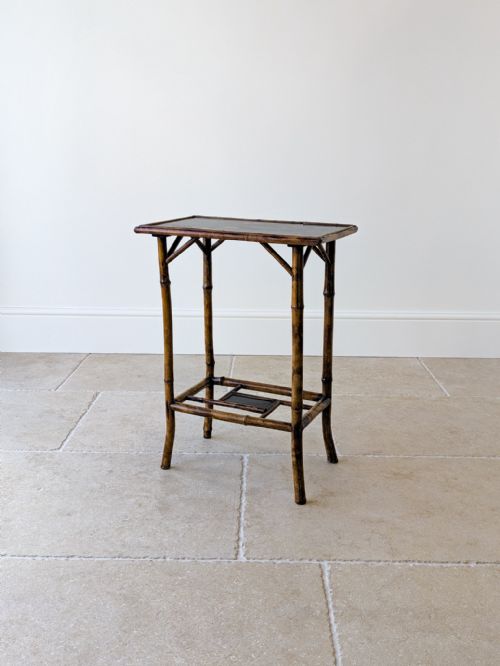
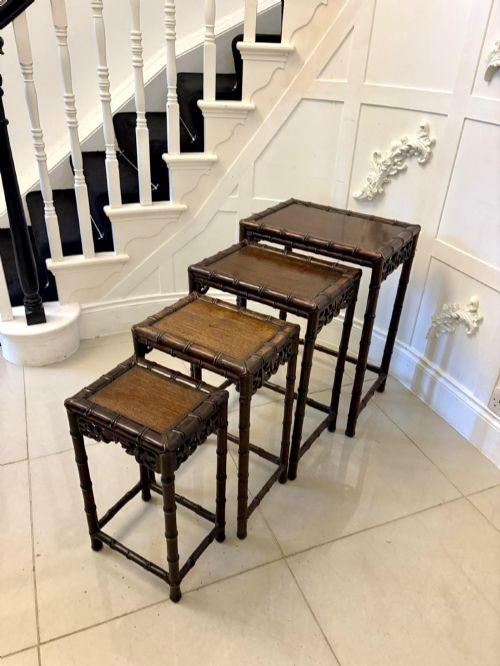
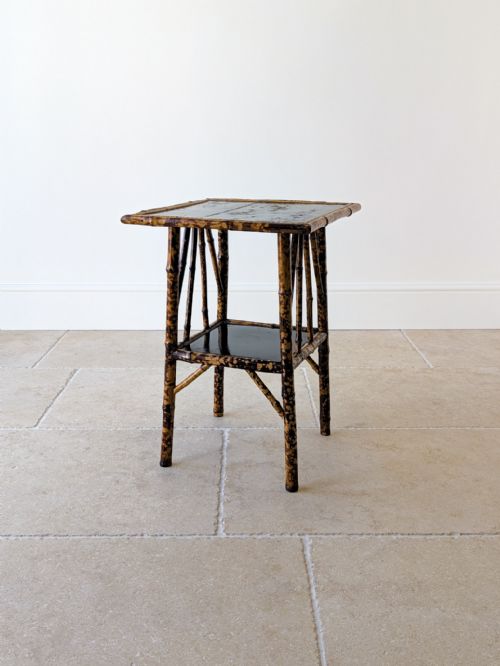
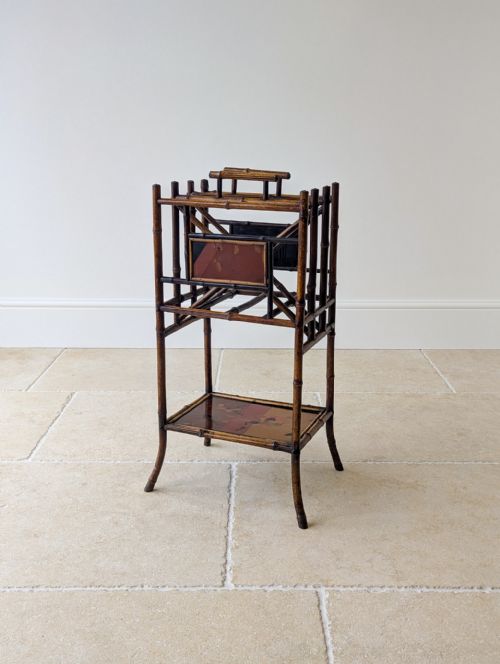
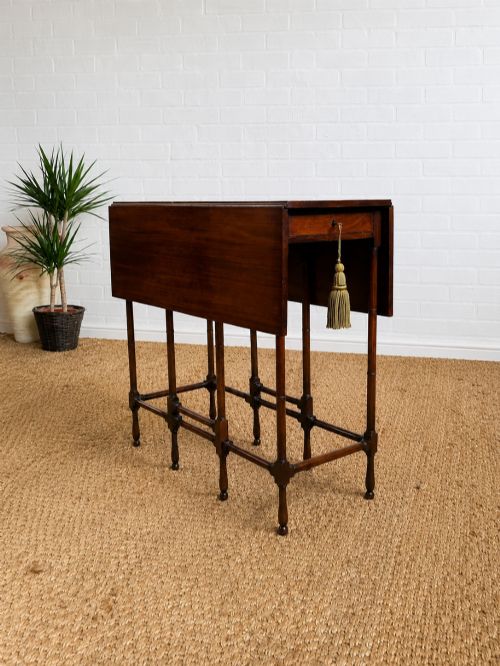
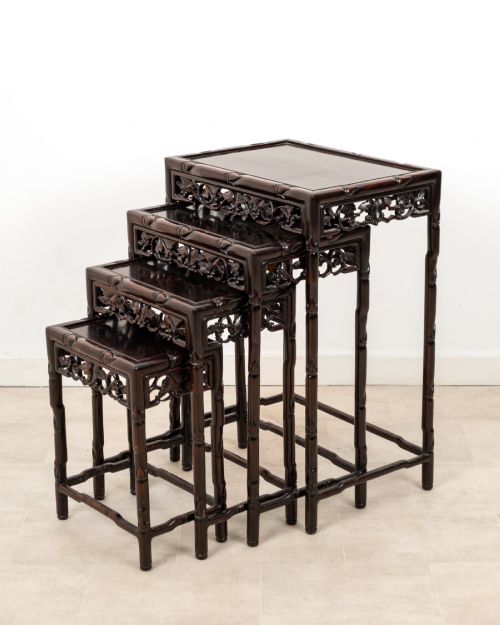
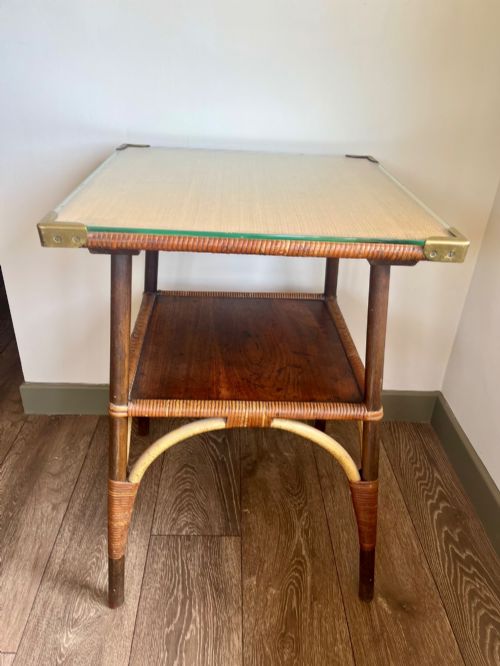
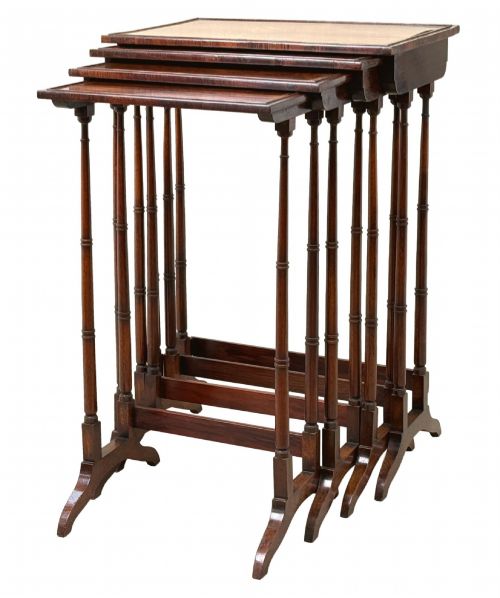
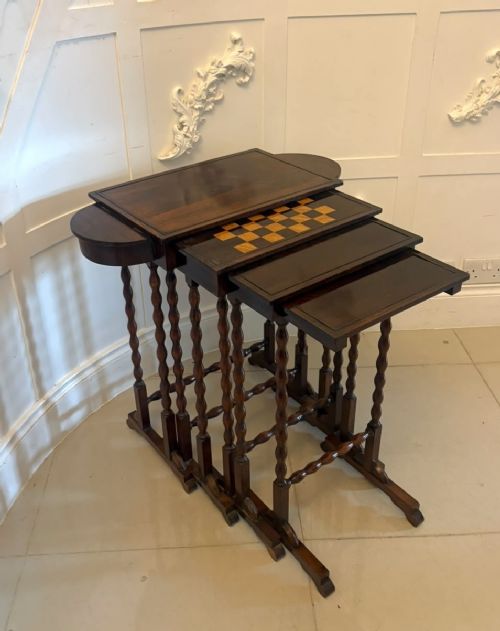
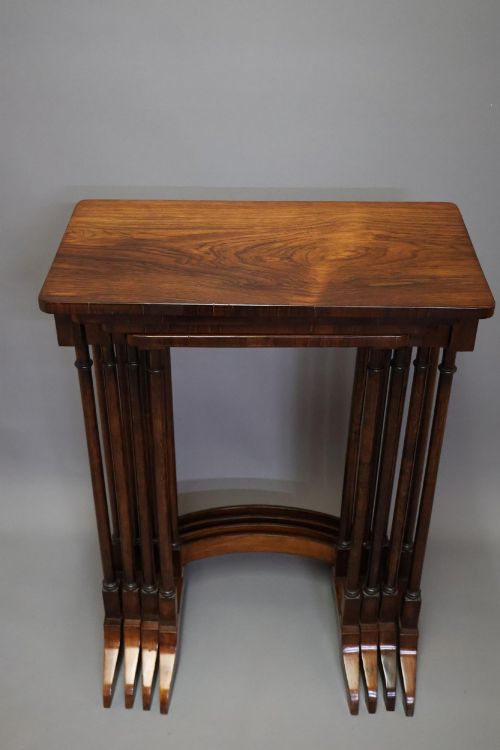
A dark bamboo table combines organic ribbed stems with polished hardwoods, lacquered surfaces, or simulated turned timber to create a distinctive silhouette. These pieces encompass nests of tables, occasional tables, plant stands, and canterburys spanning the Victorian, Edwardian, and nineteenth-century periods.
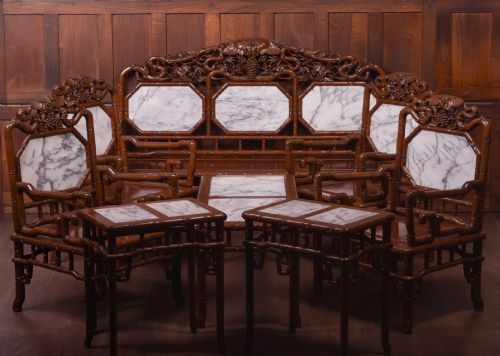
You will most frequently encounter nesting tables and occasional side pieces influenced by Chinese export traditions, Qing Dynasty forms, or the British Aesthetic Movement. These examples range from genuine bamboo and ebonised reed to mahogany and rosewood fashioned with bamboo-turned legs.
Originating across British colonial workshops, European centres, and Chinese import houses, these items served practical drawing-room functions such as holding tea, books, or decorative porcelain stands.
How they were made
Construction relies on natural bamboo canes, hardwoods such as rosewood, mahogany, and hongmu, and occasionally ebonised reed or brass fittings. Makers joined these materials using traditional dowelling and tenon joints suited to light, freestanding furniture.
Surfaces received dark finishes through clear polishing of dense tropical woods, ebonising, or dark lacquer work, sometimes paired with inset marble, leather, or carved panels.
What varies in quality
Quality rests on the integrity of the structural joints and the selection of materials, whether dense native hardwoods or genuine selected bamboo canes. Superior examples display crisp carving, balanced proportions across nested sets, and careful finishing to the lacquered or polished surfaces.
The sophistication of the design dictates distinction, moving from utilitarian occasional stands to elaborate quartetto nests featuring integrated games boards or precise Chinese export joinery.
Liberty and Co·Dryad Leicester
The Dark Bamboo Table Glossary
- Quartetto
- A set of four graduated occasional tables designed to slide neatly beneath one another. This form became particularly popular during the Regency and Victorian periods.
- Aesthetic Movement
- A late nineteenth-century design style that embraced simplicity, asymmetrical arrangement, and cross-cultural influences from Japanese and Chinese art. It heavily shaped British interpretations of bamboo furniture.
- Hongmu
- A traditional Chinese term for dense, dark hardwoods used in quality furniture construction. These heavy timbers provide the deep reddish-brown or black tones seen in period tables.
- Canterbury
- A small piece of furniture fitted with partitions for holding sheet music, books, or newspapers. Victorian examples occasionally incorporated bamboo frames.
Dark Bamboo Table: Frequently Asked Questions
How do I spot faux bamboo?
Faux bamboo is carved or turned from solid timber, such as mahogany, to imitate the segmented joints of natural cane. You can identify it by looking for the absence of natural nodes and the presence of wood grain.
This technique provided greater structural strength for table legs while retaining an exotic aesthetic.
Where should I place an occasional table?
Occasional tables suit living rooms, hallways, or beside armchairs for holding lamps, cups, or small decorative objects. Their compact footprints allow them to fit into tight spaces.
Avoid placing them in direct sunlight or damp areas to protect the dark polish and natural cane.
How do I care for dark bamboo?
Dust regularly with a dry cloth and occasionally feed exposed wooden components with a suitable furniture wax. Keep natural cane and bamboo away from extreme temperature shifts to prevent drying.
Gentle maintenance preserves the rich dark patina built up over generations.