
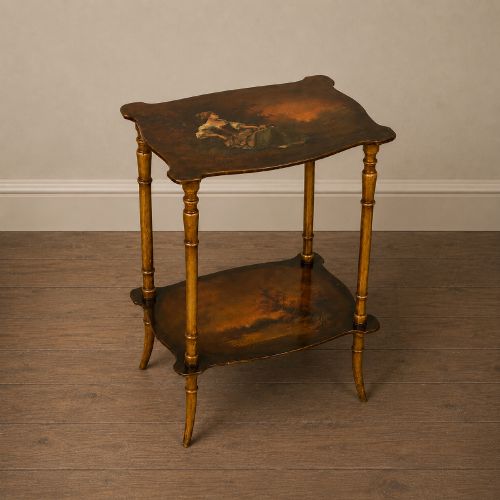
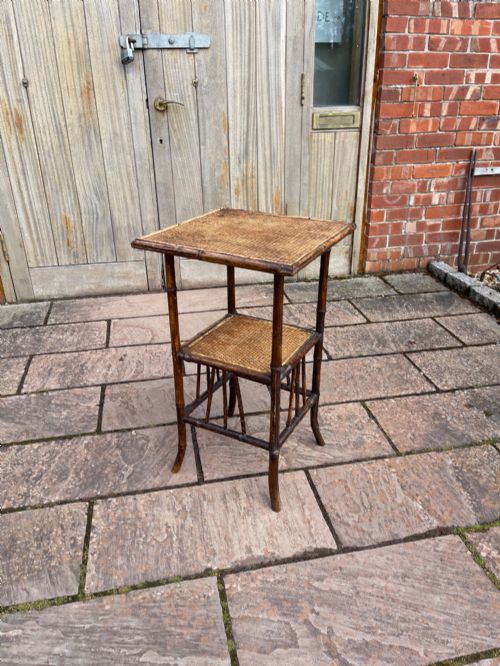


Bamboo Display Table
A bamboo display table brings a light yet sturdy surface into a room, combining natural textures with practical tiers for ornament and daily use.
Bamboo Display Table
When you search for a bamboo display table, you are looking at items designed to showcase ornaments, plants, and curiosities while adding distinct architectural interest to an interior. These pieces range from compact occasional tables and two-tier étagères to side tables created during the Victorian and Edwardian periods.
You are most likely to meet examples from the late nineteenth century on this page, particularly those reflecting the Victorian interest in exotic materials. The selection encompasses forms from the Aesthetic Movement alongside pieces influenced by Anglo-Japanese design and Chinese traditions.
The objects combine lightweight bamboo frames with varied surfaces, including lacquer, wood, and marble inserts. Their origins span British interpretations of Eastern styles as well as imported pieces from the Qing Dynasty and Meiji Period.
How they were made
Makers constructed the primary frames of these tables using flexible and resilient bamboo, often stained or finished to highlight the natural joints of the plant. Joinery required careful shaping to secure multiple tiers, shelves, and display surfaces within a stable structure.
Surfaces were frequently enhanced with contrasting materials such as lacquer, gesso, and gold leaf to create decorative panels. In heavier examples, hardwood or marble inserts were integrated into the top surfaces to provide a durable and weighty platform for vases and plants.
Listings feature items from the 19th Century, Victorian, and Edwardian periods, incorporating bamboo, hardwood, lacquer, and marble.
What varies in quality
The distinction between standard items and superior examples lies in the integrity of the bamboo frame and the precision of the joinery. Higher quality tables maintain rigid stability across multiple tiers without looseness in the intersecting joints.
Decorative execution separates basic production from finer workshop output, particularly in the application of lacquer, gold leaf, or hand-painted details. The inclusion of heavy inset materials like marble or carved hardwood elevates the sophistication of the piece.
The Bamboo Display Table Glossary
- Étagère
- A piece of furniture consisting of a set of open shelves for displaying small objects. These tiers allow for varied arrangement of ornaments and plants in a compact footprint.
- Aesthetic Movement
- A late nineteenth-century design current that emphasised visual beauty over narrative or moral themes. It drew heavily on Japanese and Chinese motifs to reshape European interiors.
- Anglo-Japanese
- A stylistic fusion popular in late Victorian design that combined British furniture forms with Japanese decorative principles and bamboo structures.
- Bijouterie table
- A glass-topped display table specifically designed for showing small valuable objects or curiosities. They often incorporate fine woodwork or lacquer finishes.
- Hongmu
- A dense, dark traditional Chinese hardwood frequently used for high-end stands and tables. It provides a heavy, contrasting foundation compared to lighter bamboo frames.
Bamboo Display Table: Frequently Asked Questions
What is a bamboo display table?
A bamboo display table is a light furniture piece featuring shelves or tiers designed to hold ornaments and decorative items. These tables combine natural cane frames with surfaces made of wood, lacquer, or marble.
Originating largely from the nineteenth century, they reflect European fascination with Eastern design through styles such as the Aesthetic Movement and Anglo-Japanese furniture making.
How were these tables used originally?
In Victorian and Edwardian homes, these tables served as functional surfaces for displaying imported ceramics, small bronzes, and potted plants. Their multi-tiered designs allowed occupants to maximise display space in smaller drawing rooms.
Some variations functioned as occasional tables for holding books or tea, while others acted as dedicated plant stands or bijouterie holders.
How do I style a bamboo table at home?
You can place a bamboo display table in a hallway, living room, or conservatory to add organic texture and varied heights to an interior. They pair well with both traditional and contemporary settings due to their neutral tones and linear frames.
Keep the items placed upon them curated to let the natural pattern of the bamboo and any lacquer work remain visible.
How do I date a bamboo table?
Dating relies on examining the construction methods, the type of finish, and stylistic markers such as Aesthetic Movement motifs or Victorian proportions. Late nineteenth-century pieces often display characteristic dark staining and pegged joinery.
Comparing the hardware, the condition of the lacquer, and the presence of period materials helps distinguish Victorian and Edwardian examples from later reproductions.