




Cane Top Side Table
A cane top side table brings natural texture and lighter framing into a room, offering a functional surface with woven detail.
Cane Top Side Table
When you search for a cane top side table, you encounter compact occasional furniture designed for flexible placement throughout a home. These pieces function primarily as bedside tables, boudoir cabinets, and small surfaces for sitting rooms.
The selections span the Victorian era, the Edwardian period, and the early twentieth century, incorporating French and British design influences. Many incorporate woven plant materials alongside traditional timber frames.
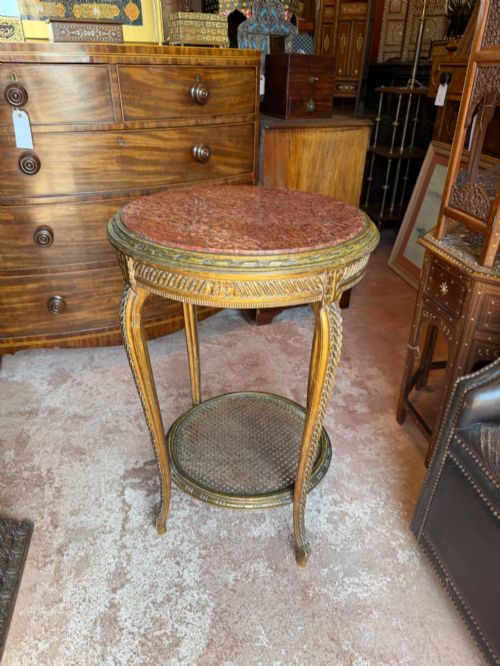
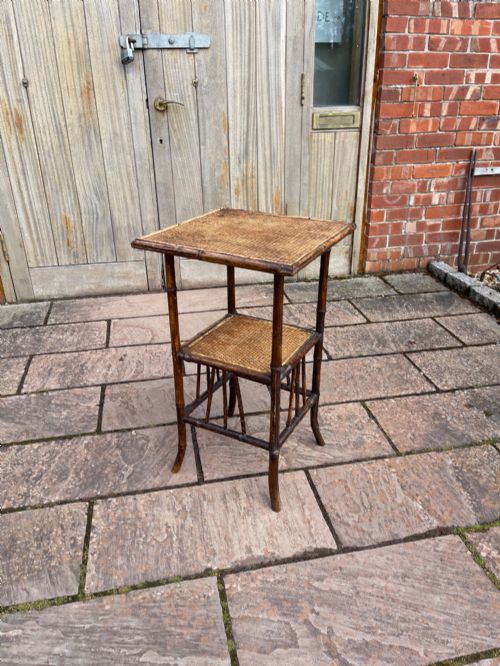
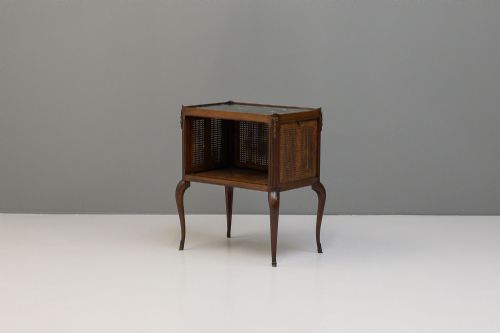
Among the variations on this page, bamboo framing paired with woven surfaces appears frequently, alongside French oak and giltwood designs featuring marble and canework.
How they were made
Construction relies on natural timber frames combined with woven plant materials such as cane, rattan, and bamboo. Artisans shaped these organic components to create lightweight yet stable occasional furniture.
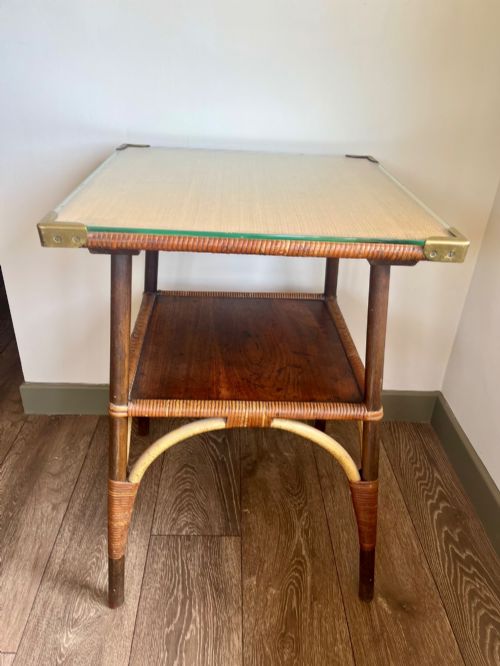
Many examples integrate contrasting elements, setting stone or marble slabs against woven cane lower tiers or incorporating brass fixtures, leather, and hessian details. Hand carving and painted finishes appear on select French forms.
One workshop represented here, Dryad Leicester, began by making wicker furniture before expanding into modernist occasional tables.
What varies in quality
The distinction between standard examples and finer pieces rests on the precision of the joinery and the integrity of the woven panels. Tightly woven cane and robust bamboo or hardwood framing indicate superior craftsmanship.
Quality also shows in the integration of secondary materials, such as well-fitted marble tops, hand-carved decorative motifs, and signed maker details from notable retailers or workshops.
Liberty & Co.·KRIEGER of Paris·Dryad Leicester
The Cane Top Side Table Glossary
- Cane
- A material derived from the peeled bark of rattan palms, woven into decorative patterns for seats and tabletops. It provides a durable, flexible surface.
- Gueridon
- A small French occasional table, typically round and supported by a central pillar or multiple slender legs. These tables often serve decorative functions in a room.
- Etagere
- A piece of furniture consisting of a set of open shelves for displaying small objects. They are frequently made with tiered cane or marble surfaces.
- Aesthetic Movement
- A late nineteenth-century design style that emphasised visual beauty over narrative content. It often featured bamboo and oriental influences in domestic furniture.
Cane Top Side Table: Frequently Asked Questions
Where should I place a cane top side table?
These compact surfaces fit easily beside a bed or armchair where you need a light place for a book or lamp. Their open framing prevents them from crowding smaller spaces.
They also work well in hallways or corners as display stands for plants and decorative objects.
How do I clean a cane top?
Dust the woven surface regularly with a soft brush to prevent dirt from settling between the strands. Avoid using excess water, which can weaken the natural fibres over time.
Conditioning the wood and cane occasionally helps maintain flexibility and prevents drying.
What periods do these tables represent?
The pieces span the nineteenth and early twentieth centuries, covering Victorian, Edwardian, and Art Deco eras. French regional styles and British iterations both feature prominently.
Design influences range from French Empire to the British Aesthetic Movement and Arts and Crafts.
Can these tables support heavy items?
Most occasional tables are built for light domestic use rather than heavy loads. Placing lamps, books, and small decorative items is well within their capacity.
Heavier versions featuring marble tops offer greater stability for supporting bulkier objects.