
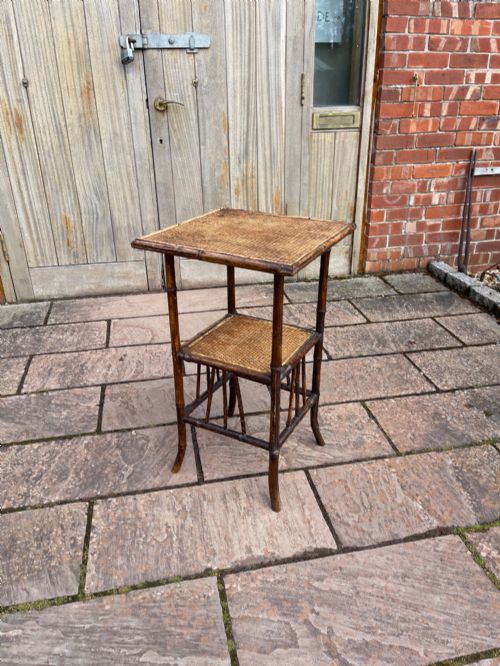


Tiered Bamboo Table
A tiered bamboo table brings lightweight utility and exotic flair to a room, spanning Victorian, Edwardian, and later twentieth-century iterations.
Tiered Bamboo Table
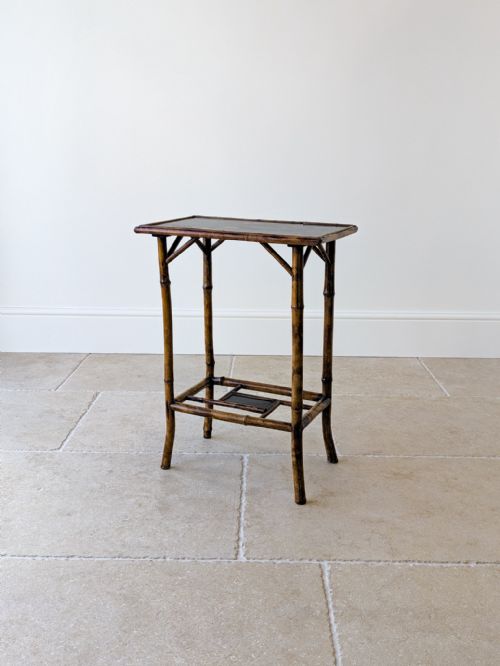
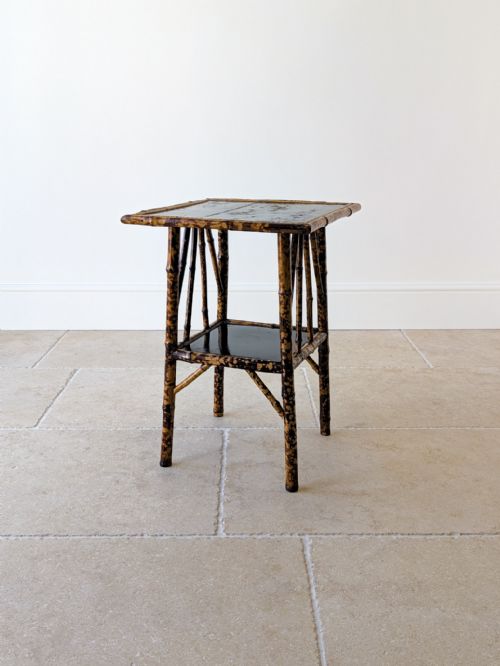
When you search for a tiered bamboo table, you are looking at lightweight occasional furniture designed with multiple surfaces for display and use. These pieces surface most frequently in nineteenth-century Victorian and Edwardian guises, often reflecting the period fascination with Eastern design.
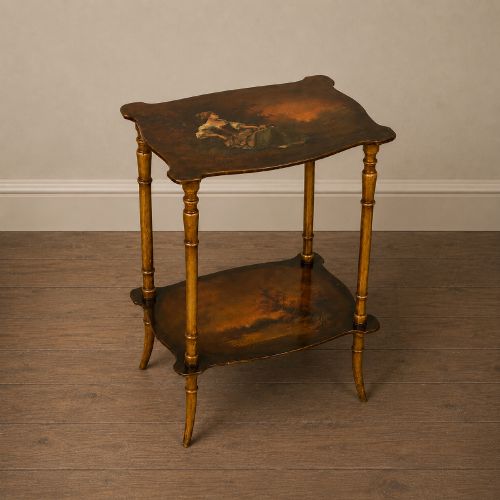
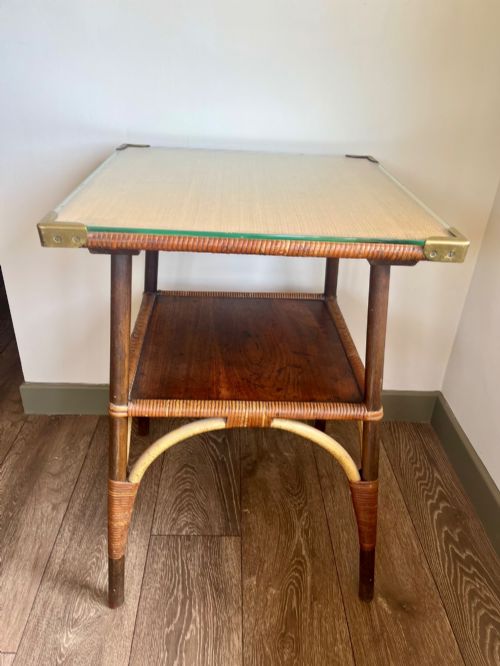
The inventory demonstrates forms ranging from side tables and sewing tables to coffee tables and étagères. You will frequently encounter two-tier constructions featuring lacquered panels or woven reed surfaces alongside simpler structural frames.
Geographic influences stretch from British Aesthetic Movement interpretations to Anglo-Indian, Chinese Hongmu, and Continental workshops. This variety means a buyer can select everything from a modest corner stand to a striking pagoda-topped centrepiece.
How they were made
Makers utilised natural bamboo and tiger bamboo for the primary skeletal frames, joining uprights and stretchers to support multiple platforms. Wood and rattan appear alongside the cane, providing sturdy inner cores or woven details for shelves and trays.
Surfaces frequently received decorative treatments including lacquer, paint, gesso, and gold leaf. Japanned finishes and Chinoiserie motifs adorned many panels, while details such as brass fittings completed the construction.
Tiger bamboo stems were prized for looking like they belonged in a Victorian jungle even when holding afternoon biscuits.
What varies in quality
The distinction between ordinary and exceptional examples rests in the execution of the surface decoration and the integrity of the joinery. Finely painted lacquer panels, crisp gilding, and well-preserved woven reed elevate an ordinary stand into a sophisticated decorative object.
Proportion and origin also dictate standing, with pieces bearing documented workshop attribution or distinct stylistic coherence commanding greater interest. The skill required to bend and fit natural bamboo without splitting determines the enduring rigidity of the tiers.
Liberty & Co.·Dryad Leicester
The Tiered Bamboo Table Glossary
- Étagère
- A piece of furniture consisting of a set of open shelves for displaying small objects. These tiered stands provide practical vertical storage in compact footprints.
- Japanning
- A type of European finish that emulates East Asian lacquerware. This technique involves layering varnishes and paints, often cured by heat.
- Hongmu
- A category of dense, dark-coloured Asian hardwoods translated literally as red wood. Pieces executed in this material display considerable weight compared to cane equivalents.
- Aesthetic Movement
- A late nineteenth-century design style emphasising visual beauty over narrative subject matter. This philosophy inspired the integration of bamboo and Japanese motifs into Western interiors.
- Tiger bamboo
- A specific variety of bamboo exhibiting mottled, high-contrast surface markings resembling animal stripes. Makers selected this patterned cane for its striking visual impact.
Tiered Bamboo Table: Frequently Asked Questions
How are tiered bamboo tables cleaned?
Dust the surfaces regularly with a soft, dry cloth to prevent dirt accumulation in the woven areas or lacquered crevices.
Avoid liquid cleaners, moisture, and direct sunlight, as these elements can warp the natural cane and damage delicate lacquer or gold leaf.
Were these tables used for tea?
Many of the two-tier and coffee-style tables served practical domestic purposes including serving light refreshments.
Additional tiers provided convenient placement for cups, sewing implements, or decorative ornaments while keeping the main surface clear.
How do I spot Victorian bamboo?
Victorian examples often display darker tones, heavy lacquer panels, and influences from the Anglo-Japanese taste.
Construction methods typically rely on pinned joints and natural materials rather than modern adhesives or synthetic cores.
Are Edwardian bamboo tables different?
Edwardian versions occasionally incorporate mahogany frames alongside bamboo or experiment with Continental painted details.
Designs from this later era lean towards lighter, more refined proportions while retaining the multi-tier functionality.