



Verre Eglomise Art
Verre eglomise art brings together glass, gold leaf, and pigment to create framed pictures, wall signs, and tables with a distinctive reflective depth.
Verre Eglomise Art
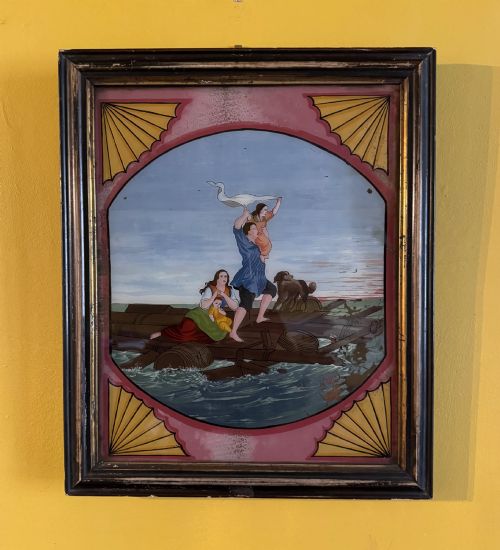
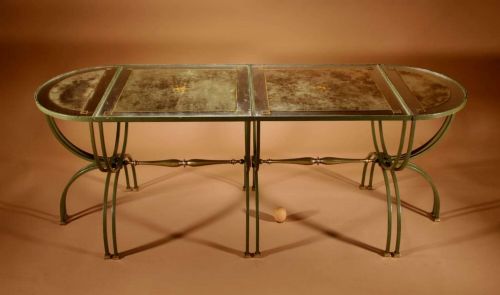
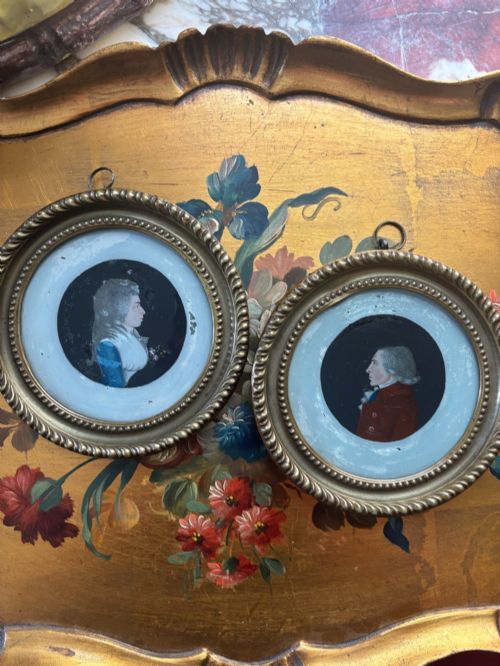
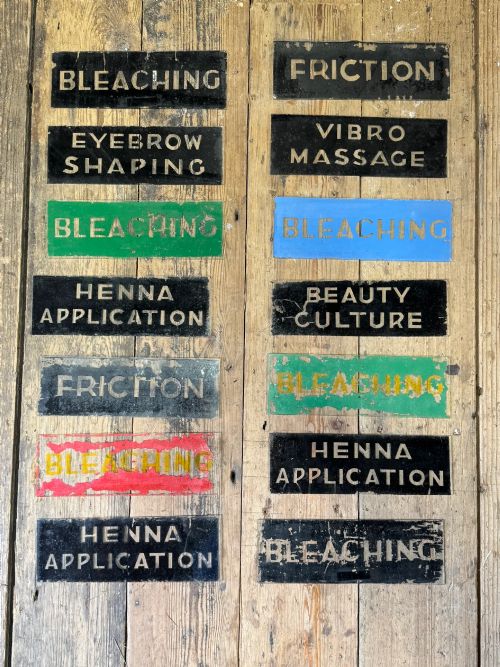
Verre eglomise art encompasses reverse glass paintings, prints, silhouettes, and decorated frames dating from the eighteenth century through to the mid-twentieth century. When searching for verre eglomise art, buyers encounter Georgian and Regency portrait silhouettes, equestrian scenes, religious needlework pictures, and Art Deco coffee tables. The selection ranges from delicate miniature portraits to large wall signs and framed engravings housed in decorative glass mounts.
The objects span multiple periods, with Georgian and Regency examples sitting alongside nineteenth-century woolwork pictures and 1930s or 1940s pieces. Forms vary from simple framed pictures and reverse glass prints to functional items like wrought iron and brass coffee tables incorporating original glass panels. This variety reflects the adaptability of the technique across different centuries and interior styles.
Materials and construction
Makers apply gold leaf, silver leaf, paint, and pigment to the reverse side of glass panels, creating an image viewed through the clear glass from the front. This method protects the delicate metallic foils and pigments from physical damage while imparting a glossy surface sheen.
Wooden frames, ebonised wood, giltwood, and wrought iron support the glass panels. Many pieces integrate paper, woolwork, or silk embroidery behind or alongside the glass, combining textile arts with reverse painting and gilding.
Verre Eglomise Art Retail Price Guide 2026
Typical asking prices for verre eglomise art among the pieces listed under this phrase on Sellingantiques today, from the lower quarter to the upper quarter. They describe what is for sale here now, not the wider market.
Listings feature items spanning the Georgian, Regency, and Art Deco periods, utilising glass, gold leaf, ebonised wood, and silk embroidery.
Judging quality in execution
The integrity of the reverse paint and gold leaf application distinguishes finer examples from simpler decorative items. Crisp line work in silhouettes and precise gilding indicate higher competency in the workshop.
The survival of original glass panels, unblemished metallic leaf, and period frames influences the integrity of the piece. Matching the glass to its original wooden or ebonised frame preserves the historical character of the work.
The Verre Eglomise Art Glossary
- Verre eglomise
- A cold decoration technique involving the application of gold or metal leaf and paint to the reverse of glass. The term derives from the eighteenth-century French decorator Jean-Baptiste Glomy.
- Silhouette
- A portrait profile filled in with a solid colour, commonly black, often painted on glass or paper. Regency and Georgian examples frequently feature fine brushwork and detailed hair ornaments.
- Reverse glass painting
- An artwork painted directly onto the back of a glass sheet and viewed from the unpainted front. This method imparts a deep gloss and protects the pigment.
- Giltwood
- Wood carved and coated with gold leaf or gold paint. Frames of this material frequently house verre eglomise panels and Regency engravings.
- Silkwork
- Embroidery executed using silk threads on a fabric ground. Eighteenth-century and Regency examples often appear paired with painted glass mounts.
Verre Eglomise Art: Frequently Asked Questions
What is verre eglomise?
Verre eglomise is a decorative technique where artists apply gold leaf, silver leaf, and pigment to the reverse side of a glass panel. The finished design is viewed through the front of the glass, giving the image a reflective and luminous quality.
This method gained popularity for decorating mirrors, furniture panels, and picture frames during the eighteenth and nineteenth centuries.
How do I care for reverse glass art?
Display these pieces away from direct sunlight and high humidity to prevent the paint and metallic leaf from lifting off the glass. Use a soft, dry cloth for dusting the frame and avoid liquid glass cleaners near the edges where moisture might seep behind the glass.
Handling the frame gently prevents movement that could stress the glass panel or damage the backing materials.
Are these pieces dated correctly?
Dates rely on stylistic evidence from periods such as the Georgian, Regency, and Art Deco eras, along with specific costume and technique markers. Makers often incorporated dated signatures or inscriptions on silhouettes and engravings.
Construction methods, such as hand-beaten ironwork or early glass manufacturing traits, help confirm the period of creation.
Where were these items displayed?
Georgian and Regency households displayed silhouettes, needlework pictures, and reverse glass prints in principal reception rooms. Commercial establishments later utilised reverse-painted glass signs for shop fronts and business interiors.
Coffee tables incorporating glass panels functioned as decorative centrepieces in twentieth-century interiors.