
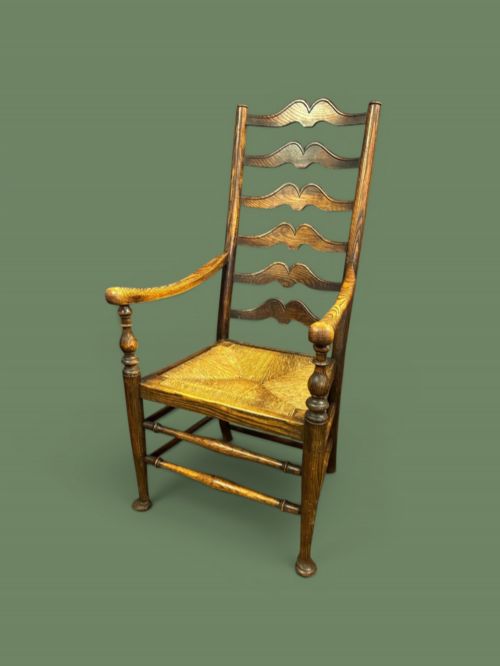
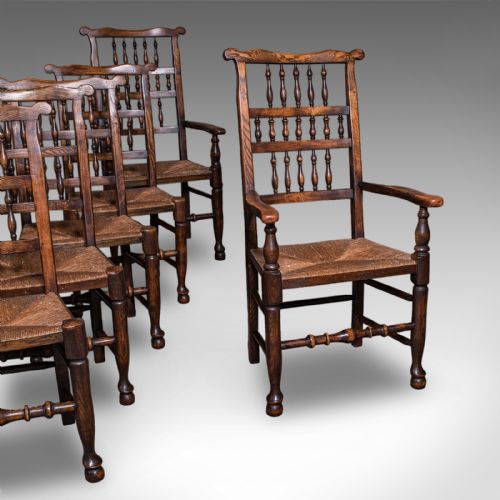


Vernacular Ladderback Chair
A vernacular ladderback chair offers honest country utility, bringing unpretentious regional craftsmanship and natural rush seating directly into modern rooms.
Vernacular Ladderback Chair
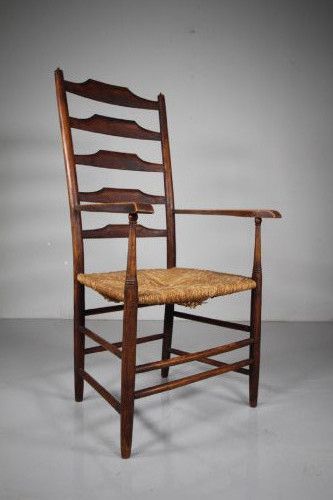
A vernacular ladderback chair is an honest piece of regional country seating, built by local makers without the strict constraints of metropolitan London workshops. These chairs span several centuries, drawing on Georgian, Victorian, and Edwardian traditions across English, Welsh, Irish, and Cheshire regions.
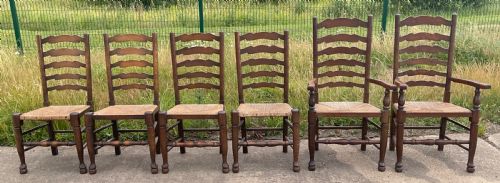
You will most commonly encounter dining chairs, side chairs, and armchairs on this page, alongside occasional rocking chairs, high chairs, and child commode chairs. Their forms are defined by horizontal slats between upright posts, built for everyday domestic utility rather than formal display.
Regional variations appear frequently, from Lancashire carvers and Sussex models to Irish súgán ash examples and Cheshire painted designs. The construction relies on traditional local timber rather than exotic imports, anchoring each piece firmly to its geographic origin.
Materials and regional construction methods
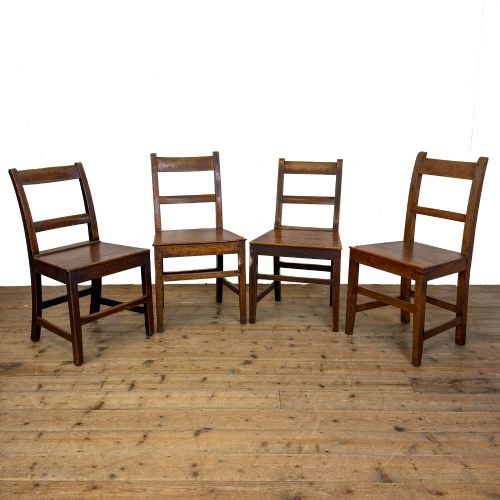
Makers constructed frames using native hardwoods such as ash, elm, beech, and oak, often combining timbers within a single chair. Elm frequently served for solid seats, while ash and beech provided the necessary strength and flexibility for turned posts and slender horizontal back slats.
Seats were traditionally woven from natural rush or plaited straw, known locally in Ireland as súgán, creating a durable and supportive surface. Some examples retain original painted finishes over the timber framework, protecting the wood while adding regional decorative character.
Listings feature elm, ash, oak, beech, and pine timbers paired with natural rush and plaited straw seating across multiple centuries.
Factors of construction and preservation
Quality rests in the integrity of the frame construction and the tightness of the joinery, as country chairs endure generations of heavy daily use. Tighter turned turnings and well-proportioned horizontal slats indicate careful workshop execution.
The survival of an original rush or plaited straw seat significantly elevates a piece, as does the retention of an early or original painted surface. Matching sets, such as dining chairs or harlequin groups, command distinct attention compared to single survivors.
Philip Clissett
The Vernacular Ladderback Chair Glossary
- Ladderback
- A chair with a back composed of several horizontal wooden slats resembling the rungs of a ladder. These slats are tenoned into the rear upright posts.
- Rush seat
- A seating surface woven from dried marsh rushes twisted into cords. It provides a resilient, textured platform that requires skilled hand-weaving.
- Súgán
- An Irish term for twisted straw or hay used to plait traditional chair seats. This material offers a robust and distinctly textured alternative to standard marsh rush.
- Vernacular
- Objects designed and built by local craftsmen using traditional regional methods and native materials, free from high-style academic design influences.
- Carver
- An armchair, traditionally placed at the head of a dining table or used as a principal seat in a domestic interior.
Vernacular Ladderback Chair: Frequently Asked Questions
How do I care for a rush seat?
Keep natural rush seats dry and clean them gently with a soft brush to remove dust. Avoid excess moisture, which can cause the dried marsh fibres to rot.
Applying a light, occasional mist of water can help maintain the flexibility of older rush, preventing it from becoming brittle over time.
Were these chairs used at dining tables?
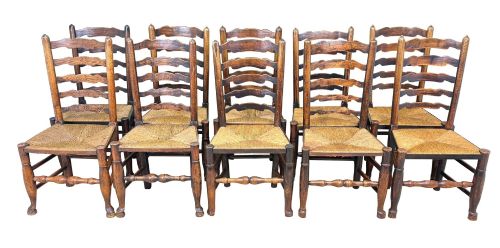
Many of these pieces served as everyday kitchen and dining seating for working households. Sets of six or ten reflect their primary role around the farmhouse table.
Single armchairs and carvers often stood by the hearth or served as the master seat, while smaller side chairs filled out the dining arrangements.
What is a harlequin set?
A harlequin set is a group of chairs that share a similar style, period, or region but are not from the exact same original workshop batch. They were often assembled over time by collectors seeking a matched dining group.
Minor variations in turning, height, or timber grain give these assembled sets a charmingly organic and authentic appearance.
How can I tell an Irish súgán chair apart?
Irish súgán chairs are distinguished by their use of plaited straw seats rather than traditional marsh rush. They often feature robust ash frames characteristic of Irish country vernacular traditions.
The distinct texture of the plaited straw provides a clear visual and tactile marker of its regional Irish origin.