
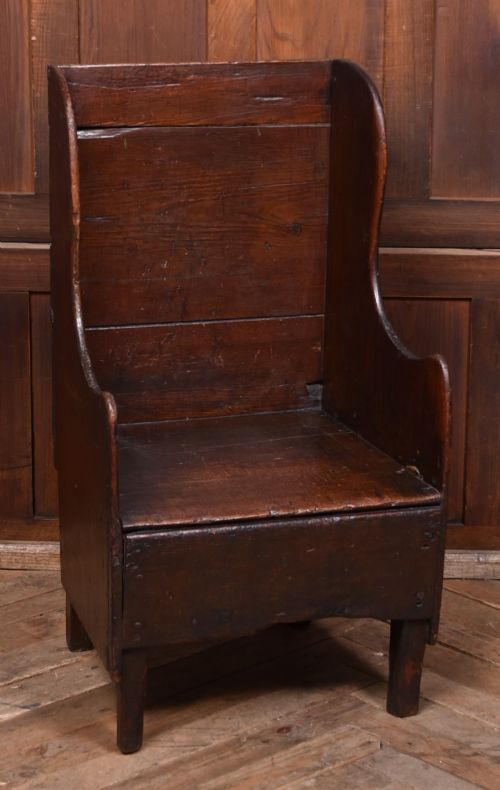


Vernacular Childs Chair
A vernacular childs chair is a domestic seat shaped by local hands, offering small-scale utility built with regional character.
Vernacular Childs Chair
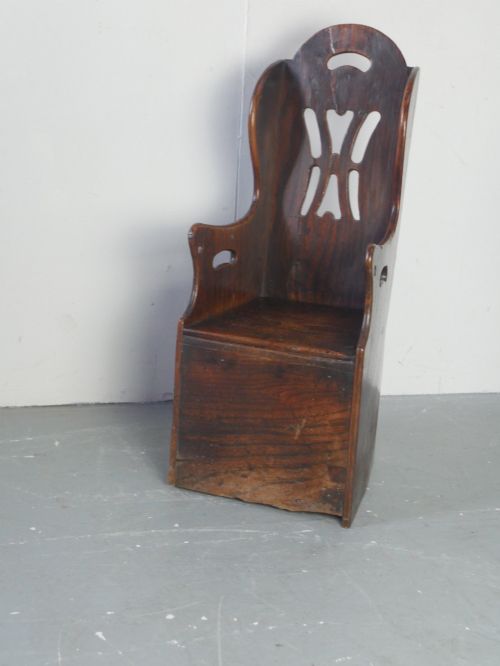
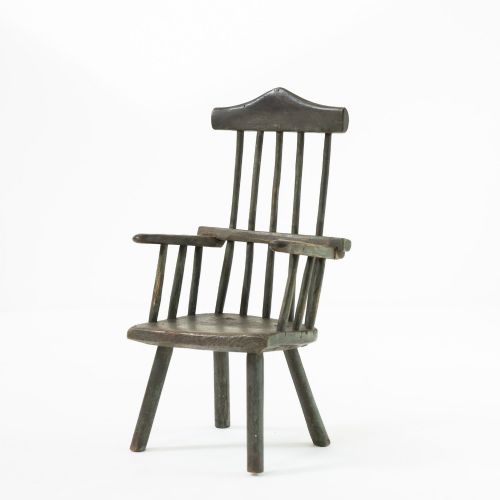
When you search for a vernacular childs chair, you encounter regional domestic seating built for younger members of the household without the strict formality of high-style urban workshops. These pieces span centuries of domestic life, taking forms from simple stick backs and ladderbacks to high chairs, rocking chairs, and lambing chairs.
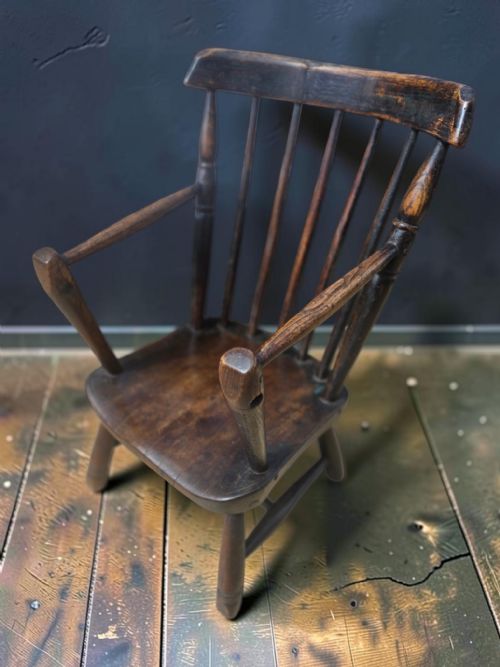
The versions you meet most frequently on this page belong to the nineteenth and eighteenth centuries, often shaped in ash, elm, and oak by country makers. They survive as children's armchairs, potty chairs, commode chairs, and Windsor styles that miniaturise adult regional seating for domestic use.
Materials and Construction
Local timber dictates the build of these seats, with oak, elm, ash, and fruitwood chosen for strength and availability. Makers often combined woods within a single frame, pairing sturdy ash for spindles and legs with elm for solid, carved seats.
Construction relies on traditional joinery methods suited to domestic workshops, including stick-back framing, spindle turning, and rush seating. Surfaces are left bare, painted, or finished with natural patination gathered through generations of handling.
Listings feature woods including ash, elm, oak, fruitwood, laburnum, and pine, alongside rush seating and painted finishes.
Judging Quality and Proportion
Quality rests in the balance of the miniaturisation, where the best examples maintain robust structural integrity while capturing the charm of adult regional forms. The handling of the timber and the tightness of the joinery separate pieces made with care from those of rougher utility.
Proportion and surface wear define the character of the piece, distinguishing intentional folk design from heavy alteration. Original painted finishes and untouched patination elevate examples above those stripped or heavily restored.
The Vernacular Childs Chair Glossary
- Lambing chair
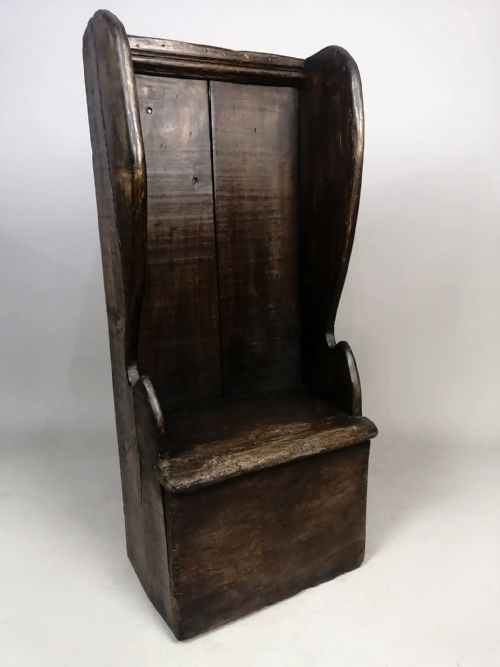
- A hooded or high-sided chair designed to keep drafts away from the occupant. These child-scale versions provide enclosed seating with solid wooden panels.
- Stick back
- A chair construction method where turned or shaped wooden sticks form the backrest, fitting directly into a thick wooden seat. This method typifies country vernacular furniture.
- Windsor chair
- A seat built with a heavy solid wooden saddle-shaped seat into which the legs and back spindles are wedged. Child variants scale down this hoopback or combback design.
- Potty chair
- A functional chair fitted with a cutout in the seat or a commode compartment beneath for toilet training. They combine domestic seating with nursery utility.
- Ladderback
- A chair back constructed from horizontal wooden slats or rails set between two upright posts. These are frequently fitted with rush woven seats.
Vernacular Childs Chair: Frequently Asked Questions
What is a vernacular childs chair?
A vernacular childs chair is a regional piece of domestic seating made by local cabinet makers or country joiners rather than large urban factories. These seats mirror the styles of adult country furniture scaled down for domestic nursery use.
They encompass stick backs, high chairs, and lambing chairs built from native timbers like ash, elm, and oak during the eighteenth and nineteenth centuries.
How were child high chairs used?
Child high chairs elevated infants to table height for meals and kept young children safely contained during busy household tasks. Their sturdy construction supported daily domestic life in country kitchens.
Many incorporate footrests and deep frames to ensure stability while in use by toddlers.
How do I date an antique child chair?
Dating relies on observing construction techniques, tool marks, timber selection, and regional design traits. Eighteenth-century examples often display pegged joinery and hand-rived woods, while nineteenth-century pieces may show early machine turning.
Comparing the form to documented adult regional chair styles helps narrow the period of manufacture.
How do I care for antique wood furniture?
Protect antique wood by placing chairs away from direct sunlight, radiators, and rapid temperature shifts that cause timber to split. Maintaining stable indoor humidity preserves the original dry surface and patination.
Dust gently with a soft dry cloth and avoid modern liquid polishes that build up on historic surfaces.