

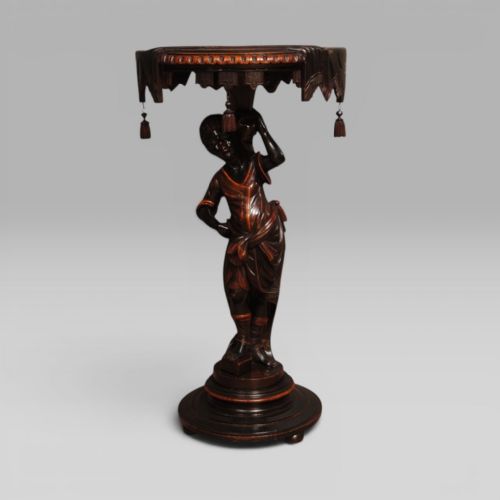


Venetian Blackamoor Stand
These venetian blackamoor stand pieces bring theatrical Italian craftsmanship and bold figural presence into a room.
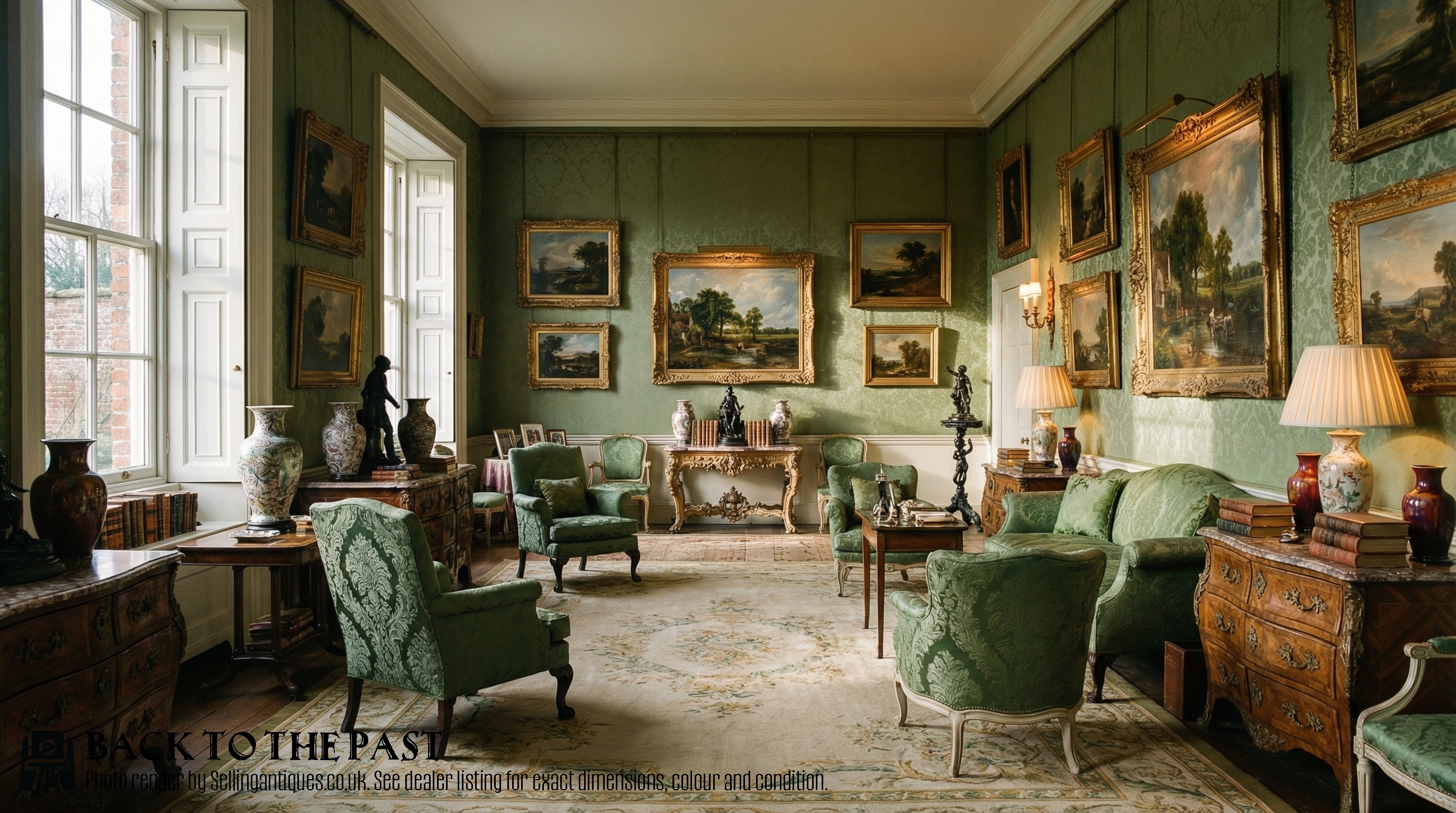
Venetian Blackamoor Stand
A venetian blackamoor stand combines sculptural figurative art with functional display furniture, taking the form of torcheres, side tables, plant stands, and standard lamps. These pieces originate primarily from the nineteenth century, spanning periods from eighteen fifty through the Edwardian era.
Makers shaped these stands as standing figures, gondoliers, or attendants holding trays, bowls, torchere arms, and pedestals. The forms range from small tabletop waiters and candlesticks to large floor-standing pedestals and torchere stands.
Most examples align with Venetian Baroque, Venetian Revival, and Rococo styles, reflecting nineteenth-century Italian decorative arts. Buyers encounter both single figures and matched pairs designed to anchor corners or frame architectural spaces.
How They Were Made
Carved wood, walnut, and gesso form the structural foundation of these figures, providing a stable base for intricate sculptural detail. Artisans shaped the wood by hand to create the lifelike contours of the figures and the support elements.
Polychrome paint and gold leaf or gilt finishes define the surface decoration, applied in layers to achieve rich colour and metallic contrast. Many surviving pieces retain their original painted and gilded surfaces, highlighting the decorative ambition of the workshops.
The documented periods span from eighteen fifty through the Edwardian era, encompassing Venetian Baroque Revival and Rococo styles.
What Varies in Quality
Surface preservation dictates the visual impact of each piece, particularly the integrity of the original polychrome paint and gold leaf layering. Surviving pigment with minimal later overpaint retains the intended chromatic brilliance of the Venetian workshop.
The Venetian Blackamoor Stand Glossary
- Torchere
- A tall stand or floor lamp designed to hold a light source or display an object at height. These tall supports often take figural forms in Venetian pieces.
- Gesso
- A plaster-like mixture applied to carved wood to provide a smooth base for gilding and painting. It allows crisp detail work beneath the metallic leaf.
- Parcel-gilt
- Partially gilded with gold leaf, leaving areas of painted wood or exposed material visible alongside the metallic sections. This technique creates contrast across the surface.
- Waiter
- A small tray or serving stand held by a figure. These tabletop pieces function as decorative receptacles for cards or small items.
Venetian Blackamoor Stand: Frequently Asked Questions
What rooms suit a blackamoor stand?
These pieces function well in entrance halls, drawing rooms, and libraries where their vertical presence and figural detail complement traditional interiors.
Pairs work effectively flanking doorways or fireplaces, while single stands serve as sculptural accents in corners.
How do I care for the painted surface?
Dust the carved wood and painted areas gently with a dry, soft brush to protect the fragile gesso and gold leaf layers.
Keep these stands away from direct sunlight and moisture to prevent the polychrome paint from flaking or fading.
Are these stands functional furniture?
Many pieces serve practical purposes as plant stands, torcheres for lighting, small side tables, or waiters for holding items.
Larger floor stands hold lamps or planters, combining decorative sculpture with utility.
How do I identify a nineteenth-century piece?
Examine the wood substrate, hand-carved tool marks, and the composition of the gesso and polychrome layers under magnification.
Nineteenth-century Italian examples display specific stylistic markers associated with Venetian Revival and Baroque aesthetics.