





Carved Wooden Gueridon
These carved wooden gueridon tables bring architectural presence and sculptural form to a room, offering practical display space with distinct historical character.
Carved Wooden Gueridon
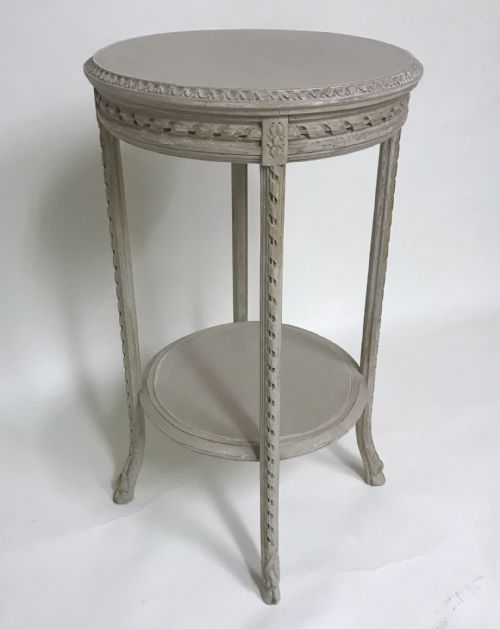
When you search for a carved wooden gueridon, you encounter French Neoclassical, Venetian Baroque, and Rococo Revival forms spanning the nineteenth and twentieth centuries. These works function as centre tables, side tables, and decorative pedestals or torchieres designed to hold lamps, plants, and art objects.
The pieces on this page appear in various timber varieties, frequently incorporating marble tops, paint, or ormolu mounts. Makers utilised mahogany, walnut, and carved wood to build robust furniture that doubles as sculptural art, often depicting figures or floral motifs.
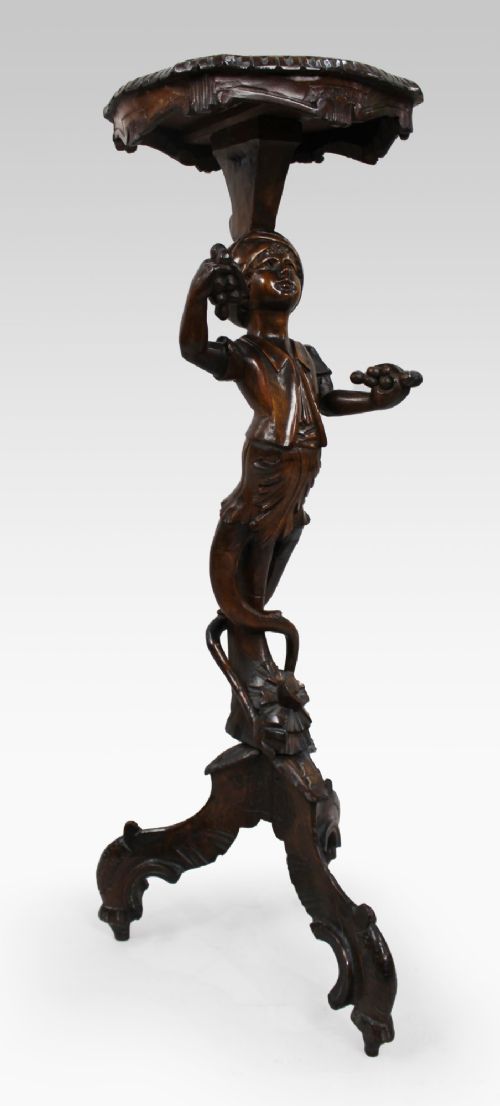
Origins stretch across France and Italy, bringing distinct regional carving traditions to light. You will find items ranging from simple occasional tables to elaborate figurative stands featuring crouching figures, young women, and Blackamoor designs.
How they were made
Joiners and carvers shaped these pieces from solid hardwoods like mahogany and walnut, employing traditional hand-carving techniques to create deep relief work and figurative elements. Surfaces were frequently painted, parcel-gilded, or left with a natural polished finish to highlight the grain.
Many tables incorporate inset marble tops and bronze or ormolu ornaments fixed securely to the wooden frames. Structural integrity relies on traditional joinery, ensuring that heavy decorative tops and carved pedestals remain stable over time.
Carved Wooden Gueridon Retail Price Guide 2026
Typical asking prices for carved wooden gueridon among the pieces listed under this phrase on Sellingantiques today, from the lower quarter to the upper quarter. They describe what is for sale here now, not the wider market.
Several pieces feature crouching figures and young women holding up the world, or at least your afternoon tea.
What varies in quality
The depth and animation of the wood carving dictate the visual standard of each piece, distinguishing flat, mechanical work from spirited, hand-chiseled detail. Sculptural figures show mastery in anatomical proportion and expression.
Material combination also elevates a piece, particularly the integration of genuine marble inserts, fire-gilt bronze or ormolu mounts, and layered painted finishes. Well-chosen timbers with rich figuring provide a stronger foundation for decorative carving.
The Carved Wooden Gueridon Glossary
- Gueridon
- A small ornamental table or stand, originating in seventeenth-century France and often taking a round or sculptural form. These pieces frequently serve as pedestals or occasional tables.
- Torchere
- A tall stand or pedestal designed to hold a light, candelabrum, or decorative sculpture. They often feature slender shafts supported by elaborate carved bases.
- Ormolu
- Gilded bronze mounts and ornaments applied to furniture and decorative objects. This technique enhances the visual richness of nineteenth-century French and Italian pieces.
- Parcel-Gilt
- Partially gilded woodwork where gold leaf highlights specific carved details against a painted or natural wood background. This technique adds depth and contrast to architectural mouldings.
- Blackamoor
- A decorative sculptural motif depicting figures from African or Eastern traditions, commonly executed in carved and painted wood during the nineteenth century. These figures often support trays, torchieres, or tabletops.
Carved Wooden Gueridon: Frequently Asked Questions
What is a carved wooden gueridon used for?
These pieces serve as occasional tables, display surfaces for art and lamps, or tall pedestals for sculptures and plants.
Their compact footprints allow them to fit easily into corners, hallways, or beside seating areas while adding a strong decorative element.
How do I identify the period of a gueridon?
Dating relies on stylistic clues such as Neoclassical symmetry, Rococo curves, or the specific character of nineteenth-century figurative carving.
Materials like ormolu mounts, painted finishes, and inset marble tops also help narrow down the decade of production.
Are these tables sturdy enough for daily use?
Solid hardwood construction and traditional joinery give these tables good structural stability for holding lamps and decorative objects.
Figurative stands and pedestal bases distribute weight evenly, though delicate carved elements and marble tops require careful placement.
Where were most of these pieces made?
The listings show strong French and Italian origins, reflecting major centres of nineteenth-century craftsmanship and design.
Regional workshops in these countries produced distinct styles ranging from formal Neoclassical side tables to expressive Venetian torchieres.