



Italian Baroque Pedestal
An italian baroque pedestal brings architectural drama and sculptural carving to a room, using rich woods and gilded surfaces to display art.
Italian Baroque Pedestal
An italian baroque pedestal encompasses carved wooden supports, torchieres, columns, and plinths originating across the seventeenth, eighteenth, and nineteenth centuries. These forms serve primarily to elevate sculptures, candelabras, and planters, integrating classical motifs into domestic and grand interiors.
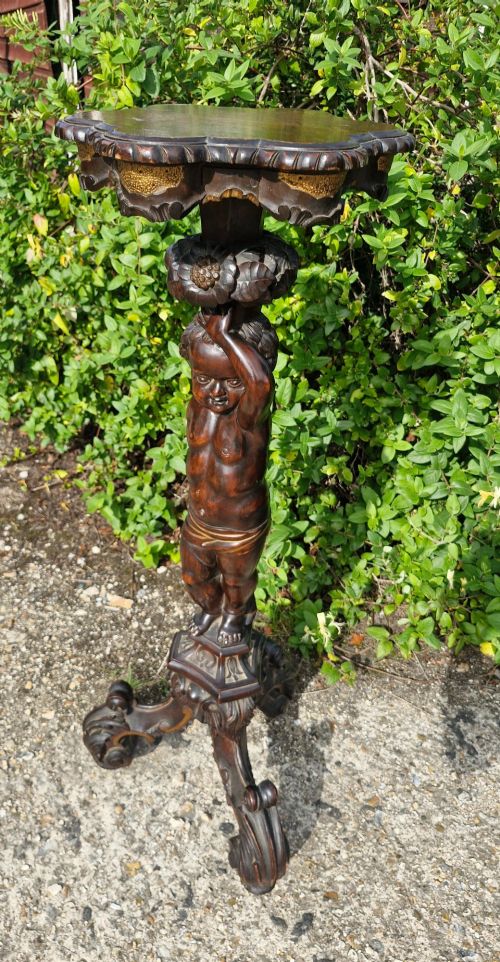
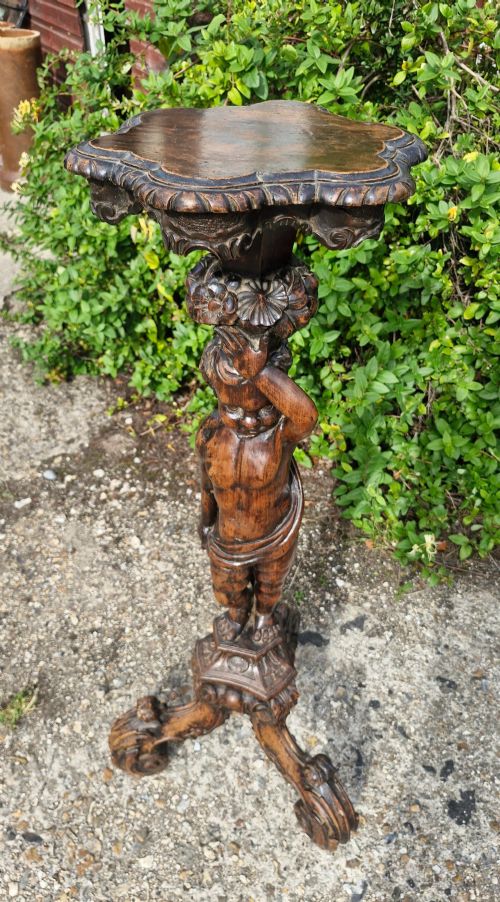
Buyers encountering this selection meet pieces ranging from seventeenth-century walnut bases featuring putti to nineteenth-century revival columns and painted stands. The inventory spans regional variants like Venetian and Tuscan works, alongside related side tables and desks sharing the aesthetic.
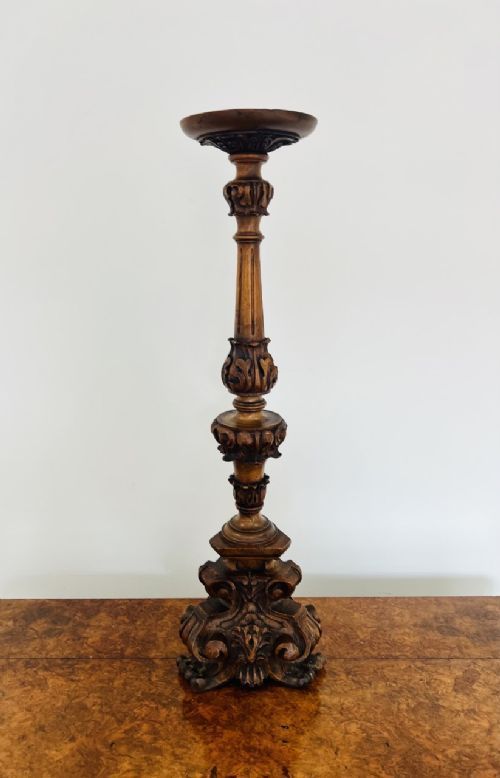
The objects combine functional support with intense sculptural expression, often utilising carved figures or architectural elements such as capitals and fluted shafts. Their forms bridge decorative furniture and fine art sculpture.
How they were made
Craftsmen utilised solid hardwoods including walnut, limewood, and carved wood to build the structural core of these stands, shaping them with deep relief and turning techniques. These woods provide the dense foundation required to support heavy stone elements and large figures.
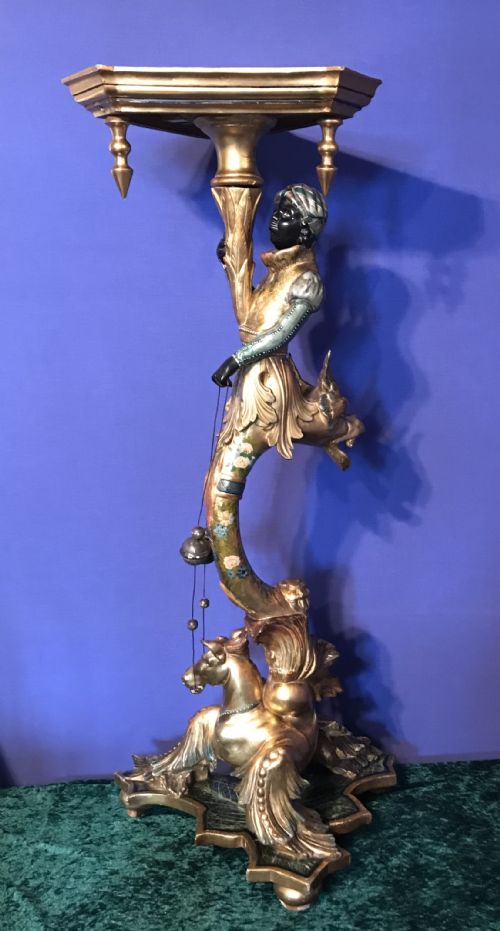
Surfaces received intricate finishes involving gesso, gold leaf, paint, and parcel gilt highlights, creating luminous contrasts and rich textures. Marble tops and inserts frequently cap the wooden bases, adding weight and a formal surface.
Current listings feature materials such as walnut, limewood, marble, gold leaf, and gesso across the seventeenth, eighteenth, and nineteenth centuries.
What varies in quality
The distinction in quality rests upon the depth and finesse of the wood carving, particularly in figurative elements like putti or dolphins. Superior examples display anatomical precision and fluid movement, whereas lesser pieces exhibit stiff or simplified proportions.
The integrity of the original surface finishes, such as polychrome paint and gold leaf applied over gesso, dictates the visual power of the piece. Intact period gilding and original marble tops elevate the stature of the object significantly.
The Italian Baroque Pedestal Glossary
- Torchiere
- A tall stand or pedestal designed to carry a candle or light source. These often feature elaborate carved shafts and tripod bases.
- Putto
- A figure of a small winged infant, frequently carved in groups supporting the column shaft or base in baroque furniture. They add dynamic narrative energy to the composition.
- Parcel gilt
- A decoration method where only specific areas of an object receive gold leaf, leaving the painted or natural wood visible elsewhere. This technique highlights particular carved details.
- Gesso
- A plaster mixture applied to wood surfaces to prepare them for painting or gilding. It provides a smooth ground that can be heavily embossed or carved.
- Triform
- Having three sides or a triangular base plan, common in heavy pedestals to ensure stability. This geometry structures the support for central columns.
Italian Baroque Pedestal: Frequently Asked Questions
What is an italian baroque pedestal used for?
These pieces function primarily as elevated platforms for displaying sculptures, urns, and decorative objects within a room.
They also stand alone as architectural elements, introducing verticality and rich ornamentation to empty corners or hallways.
How do I date an antique pedestal?
Dating relies on analyzing the wood species, tool marks, construction joints, and the wear patterns on the gesso and gold leaf.
Stylistic indicators, such as the naturalism of carved putti or the specific profile of a column, help align the piece with seventeenth, eighteenth, or nineteenth-century periods.
Are these pedestals strong enough for heavy items?
The sturdy walnut and limewood construction of these pedestals provides substantial weight capacity for heavy stone or bronze sculptures.
However, fragile carved details and delicate gilded surfaces require careful placement to avoid accidental impacts.
How do I care for gilded wood surfaces?
Gilded and painted surfaces demand gentle dusting with a soft, dry brush to prevent scratching the thin metal leaf.
Moisture and direct sunlight must be avoided to protect the underlying gesso and wood from cracking or fading.